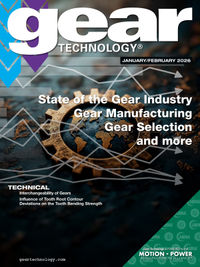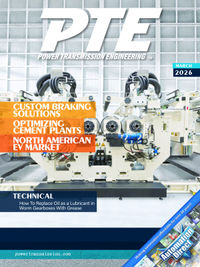
My daughter is currently attending Northern Michigan University in Marquette, MI. It’s typically a six-and-a-half-hour drive according to the smartphone, but a recent expedition took eight+ hours due to a surprise blizzard coming off Lake Superior.
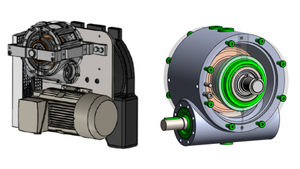
For worm gearboxes, oils are mainly used in combination with splash lubrication. Consistent lubricants, such as greases, are used less frequently and are used, for example, in gearboxes where it is not possible or difficult to seal the housing (Ref. 1). These applications include positioning gears, but also power gears with high sealing requirements, such as in the food industry. Grease lubrication has, in comparison to oil, a negative thermal effect on the worm, resulting in higher mass temperatures (Ref. 2). However, this effect becomes less relevant in the application of positioning gears, so that the advantages of grease lubrication outweigh the disadvantages in these applications.
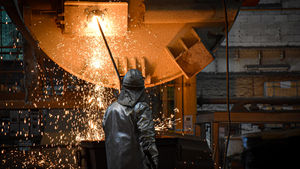
Mechanical engineering develops the scientific and mathematical principles behind physical machines, but you can’t help feeling a little real-world magic taking place in the manufacture of components needed for large, heavy industrial applications. Cement production, for example, relies on gigantic equipment to grind raw materials using rotary kilns, ball mills, vertical mills and crushers.
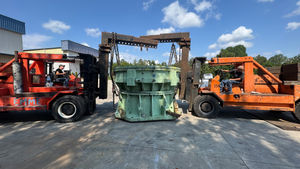
The call came into Atlanta Gear Works like any other—a vertical mill drive used for a crusher application in cement needed a gearbox upgrade. The difference this time was the sheer size and scope of the gearbox in question. Similarly-sized gearbox rebuilds could take a month or more to complete, but Atlanta Gear Works had 14 days to complete this rebuild—counting weekends—with a tight schedule leaving no room for error.

We have all seen the Q4 2025 headlines around electric vehicle (EV) sales and they were not good. Ford recorded a $19.5B loss in EV pullbacks (Ref. 1). General Motors posted $6B in EV debt (Ref. 2). Stellantis took a $26B hit which was compounded by underperforming EV sales and recovery from the previous CEO’s disastrous cost-cutting strategy (Ref. 3). Also, notably, was the laundry list of not-long-ago hailed startups that have went bankrupt, often leaving investors, suppliers and employees holding the bag: Bollinger, Canoo, Nikola, ELMS, Lordstown, Fisker, Arrival, Proterra, Volta just to name a few. Many more are on the brink along with dozens of startup suppliers that enticed investors with untold wealth to be gained in the automotive revolution 2.0 (Ref. 6,13,14).
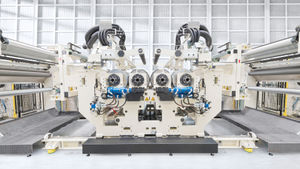
In a large laminating unit by Saueressig Engineering for laminating steel strip on both sides, rubber rollers press a protective PET film onto hot steel strip. Despite cooling, these rubber rollers do wear down and need to be replaced regularly. Four profiled rail brakes by Mayr Power Transmission ensure that the laminating process, which takes place 24 hours a day, only must be interrupted briefly to replace the rollers.

There’s a particular irony in watching an electric vehicle glide silently past, promising a cleaner future, while knowing that somewhere in the Democratic Republic of the Congo, massive mining equipment—powered by diesel engines and planetary gearboxes—is extracting the cobalt that makes that quiet drive possible.

Intelligent power management company Eaton will showcase four new mobile power innovations at the upcoming Heavy Duty Aftermarket Week (HDAW), taking place Jan. 19–22, 2026 in Grapevine, Texas, at its exhibit in Booth #1607. The new offerings expand Eaton’s already comprehensive vocational and heavy-duty truck portfolio, delivering greater flexibility, reliability and performance for fleets and upfitters.

A broad line of mechanical components for use as stops, spacers, shaft connectors, and versatile mounting devices in warehouse automation systems has been introduced by Stafford Manufacturing Corp. of Wilmington, MA. Stafford Warehouse Automation Components include several shaft collar designs for positioning, spacing, securing, and limiting motion on a shaft; rigid couplings for connecting two rotating shafts while allowing for misalignment, vibration absorption, or motion transfer; and motor, bearing, sensor, or bracket mounts.

Kollmorgen Corporation has released the next update for the SafeMotion Monitor (SMM) firmware: SMM 3.0. This upgrade expands functional safety support for linear motors and linear axes, helping machine builders implement functional safety in applications ranging from semiconductor manufacturing to battery production and industrial automation that require safety.

ABB has introduced its Automation Extended program, a strategic evolution of its distributed control systems (DCS), designed to help industries modernize without disruption. Building on ABB’s long-standing leadership with the world’s largest DCS installed base and vision in process automation, Automation Extended outlines how future automation capabilities can be introduced progressively – preserving system integrity while enabling the flexibility, scalability and efficiency needed for the next era of industrial operations.

A new version of the MESYS shaft and rolling bearing analysis software is available. The bearing analysis software allows the calculation of the load distribution within the bearing as well as bearing life according to ISO 16281. It is integrated in a shaft system calculation offering additional capabilities such as modal analysis, strength calculation for shafts and interfaces to gear calculations.

Kuka Robotics will showcase its broad portfolio of autonomous mobile robots (AMRs) designed for seamless automation integration at Modex 2026, taking place April 13–16 in Atlanta, GA, at the Georgia World Congress Center. Attendees can visit Kuka in Building ABC, Level 1, Booth #B15132 to see live demonstrations of advanced AMR solutions, including the debut of the KMP 250P autonomous mobile platform, which simplifies material handling and improves operational efficiency.
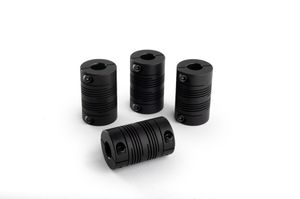
Ruland Manufacturing has introduced its new D-series of six beam couplings, expanding its beam coupling product line to offer one of the most complete selections of standard beam couplings available for precision motion control applications.
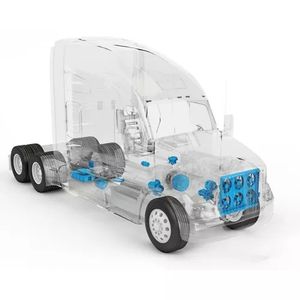
Eaton intends to pursue a separation of its Vehicle and eMobility segments (together, “Mobility Group” or “Mobility”) into an independent, publicly traded company.

NTN Bearing Corporation of America announces a key transition within its Automotive Aftermarket business unit, as longtime NTN veteran John Tyma retires, and Alan Dick joins the team to support continued growth in the heavy‑duty aftermarket.

ZF Friedrichshafen AG and the BMW Group have signed a long-term supply agreement in the field of passenger car drive systems. The core of the agreement is the supply and continued development of the proven 8-speed automatic transmission (8HP). The contract, worth several billion euros, runs until the late 2030s. This creates a solid foundation for open-technology and low-emission mobility of the future for both companies.

Siemens has announced the acquisition of Canopus AI, an innovator in computational and AI-driven metrology solutions, enabling semiconductor manufacturers to achieve new levels of precision and efficiency in wafer and mask inspection processes. This acquisition strengthens Siemens’ position in the semiconductor manufacturing ecosystem and expands its semiconductor design and manufacturing digital thread by integrating additional cutting-edge metrology technologies, enhanced with advanced AI capabilities.

ABB has signed an agreement with Fervo Energy, a Texas-based leader in enhanced geothermal systems, to supply advanced motor control solutions for the Cape Station geothermal project in Utah. Scheduled to start delivering reliable, carbon-free power to the grid in 2026, Cape Station is expected to become the world’s largest next-generation geothermal development by installed capacity and represents a major step forward in sustainable energy generation in the United States.



Contact | Privacy Policy
©2026 Power Transmission Engineering
 Power Transmission Engineering is THE magazine of mechanical components. PTE is written for engineers and maintenance pros who specify, purchase and use gears, gear drives, bearings, motors, couplings, clutches, lubrication, seals and all other types of mechanical power transmission and motion control components.