Optimizing cement plant performance through advanced gearing systems
Cement producers are seeking environmentally efficient, innovative and responsible manufacturing techniques to establish a clearer path toward carbon neutrality.
Mechanical engineering develops the scientific and mathematical principles behind physical machines, but you can’t help feeling a little real-world magic taking place in the manufacture of components needed for large, heavy industrial applications. Cement production, for example, relies on gigantic equipment to grind raw materials using rotary kilns, ball mills, vertical mills and crushers.
The challenge in 2026 is to maintain existing plants and provide the production upgrades required for future cement production. Enter FCMD, a Ferry Capitain and CMD Gears company, a single-source supplier in the cement industry offering ring gears and pinions, gearboxes/inching drives, trunnion and ball head mills, pinion bearings out of Babbit Metal, gear/grid couplings and more.
“FCMD provides everything from design and manufacturing to installation and maintenance,” said Victor Manoury, sales engineer at FCMD North America. “We focus on high-torque, low-speed applications including custom-made gearboxes, worm gear and planetary gearboxes and kiln gear drives.”
Cement Production Strategies
Cement producers are seeking environmentally efficient, innovative and responsible manufacturing techniques to establish a clearer path toward carbon neutrality. This aligns with the sustainability push taking place across heavy industrial sectors including mining, construction, aggregate, off-highway and agriculture.
“This is truly one of the biggest challenges today in cement,” Manoury said. “Reducing energy consumption, decarbonizing plants and finding cleaner and more efficient solutions to produce cement.”
Furthermore, the cement industry is extremely competitive. Manoury said suppliers must be aware of pricing, lead times, service and support, etc. Companies seeking contracts must assume five other suppliers are working on the same open bid.
“Given the larger nature of the products we deal with (high-torque/low-speed applications), naturally buyers turn to worldwide solutions. There’s a constant struggle to fight against cheaper, alternative solutions across the globe,” Manoury added. “To stay relevant in these industries, we focus on quality, reliability and added value, rather than price alone. It helps to offer 150+ years of experience as well as a team of dedicated engineers.”
Flexibility—it turns out—is one of the most important aspects of cement production. The success of a component upgrade or a gearbox replacement depends largely on clear and concise communication with the clients. FCMD North America acts as a direct link between the French engineering offices and the U.S. end users, ensuring smooth coordination and quick decision-making.
“If our customer is transparent and shares the date of an outage, for example, we can figure out how to get the equipment up and running as quickly as possible,” Manoury noted.
“Each project adds to our knowledge base, informing the next, refining our designs, and deepening our understanding of how our equipment performs in the field. We don’t just manufacture parts; we engineer complete solutions grounded in real-world performance data and customer feedback.”
Victor Manoury, sales engineer, FCMD North America
Technologies for Cement Applications
With so much experience in cement production, Manoury discussed how CMD knows the customer’s specific difficulties and pain points. They developed the Kiln Gear Drive (KGD), a three-degree of freedom system, that allows perfect meshing from the pinion to the ring gear. Customers provided feedback on issues such as pitting and, in extreme cases, tooth rupture, resulting from the complex running behavior of the kiln. The deformation of the kiln shell often altered the girth gear geometry, creating misalignment and accelerated wear.
To address these recurring problems, CMD engineered a completely new solution the “KGD” specifically designed to compensate for kiln movement and maintain optimal gear engagement throughout operation. This unique system includes the gearbox, pinion and ring gear all as one solution. The technology has been around since the late 2000’s and fits the cement industry perfectly. By introducing the Bogiflex KGD (Kiln Gear Drive), CMD made the drive system an integral part of kiln performance by enhancing its reliability and performance.
The Bogiflex is a floating and self-aligning gearbox. It follows the movement of the girth gear, and therefore kiln shell, in every direction. It compensates for any kiln deformation or movement and ensures that pinion-girth gear meshing conditions are always constant. The CMD Bogiflex KGD components include standard components and therefore allow commonality of spare parts between several plants. The tuning of the drive reduction ratio is obtained by adjusting the specification of the primary gearbox. Three standard sizes of Bogiflex KGD units exist so far which cover most existing kiln sizes.
Another major technological advancement in cement solutions is the development of FerryNod, a proprietary ferrous alloy created by Ferry Capitain. With a hardness range between 250 BHN and 340 BHN, FerryNod is a ductile iron material designed in full compliance with AGMA 6014/ ISO 6336 specifications.
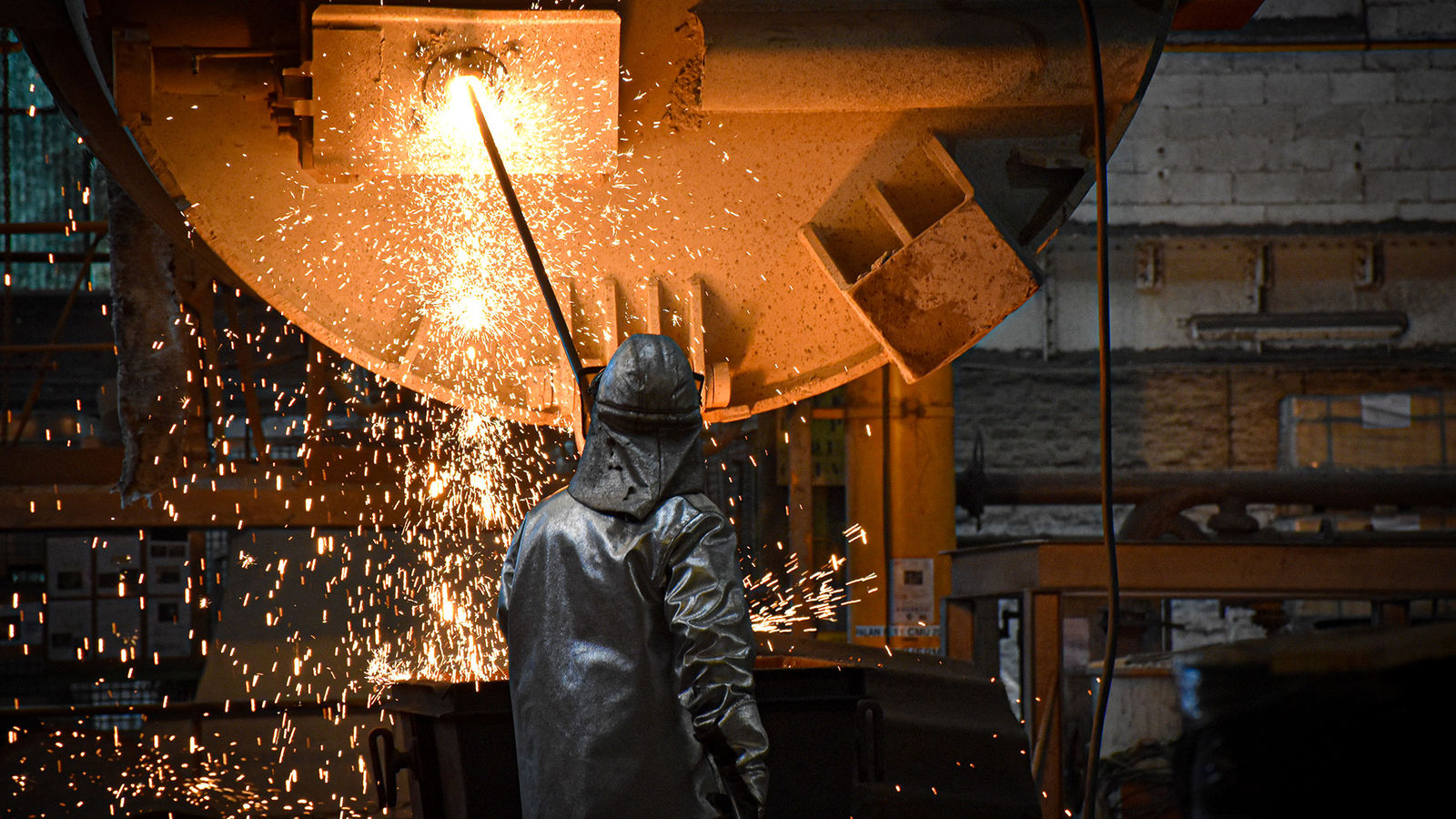
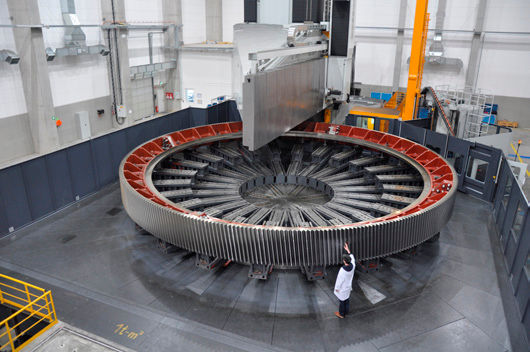
“Our foundry capabilities enable the production of large-scale components such as ring gears up to 16 meters in diameter, mill heads and trunnions, all cast using FerryNod. Originally developed to meet demand for larger and more robust equipment in the mining industry, this material has proven to deliver exceptional performance under heavy-duty conditions. The name FerryNod reflects its core achievement: surpassing the stress values defined by AGMA standards, offering our customers a solution with superior mechanical properties, shorter lead times, and lower costs compared to conventional cast steel,” Manoury said.
[advertisement]
FCMD’s commitment extends far beyond manufacturing and delivery. The company believes true reliability comes from long-term partnership with each cement producer.
FCMD’s commitment extends far beyond manufacturing and delivery. The company believes true reliability comes from long-term partnership with each cement producer
Live Monitoring, Drop-In Technology and Safety
Live monitoring has become a key focus for cement plants, particularly for maintenance teams striving to enhance safety and prevention. Thanks to advances in digital technologies, it is now possible to monitor an entire plant’s equipment in real time directly from a control room. Even the slightest variations in vibration or temperature can be detected instantly, allowing for early intervention that protects equipment integrity and prevents costly unplanned downtime.
As a supplier of drive components for critical cement equipment (kilns and mills) FCMD places special emphasis on monitoring solutions.
“To address these needs, we have developed the Connected Pinion, an innovative system designed to detect misalignment, lubrication disturbances, and abnormal operating conditions that can lead to scuffing, pitting, or even cracks. The Connected Pinion is equipped with embedded temperature sensors located near the active flank of the tooth, providing operators with precise, real-time temperature data. When irregularities are detected, the system emits immediate alerts, allowing for rapid corrective action before any damage occurs,” Manoury said.
In addition, FCMD partners with specialized monitoring experts who provide comprehensive live-monitoring capabilities for position and temperature, for all drive components- ring gears, gearboxes (planetary, parallel, etc.), and complete drivetrains. These systems integrate alarm signals, predictive analytics, and continuous data collection, ensuring quick diagnostics and expert analysis to determine the right corrective actions and prevent unplanned downtime.
Unlike the mining industry, which often drives innovation through new projects and disruptive technologies, the cement sector focuses primarily on maintaining and upgrading existing equipment. Most investments involve modernizing older systems rather than building entirely new ones. This is where drop-in replacement systems play a crucial role. They allow operators to repair or replace aging components while simultaneously upgrading performance. Thanks to modern manufacturing techniques and advanced heat treatment processes, today’s gears offer significantly higher durability and resistance than those produced decades ago.
“As an engineering-driven company specialized in gear systems, FCMD views every retrofit or replacement project as an opportunity to enhance reliability and optimize design. For example, our engineers can redesign a gearbox to serve multiple applications through smart modular design—allowing the same unit to fit two types of equipment. This approach not only reduces spare parts inventory but also improves overall system reliability and efficiency.”
Safety continues to be a focal point in cement production. There’s an increase in safety across all the market segments. From torque-limiting couplings that protect not only the equipment but also the maintenance personnel in the factory to hydraulic inching drives systems used to perform maintenance on horizontal mills.
These hydraulic systems are also highly adaptable and can be customized to suit mills of different sizes and configurations.
Service and Support: The Work Continues
Manoury said FCMA’s commitment extends far beyond manufacturing and delivery. The company believes true reliability comes from long-term partnership with each cement producer. “The goal is to ensure continuous technical support, spare-part availability and on-site expertise throughout the full life cycle of every piece of equipment. Each project adds to our knowledge base, informing the next, refining our designs, and deepening our understanding of how our equipment performs in the field. We don’t just manufacture parts; we engineer complete solutions grounded in real-world performance data and customer feedback,” Manoury said.
A horizontal mill gearbox will never face the same thermal and mechanical constraints as a kiln drive. That’s why every FCMD solution begins with the right questions: What are the site conditions? How often is the equipment cycled? What temperatures, humidity, and altitude will it operate under? These details matter and they shape every design decision.
FCMD provides everything from design and manufacturing to installation and maintenance in cement production.
The Evolution of Cement Production
Maintenance is vital in cement production. Manoury said the mechanical drive components that keep a kiln or mill turning operate under extreme conditions—high loads, constant solicitations and heat. When those systems stop, production stops. Most cement facilities have at least one outage per year. It is critical to swap the bearings and inspect the gears.
“It’s very easy to get to a point where you’re damaging the equipment in cement applications. Do we see any wear or tear on the tooth surface? Are we using the right amount of lubrication? Is the lubricant the right quality? The plant itself sometimes has stricter MRO policies in place than the provider of the components and equipment. It’s also critical to have the right amount of spare parts on hand at every cement plant,” he added.
They’re putting AI and automation into everything today, so Manoury said he assumes this will eventually take place in these heavy industrial applications as well.
“We’re already seeing automated drones for inspections on cable lines, terrain analysis, etc. I could see that being integrated within the heavy industry too… I mean we touch based on it previously, sensor-embedded gearboxes and pinions will make it possible to continuously monitor temperature, vibration, and torque in real time. These systems will feed data directly into AI-based models capable of predicting failures with remarkable accuracy.”
However, technology alone won’t replace human expertise, it will only enhance it. The interpretation of the data, the understanding of gear contact patterns, and the ability to connect field observations with design intent will still depend on experienced engineers.
There will come a point in time when complete smart factories will be used in heavy industry. This digital transformation will make cement plants more responsive, more reliable, and ultimately more efficient. In the longer term, true disruption could come from a breakthrough in how cement itself is made.
“Eventually everything in cement plants will be monitored. The core components and processes themselves may not change dramatically—they’ve remained largely the same for decades. What will change is how we operate and maintain them. The industry is moving toward smarter, more connected equipment. We can expect a steady rise in automation, sensors and real-time monitoring systems that provide live insight into performance, wear and efficiency.”
If engineers ever discovered a carbon-free, cost-effective alternative to traditional cement production, Manoury said this would fundamentally reshape the industry.
“Until then, the evolution will focus on making today’s systems smarter, cleaner and more connected.”
Power Transmission Engineering is THE magazine of mechanical components. PTE is written for engineers and maintenance pros who specify, purchase and use gears, gear drives, bearings, motors, couplings, clutches, lubrication, seals and all other types of mechanical power transmission and motion control components.
*Unsubscribe any time. Full details in our privacy policy









 Power Transmission Engineering is THE magazine of mechanical components. PTE is written for engineers and maintenance pros who specify, purchase and use gears, gear drives, bearings, motors, couplings, clutches, lubrication, seals and all other types of mechanical power transmission and motion control components.