


The Gears Behind the Green Machine
There’s a particular irony in watching an electric vehicle glide silently past, promising a cleaner future, while knowing that somewhere in the Democratic Republic of the Congo, massive mining equipment—powered by diesel engines and planetary gearboxes—is extracting the cobalt that makes that quiet drive possible.
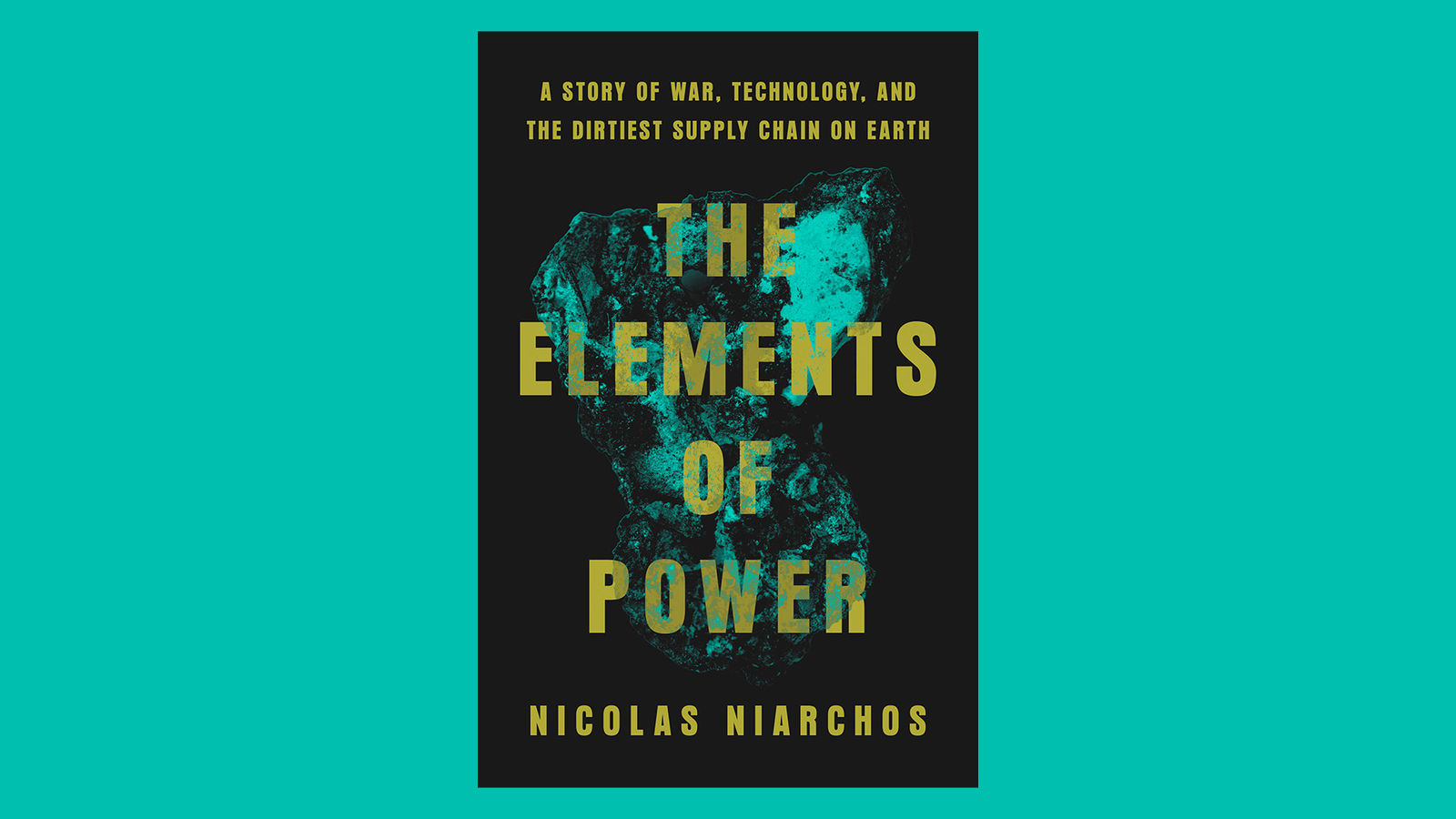
Nicolas Niarchos’s The Elements of Power: A Story of War, Technology, and the Dirtiest Supply Chain on Earth brings this contradiction into sharp focus. What began as an investigation into lithium-ion batteries became something larger. “This was a book on batteries, I thought, a topic that might cause eyes to glaze over during dinner talk,” Niarchos writes. “But as I delved further into the world of lithium-ion, I realized that it was not simply a story about sockets and charges—it was also a story about control and immense power.”
That power—both geopolitical and mechanical—should interest anyone in our industry. The electrification movement doesn’t represent a shift away from heavy mechanical systems. It’s a shift to different applications of the same fundamental technologies we’ve been refining for decades.
The scale is staggering. The DRC supplies roughly 70 percent of the world’s cobalt. Australia and South America provide much of the lithium. Indonesia processes nickel. At every stage, the work depends on equipment our industry knows intimately: autonomous haul trucks with drivetrains handling 400 tons, conveyor systems running continuously, crushers and ball mills operating under enormous loads.
Consider the ring gears on a 40-foot SAG mill—semi-autogenous grinding mills that pulverize ore into powder fine enough for battery production. These represent some of the most demanding applications in power transmission: continuous operation, massive torque loads, impact forces in harsh conditions. When these systems fail, production stops and the entire supply chain stalls.
Niarchos spent years reporting from mines, processing facilities, and manufacturing plants across multiple continents. While his focus is on geopolitics and human cost, the mechanical reality threads through every chapter. China didn’t just invest in mines; they invested in smelters, refineries, and the machinery to run them. They understood that the energy transition would require serious industrial infrastructure, not just better software.