
[advertisement]
Feature Articles

March 4, 2026


Norm Parker


Manufacturing Automotive Electric Vehicle Electrification Bearings Electric Motors Gearboxes Feature Articles Transportation

Examining the EV Revolution

The North American outlook in 2026

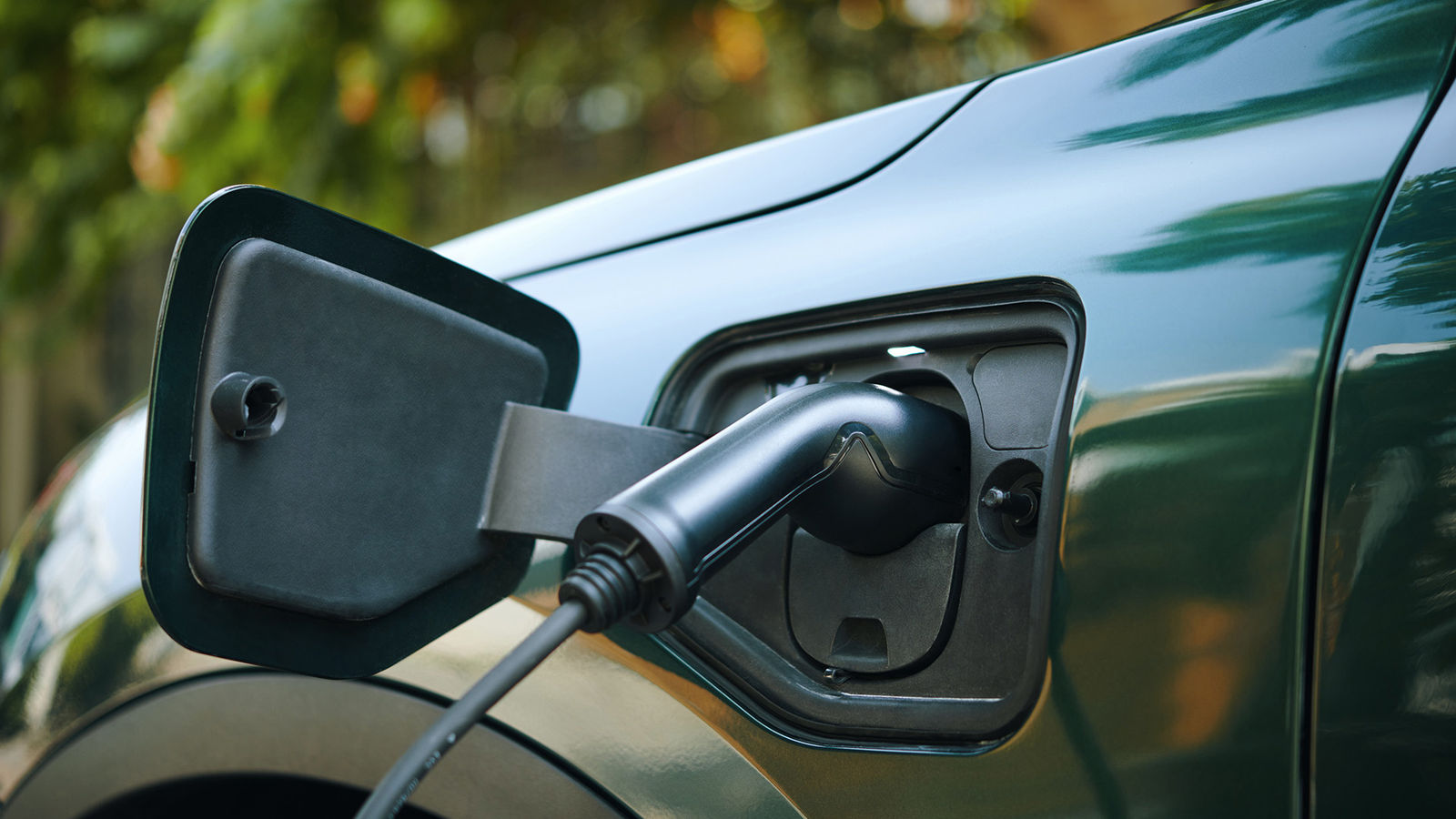
EV charging (courtesy of Envato).

We have all seen the Q4 2025 headlines around electric vehicle (EV) sales and they were not good. Ford recorded a $19.5B loss in EV pullbacks (Ref. 1). General Motors posted $6B in EV debt (Ref. 2). Stellantis took a $26B hit which was compounded by underperforming EV sales and recovery from the previous CEO’s disastrous cost-cutting strategy (Ref. 3). Also, notably, was the laundry list of not-long-ago hailed startups that have went bankrupt, often leaving investors, suppliers and employees holding the bag: Bollinger, Canoo, Nikola, ELMS, Lordstown, Fisker, Arrival, Proterra, Volta just to name a few. Many more are on the brink along with dozens of startup suppliers that enticed investors with untold wealth to be gained in the automotive revolution 2.0 (Ref. 6,13,14).

As Cox Automotive recently reported, 2025 posted the best non-EV vehicle sales since pre-COVID and EV sales came in at 7.8 percent. We were on track for 10 percent for three quarters before the incentives expired at the end of September. “2025 unfolded largely as anticipated, with changes to federal EV incentives reshaping the demand patterns that drove record Q3 sales,”. (Ref. 8) How did we go from 2021 when CEOs were claiming that millions of sales were just around the corner to 2026, when we are talking about billions of write-downs due to cancelled EV contracts (Ref. 5)?

2021 was before the lion’s share of the money was spent. There was still time to correct the course - the ship(s) had not yet sunk. Yet here we are. There is great confusion among my friends and colleagues about how industry leaders were this far off the mark. Even to the non-automotive professional, it was obvious that the wild projections could never be met. Yet the CEOs who are paid Hollywood money to get the answers right, all got it wrong.
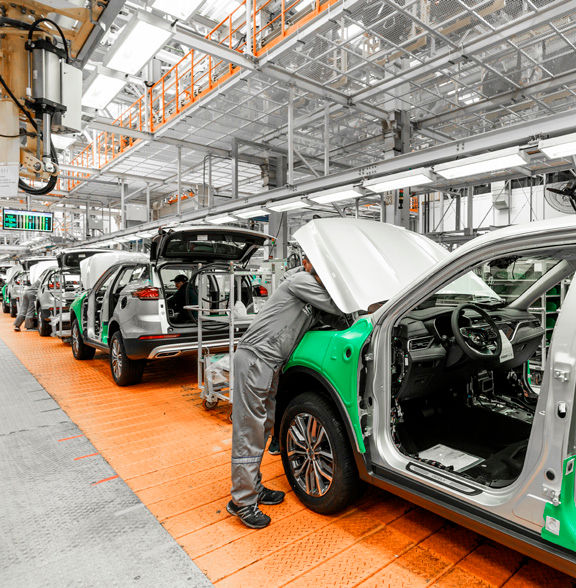
Electric car assembly line (courtesy Adobe Stock/Ivan Traimak).

A good economy can forgive many sins, superficially. The real damage to people and suppliers, however, will take years to clean up. When a supplier is awarded a contract, there is an agreed volume range. For instance, if the minimum target is 500k parts; the supplier does not just get to say they can make 500k parts. They must, in real time, demonstrate they can make 500k parts. This means that by the time that production starts the location, equipment, material, people, packaging, logistics and initial inventory have all been defined in detail. Now, let’s say the 500k orders are not coming in…it’s only 50k orders. Almost immediately, workers need to be laid off because the suppliers must begin repayment of the loans, and the reduced income is not sufficient to sustain the debt. If the volumes stay low; eventually, the manufacturer will issue a volume update, and the supplier can start a claim process for unused equipment, material and related expenses. However, this is often a slow process, and many suppliers cannot ride out the debt long enough to remain solvent. As a result, factories close, people lose jobs, and houses are sold at a loss because people cannot afford to keep them. This is the real side of poor decision making. However, you can rest assured that the people that made those decisions are doing just fine.

The current economy is generally healthy in terms of GDP growth and consumer spending, though stagnating jobs are a moderate concern. The GDP is growing, but jobs are not increasing at the same rate. There is uncertainty regarding tariffs, future EV policy and trade relations which create consumer anxiety for some buyers—potentially putting off new purchases for a year or downsizing purchasing plans (Ref. 10). Additionally, there is concern of China controlling the majority of rare earth minerals that are needed for battery and motor production (Ref. 15).
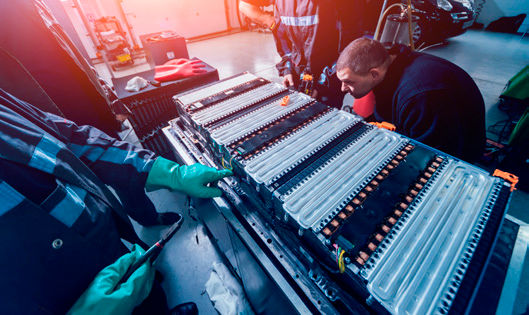
Disassembling the battery of an electric vehicle engine (courtesy Adobe Stock/romaset).
Share and save:


This article appeared in the March 2026 issue.


Read PDF

[advertisement]

We continue to expect semiconductor shortages as AI data centers have dramatically increased global demand. There is a looming shortage of DRAM (Dynamic Random-Access Memory), on the horizon with an overall increase in memory prices (Ref. 16). There is excitement around the digital transformation of the vehicle cockpit with AI advancements. Sophisticated vehicle interaction and infotainment features are expected to be a focal point over the next several years.

For 2026, U.S. sales for non-EV vehicles are anticipated to be on par with 2025—which was the best post-COVID year to date. The EV market is not as optimistic with Bloomberg predicting an “EV Winter” in 2026 as sales continue to slide following the loss of buying incentives. The U.S.-based full electric vehicle sales are forecasted to be at least 15 percent lower than 2025—optimistically, around 1 million vehicles for 2026 (Refs. 9,11,12,17).

From an insider and engineering perspective—I view electric vehicles as a great option for predictable commutes and in areas where the charging systems are known and reliable. Several major fueling stations have started picking up chargers such as Loves and Circle K with others joining. This will be a huge move in reducing range anxiety. In terms of engineering complexity—the mechanical complexity is dramatically reduced in an EV. Between an internal combustion engine + automatic transmission—we go from perhaps 3,000 parts to maybe 300 (varies widely depending on the type of box).

However, the complexity is not truly reduced. It is simply transferred to different components. The battery, PIM, motor, ECU network is amazingly complicated and usually creates the most trouble in EV reliability. This is a slow-moving train, and there are no real deadlines other than the man-made ones which are usually attached to contracts. This market will grow and improve at the pace that people and the market provide. Eventually buying gas vs. electric will not be any more dramatic than deciding if you want a gas or electric chainsaw.

References

  1. Wayland, Michael. “Ford to Record $19.5 Billion in Special Charges Related to EV Pullback.” CNBC, 15 Dec. 2025, www.cnbc.com/2025/12/15/ford-ev-pullback.html.

  2. Cenzio, Sebastian. “GM’s Multi-Billion-Dollar EV Hit Was Huge in 2025.” Autoblog, 21 Jan. 2026, www.autoblog.com/news/gm-announces-6-billion-usd-hit-from-electric-vehicles. Accessed 15 Jan. 2026.

  3. Winton, Neil. “Stellantis, Shaken by Huge Losses, Faces Prolonged Recovery.” Forbes, 12 Aug. 2025, www.forbes.com/sites/neilwinton/2025/08/12/stellantis-shaken-by-huge-losses-faces-prolonged-recovery/. Accessed 1 Feb. 2026.

  4. Parker, Norm. “Roller Bearing Outlook 2025.” Powertransmission.com, 12 Feb. 2025, www.powertransmission.com/roller-bearing-outlook-2025. Accessed 1 Feb. 2026.

  5. “GM Can “Absolutely” Catch Tesla in EV Sales by 2025, Says CEO Mary Barra.” CNBC, 27 Oct. 2021, www.cnbc.com/2021/10/27/gm-can-absolutely-top-tesla-in-ev-sales-by-2025-says-ceo-mary-barra.html.

  6. Wasson, Thomas. “Bollinger Motors Shuts down amid Financial Woes.” FreightWaves, 3 Dec. 2025, www.freightwaves.com/news/bollinger-motors-shuts-down-amid-financial-woes. Accessed 1 Feb. 2026.

[advertisement]

Epp, Henry. “2025 Will Be the Best Year for New Vehicle Sales since before the Pandemic.” Marketplace.org, 2025, www.marketplace.org/story/2025/12/30/2025-was-a-good-year-for-new-car-sales-in-spite-of-turmoil.

  • Streaty, Stephanie Valdez. “Despite Q4 Collapse, 2025 EV Sales Decline Only 2% versus 2024; Policy Shifts, New Product Set Stage for next Chapter - Cox Automotive Inc.” Cox Automotive Inc., 2025, www.coxautoinc.com/insights-hub/q4-2025-ev-sales-report-commentary/.

  • Beecham, Matthew. “Automotive Market Trends 2026: Navigating Volatility, Innovation and Opportunity.” S&P Automotive Insights, 2026, www.spglobal.com/automotive-insights/en/blogs/2026/01/automotive-market-trends-2026.

  • “Fragmented Reality: 5 Forces to Shape the Auto Industry in 2026 - Cox Automotive Inc.” Cox Automotive Inc., 2026, www.coxautoinc.com/insights-hub/fragmented-reality-5-forces-to-shape-the-auto-industry-in-2026/.

  • Kyle Stock and Lili Pike. “Automakers Face an “EV Winter” in 2026 as Sales Growth Slows.” Financial Post, Postmedia, 6 Jan. 2026, financialpost.com/commodities/energy/electric-vehicles/automakers-face-ev-winter. Accessed 1 Feb. 2026.

  • Chesbrough, Charlie. “Cox Automotive Forecast: New-Vehicle Sales Slow in January, as Harsh Winter Weather and Economic Headwinds Hit Market - Cox Automotive Inc.” Cox Automotive Inc., 27 Jan. 2026, www.coxautoinc.com/insights-hub/cox-automotive-forecast-jan-2026-u-s-auto-sales-forecast/. Accessed 1 Feb. 2026.

  • Hunting, Benjamin. “10 EV Car Companies That Are Gone or Going Under.” Driving, Driving, 26 Aug. 2025, driving.ca/car-culture/lists/ev-electric-vehicle-automaker-company-bankrupt-discontinued-canoo-fisker-lordstown.

  • Clausi, Peter. “EV Bankruptcies and Delays: Another One Bites the Dust. - InvestorNews.” InvestorNews, 24 Feb. 2025, investornews.com/critical-minerals-rare-earths/ev-bankruptcies-and-delays-another-one-bites-the-dust/. Accessed 1 Feb. 2026.

  • Kim, Tae-Yoon, et al. “With New Export Controls on Critical Minerals, Supply Concentration Risks Become Reality – Analysis - IEA.” IEA, 23 Oct. 2025, www.iea.org/commentaries/with-new-export-controls-on-critical-minerals-supply-concentration-risks-become-reality.

  • Sourceability Team. “Memory Price Increases + Consumer Impact | Sourceability.” Sourceability.com, 2026, sourceability.com/post/the-memory-shortage-is-driving-higher-costs-for-buyers-and-consumers. Accessed 1 Feb. 2026.

  • IEA. “Trends in Electric Car Markets – Global EV Outlook 2025.” IEA, 2025, www.iea.org/reports/global-ev-outlook-2025/trends-in-electric-car-markets-2.

  • [advertisement]