[advertisement]
Revolutions

January 12, 2026


Matthew Jaster


Manufacturing Automation Electric Vehicle Electrification E-Mobility Motion Control Robotics Actuators Reliability Simulation System Design IIoT Software Revolutions Drones

Production-Ready Results

CES 2026 Highlights the Latest and Greatest Manufacturing

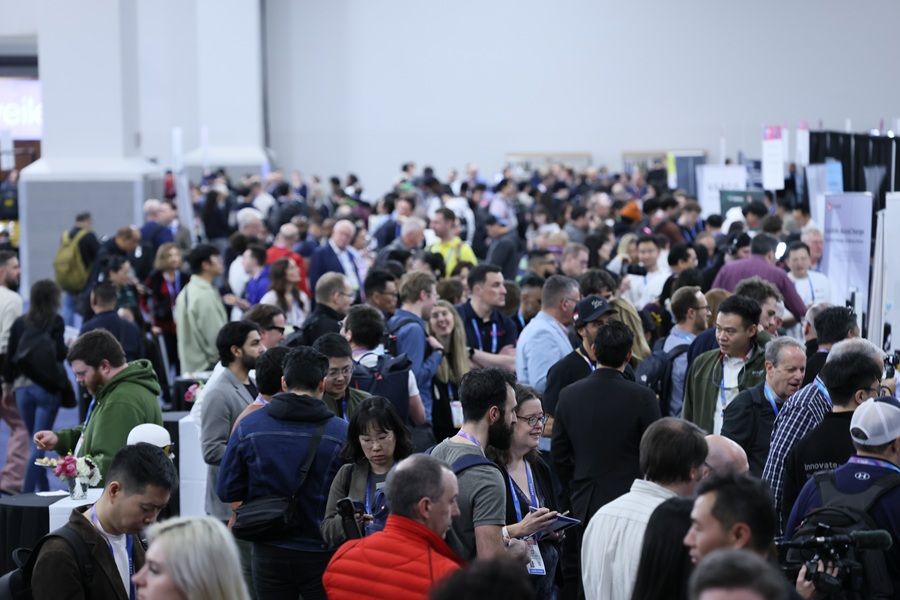
The broad range of exhibits and industries represented at CES in Las Vegas can inspire innovative solutions year in and year out. Industries include 3D printing, AR/VR/XR, AI, cloud computing/data, construction tech, cybersecurity and more. At CES 2026, the spotlight was once again on robotics—a sector that continues to redefine how we live, work and interact. This year’s show floor promised a remarkable array of innovations, underscoring how robots are becoming deeply integrated into everyday life, from home automation and healthcare to hospitality and logistics. Other areas of interest included e-Mobility, IIoT, wearable technology, drones and AI. Here are a few highlights:

Schaeffler Presents Planetary Gear Actuator for Humanoid Robots

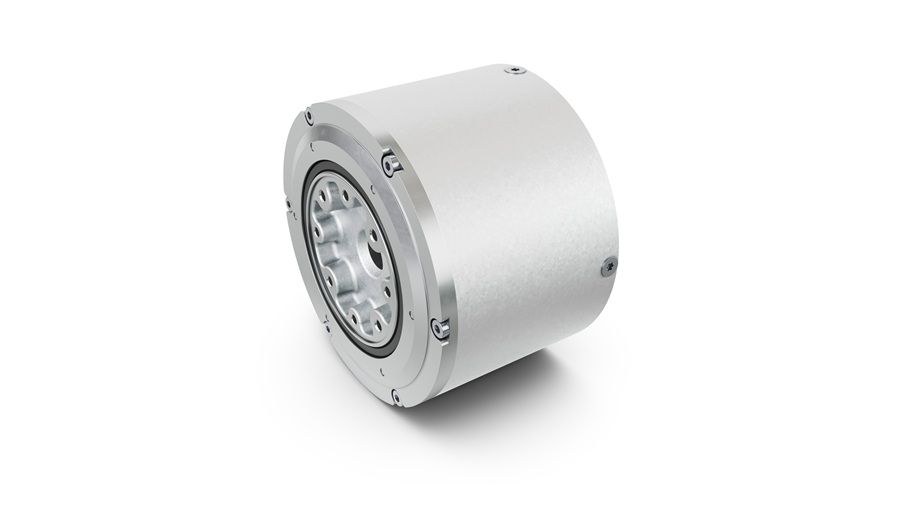
Schaeffler recently presented a planetary gear actuator developed specifically for humanoid robots at CES 2026 in Las Vegas. Actuators transmit torque with high precision and minimal compliance and are essential for enabling humanoid robots to move accurately and efficiently. On average, 25 to 30 actuators are required in total for joints such as the shoulders, knees, and hips. While conventional actuators often offer limited or no back-drive-ability – that is, the ability to move the drive in reverse – Schaeffler’s planetary gear actuator enables smooth back-driving and high precision thanks to its innovative design. 

In addition, Schaeffler manufactures all components entirely in-house, ensuring the highest levels of quality and reliability. Humanoid robots will play a key role in the industry of tomorrow, as they can be seamlessly integrated into existing work environments, relieve employees of repetitive and ergonomically demanding tasks, and significantly increase productivity as a result.
Andreas Schick, chief operating officer of Schaeffler AG and responsible on the executive board for humanoid activities, says: “Schaeffler aims to secure a key position in the rapidly growing humanoid robotics market. Thanks to our decades of manufacturing expertise, we are able to deliver the highest quality in large volumes and within the shortest possible production times. The innovative planetary gear actuator is a production-ready key product within our portfolio and will make humanoid robots even more capable and powerful.”

Share and save:


[advertisement]

Planetary gear actuator: A tailor-made drive solution for humanoid robots

Schaeffler deploys humanoid robots across its entire value chain and therefore understands market requirements and customer needs firsthand. This enables Schaeffler to successfully transfer scalable solutions from the automotive and industrial sectors to humanoid robotics and to develop tailor-made products that address the challenges of the future. With a comprehensive portfolio spanning eight product families, Schaeffler covers the full spectrum of requirements for humanoid robots. Integrated linear and rotary actuators – one of Schaeffler’s core competencies – account for around half of all components in a humanoid robot.

One of the product highlights of this year’s CES trade show is the planetary gear actuator, a highly efficient drive system designed and manufactured entirely by Schaeffler. The compact yet powerful system combines a two-stage planetary gearbox, an electric motor, as well as an encoder and controller in a space-optimized unit. Thanks to its high thermal stability, a torque range of 60 to 250 Nm, and particularly low back-driveability, the planetary gear actuator withstands external forces and prevents unintended reverse rotation of the drive component. The result is precise, energy-efficient motion sequences with high torque transparency – ideal for continuous-duty operation in humanoid robots.

schaeffler.us/us

Siemens Unveils Technologies to Accelerate the Industrial AI Revolution

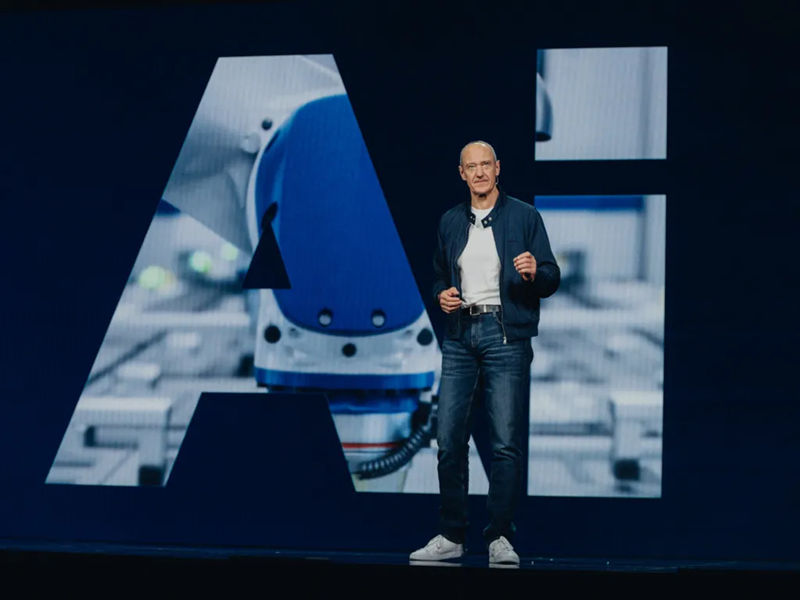
At CES 2026, Siemens’ keynote marked a new era of technology for industry and infrastructure, showcasing how customers and partners are harnessing artificial intelligence to transform their businesses. With AI-enabled technologies, deep domain expertise, and trusted partnerships, Siemens is converting this technological leap into measurable benefits for customers, partners, and society. 

“Just as electricity once revolutionized the world, industry is shifting toward elements where AI powers products, factories, buildings, grids and transportation. Industrial AI is no longer a feature; it’s a force that will reshape the next century. Siemens is delivering AI-native capabilities, intelligence embedded end-to-end across design, engineering and operations, to help our customers anticipate issues, accelerate innovation and reduce cost,” said Roland Busch, president and CEO of Siemens AG. “From the most comprehensive digital twin and AI-powered hardware to copilots on the shop floor, we’re scaling intelligence across the physical world, so businesses realize speed, quality and efficiency all at once. This is how we scale a once-in-a-generation technology shift into measurable outcomes.” 

Siemens highlighted its long-standing partnership with NVIDIA at CES 2026: The companies are expanding their partnership to build the Industrial AI Operating System – helping customers revolutionize how they design, engineer, and operate physical systems. Siemens and NVIDIA will work together to build AI-accelerated industrial solutions across the full lifecycle of products and production, enabling faster innovation, continuous optimization, and more resilient, sustainable manufacturing. The companies also aim to build the world’s first fully AI-driven, adaptive manufacturing sites globally, starting in 2026 with the Siemens Electronics Factory in Erlangen, Germany, as the first blueprint. 

To support development, NVIDIA will provide AI infrastructure, simulation libraries, models, frameworks and blueprints, while Siemens will commit hundreds of industrial AI experts and leading hardware and software. The companies have identified impact areas to make this vision a reality: AI-native EDA, AI-native Simulation, AI-driven adaptive manufacturing and supply chain, and AI-factories. 

Siemens also announced that it will be integrating NVIDIA NIM and NVIDIA Nemotron open AI models into its electronic design automation (EDA) software offerings to advance generative and agentic workflows for semiconductor and PCB design. This will both maximize accuracy through domain specialization and significantly lower operational costs by enabling the most efficient model to handle and adapt to every specific need. 

[advertisement]

“Generative AI and accelerated computing have ignited a new industrial revolution, transforming digital twins from passive simulations into the active intelligence of the physical world,” said Jensen Huang, founder and CEO of NVIDIA. “Our partnership with Siemens fuses the world's leading industrial software with NVIDIA's full-stack AI platform to close the gap between ideas and reality — empowering industries to simulate complex systems in software, then seamlessly automate and operate them in the physical world.”

Siemens’ primary product launch at CES 2026 is the Digital Twin Composer, available on the Siemens Xcelerator Marketplace mid-2026. This new technology brings together Siemens’ comprehensive digital twin, simulations built using NVIDIA Omniverse libraries, and real-time, real-world engineering data. 

With the Digital Twin Composer, companies can create a virtual 3D model of any product, process, or plant; put it in a 3D scene of their choosing; then move back and forth through time, precisely visualizing the effects of everything from weather changes to engineering changes. 

With Siemens’ software as the data backbone, the Digital Twin Composer builds Industrial Metaverse environments at scale, empowering organizations to apply industrial AI, simulation and real-time physical data to make decisions virtually, at speed and scale. Digital Twin Composer is part of Siemens Xcelerator, an industry proven portfolio of software used by companies worldwide to develop digital twins. 

siemens.com

Everati and Aria Group Offer EV Platform for Low-Volume Manufacturers 

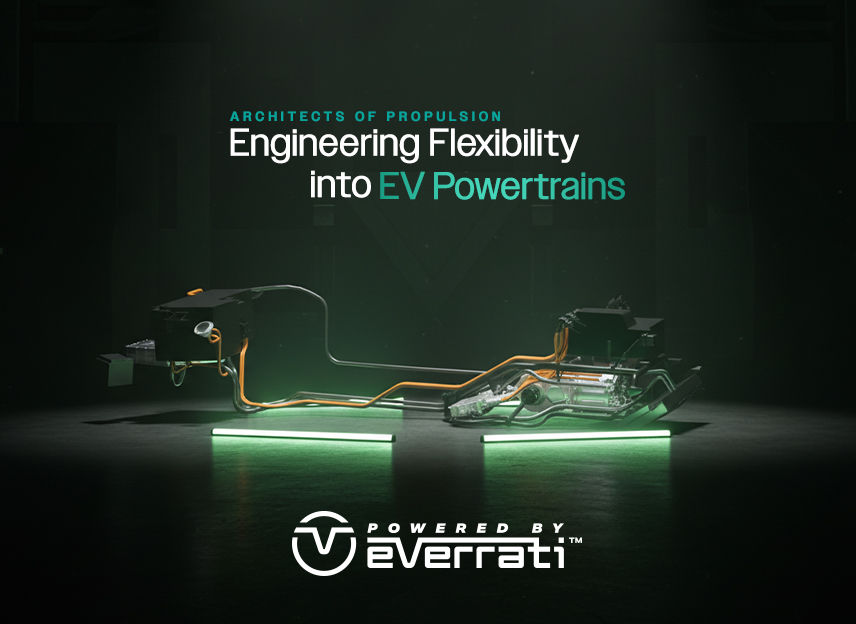
Everrati and Aria Group Inc. launched a new B2B electric vehicle platform at CES 2026 designed specifically for manufacturers that have been priced out of electrification.

 The joint platform combines Everrati’s OEM-grade, modular electric powertrain with Aria’s lightweight composite chassis architecture to deliver a production-ready EV solution for low-volume OEMs, specialty vehicle programs, heritage brands, and defense and off-road applications.

The result: dramatically lower cost, reduced development risk, and faster time to market compared with traditional clean-sheet EV programs.

“This is about removing the structural barriers that have made low-volume electrification slow, expensive and risky,” said Justin Lunny, CEO of Everrati. “By pairing a proven electric powertrain with a highly adaptable composite chassis, we’re giving manufacturers a credible, scalable route to EVs without the usual financial burden.”

Clive Hawkins, Aria Group Inc. CEO added: “Our customers consistently struggle to balance packaging, performance, cost and regulatory compliance. This partnership brings together two complementary technologies to solve that problem in a practical, commercially viable way.”

The turnkey platform is engineered to support low- and medium-volume production, including programs required to meet U.S. crash and regulatory standards. A joint development mule and demonstrator vehicle is planned, with active discussions already underway with prospective customers in North America and Europe.

The Everrati–Aria collaboration offers an alternative to bespoke EV development at a time when investors and policymakers are increasingly focused on scalable electrification.

everrati.com

[advertisement]

×

Like What You see?

Power Transmission Engineering magazinePower Transmission Engineering is THE magazine of mechanical components. PTE is written for engineers and maintenance pros who specify, purchase and use gears, gear drives, bearings, motors, couplings, clutches, lubrication, seals and all other types of mechanical power transmission and motion control components.

E-mail

Choose at least one from the options below:

 Power Transmission Engineering magazine, published 8 times per year (print or digital).

 Power Transmission Engineering e-mail newsletter, published weekly.

 Special Offers and promotions via e-mail from Power Transmission Engineering's advertisers and partners.

*Unsubscribe any time.
Full details in our privacy policy
Already a subscriber? Log in