Implementing automation in laboratories offers a wide range of benefits:
- Increased productivity: Automation handles repetitive and time-consuming tasks, freeing lab personnel to focus on higher-value activities like data interpretation, troubleshooting, and innovation.
- Improved data quality: Human error is a major source of variability in lab results. Automated systems ensure consistent sample handling, analysis, and timing—leading to more reliable and reproducible data.
- Reduced costs: Automation reduces reagent waste, minimizes the need for repeat tests, and optimizes labor costs. It also extends the operational hours of the lab without requiring additional staff.
- Enhanced safety: Automation reduces the need for human interaction with hazardous chemicals, infectious samples, or repetitive manual tasks that can lead to injury. This creates a safer working environment and helps labs comply with occupational health and safety regulations.
- Faster turnaround times: Automated systems can process samples continuously and in parallel, significantly reducing the time from sample receipt to result delivery. This speed is critical in clinical settings where timely diagnosis can directly impact patient care and outcomes.
Motion control is the backbone of lab automation, enabling precise, reliable, and efficient operation of automated systems, understanding the different motion technologies is key to optimizing performance.
With the increasing demand for higher throughput, BLDC motors stand out due to their high-speed capabilities and precise speed control. These motors facilitate rapid sample movement throughout the process. The slotless design offers low inertia, enabling quick acceleration and stopping, which is crucial for efficient sample transfer. Portescap’s 16ECP motors, available in various lengths and coil options, provide an ideal solution for such applications.
Minimizing the overall footprint of workstations is vital in lab environments. Coreless DC motors are practical due to their high-power density, allowing for compact and efficient designs. Various diameter options enable the customization of each workstation axis to perform tasks within the smallest possible space. Portescap’s 16DCT and 22DCT series offer multiple coil options and mechanical customizations, making them versatile choices for different lab automation needs.
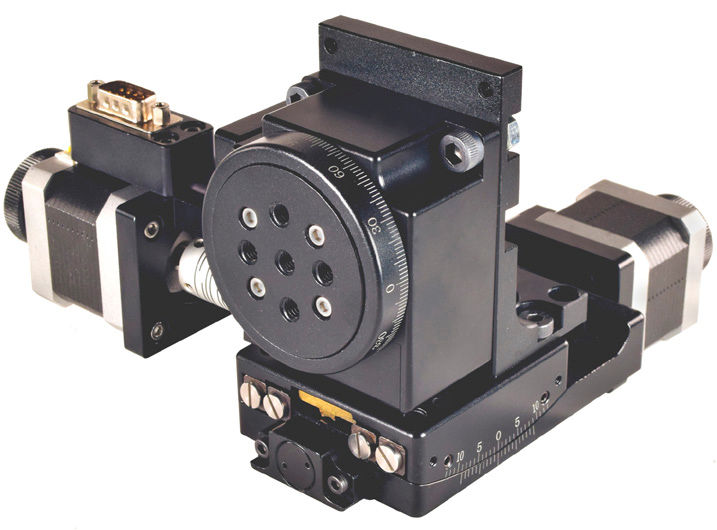
Precise positioning is critical as samples move through automated processes. Stepper motors excel in this area, providing the necessary accuracy and control. Their mechanical construction and ease of control make them suitable for both horizontal and vertical movements. Portescap’s 26M can stack and 20DAM linear stepper motors offer robust rotary and linear solutions to meet high accuracy demands.
portescap.com
Digital Health
OTO Fertility, a digital health platform developed by OTO Coach, is redefining reproductive care with patented biometric and AI-powered technology designed to bring clarity, precision, and confidence to fertility treatment. At the Consumer Electronic Show (CES) 2026 in Las Vegas, OTO has debuted Cira, its newest wrist-worn fertility biosensor, marking a major advancement in how patients and clinics understand and support reproductive readiness.
Built to support every path to parenthood, from natural conception to IVF and IUI, the OTO Fertility solution combines real-time physiological data with precise guidance that help patients and fertility care teams make better-informed decisions at the moments that matter most.
OTO’s technology is rooted in more than 40 years of bioscience and space medicine, originally developed by NASA for astronauts and later refined for elite human performance. With the launch of Cira, this level of physiological precision is now delivered through a comfortable, wristband paired with OTO’s FDA-approved app. Together, they monitor more than fifty biometric markers in just minutes, including heart rate variability, nervous system regulation, and stress response, translating complex biology into a clear, actionable OTO Fertility Index.
This index identifies when the body is in an optimized “Fertility Zone,” offering insight that goes beyond traditional fertility measures such as age, BMI, or AMH. For the first time, women can clearly see when their body is truly ready to conceive, restoring autonomy, confidence, and control in a process that has historically been defined by uncertainty.
“Until now, fertility care has existed without visibility into the most fundamental factor: how the body is responding to and recovering from stress in real time,” said Caleb Evans, founder and CEO of OTO. “With Cira and the OTO Fertility platform app, patients gain clarity and agency, while clinicians gain a critical new layer of physiological context to guide care. We don’t replace existing fertility protocols, we make them smarter, safer, and proactive.”
Globally, one in six women experiences infertility, and despite decades of innovation, fertility treatment success rates have plateaued. In fertility care, time is the one resource that cannot be replaced. Every cycle, every intervention, and every decision carries emotional, physical, and financial weight. OTO Fertility is the first platform built to help reduce avoidable loss, poorly timed interventions, and the risk of proceeding without understanding whether the body is truly prepared, bringing a new standard of care to reproductive medicine.
otofertility.com