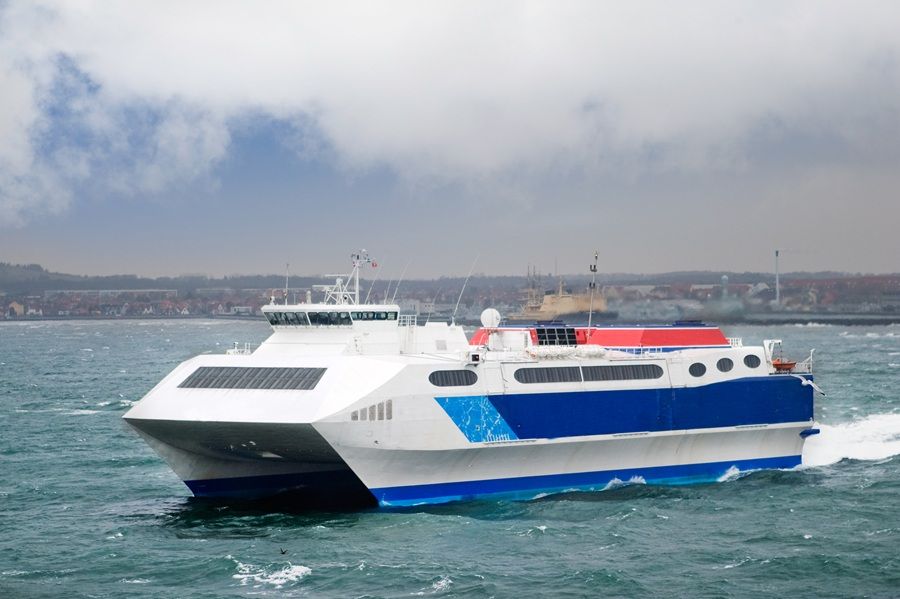
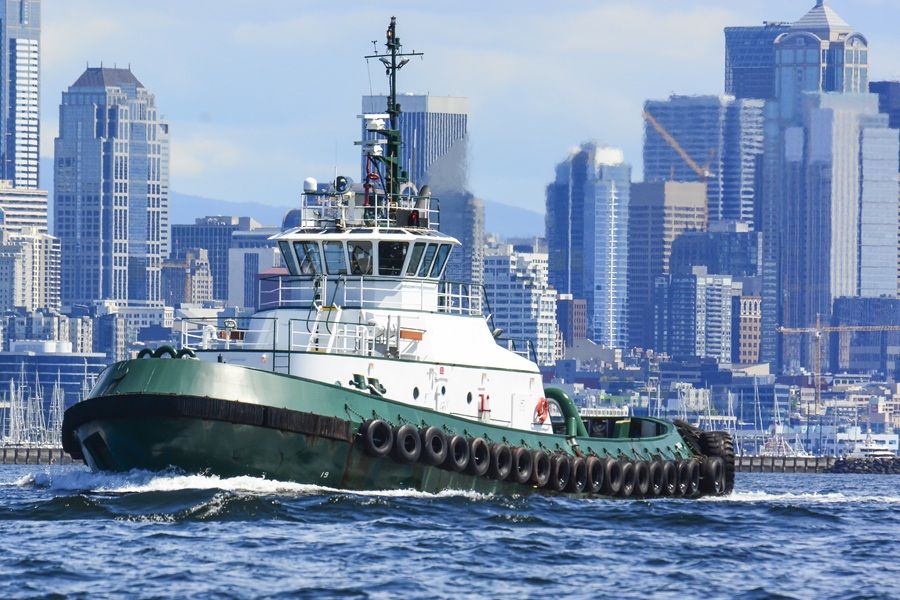
Outside those niches, hybrid – a diesel engine paired with an electric motor and battery, with a clutch in between to disengage the diesel when not needed – offers the flexibility most operators actually need.
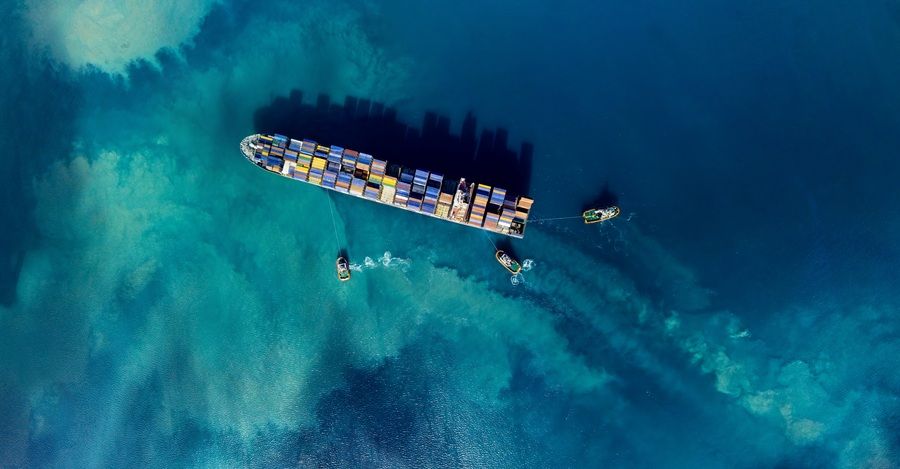
Vessel size draws a clear line, too. Small to mid-size vessels are leading the transition, while the largest container ships and tankers, with their two-stroke engines the size of a house, are following a different path. Typically, a combination of exhaust scrubbers, alternative fuels, and operational changes rather than wholesale electrification.
Interestingly, the pattern mirrors the construction vehicles sector, where small excavators are increasingly electric while large machines remain firmly in the diesel camp for now.
From an engineering perspective, hybridization is a more incremental change than the language around it sometimes suggests. A typical four-stroke marine engine drives a gearbox that reduces input speed to the propeller, often via an intermediate power take-off shaft for onboard generation. Adding hybrid capability means inserting an electric motor and a clutch into that arrangement – either before or after the gearbox – so that the diesel engine can be disengaged and the vessel driven on electric power alone.
The gearbox itself does not need to be redesigned. The propulsion architecture remains familiar. What changes is the addition of components that allow the engine to be cleanly decoupled when running electric and recoupled when it isn’t. For new builds and retrofits alike, this is well-understood territory.
We can see an excellent example of this in a project we carried out to help build Switzerland's first climate-neutral cruise ship. The 63.5-meter, 5-deck vessel runs on a parallel hybrid system in which each of its two propeller shafts is driven by a 405 kW diesel engine paired with a 180 kW electric motor. Sitting between the diesel and the marine gear on each shaft is a compact 2-in-1 unit that combines a flexible coupling — connected to the diesel flywheel to damp torsional vibration — with an electromagnetic clutch that cleanly engages and disengages the diesel from the driveline.
The result is a ship that consumes around 20 percent less energy than a conventional equivalent, without any radical reinvention of the underlying propulsion architecture.
Looking further ahead, more radical changes are possible. Some cruise vessel concepts under development would replace conventional propellers with azimuth thrusters driven directly by generators, eliminating the gearbox altogether. Whether this becomes mainstream is an open question, but it is one of several signs that the drivetrain conventions of the past century may not all survive intact.
Retrofit as the near-term reality
One factor often underappreciated outside the industry is the sheer practical impossibility of meeting emissions targets through new builds alone. Global shipyard capacity simply cannot deliver enough new vessels to replace existing fleets on the timeline that regulations demand. A substantial portion of the response will therefore come through retrofitting existing diesel vessels with hybrid systems, alternative fuel capability, or other emissions-reducing technologies.
That has some major implications for powertrain component design. Solutions that integrate cleanly into existing propulsion arrangements – without requiring a redesign of the gearbox or significant rework of the surrounding installation – are far easier to specify into a retrofit project. So are solutions that consolidate multiple components into a single, factory-assembled unit, simplifying installation and reducing the time a vessel spends in dock.
A divided world
Marine electrification is not a single, globally synchronized movement, and it is unlikely to become one anytime soon. European operators and regulators are leading the way, with Nordic countries particularly advanced, while North American operators in coastal ferry services are moving quickly behind them. Other regions are taking a more cautious approach, and recent geopolitical shifts around energy security have introduced new variables that did not feature prominently a few years ago.
What ties these different trajectories together, however, is the underlying direction of travel. The next five to ten years will see more fully electric short-route ferries enter service, more hybrid systems specified into both new builds and retrofits, and more cruise and pleasure craft adopting electric capability for at least part of their operating profile. Even where diesel remains in service across the largest vessels, it will increasingly do so in combination with cleaner technologies rather than alone.
For everyone involved, from shipyards and naval architects to owners, and operators, that creates a real opportunity.
Vessels designed and built today will operate well into the 2040s and beyond, which means the decisions being made now will shape the sector for decades. Getting those decisions right calls for partners who can bring the full engineering picture into view: who understand the propulsion architectures already in service, who can integrate hybrid and electric solutions cleanly into them, and who can support both new builds and retrofits with the same confidence.
regalrexnord.com