

Force Control Rebuilds Fast Brake for Control on Downhill Conveyors
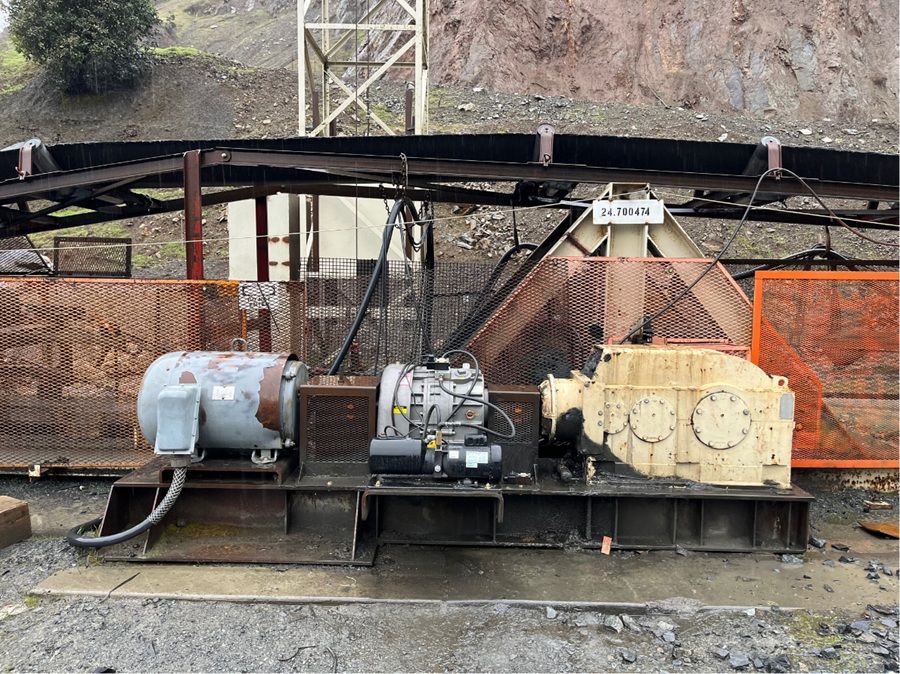
Conveyors are critical equipment at aggregate plants. Downhill conveyors, loaded with tons of material, don’t leave much room for error. When brakes fail and a belt gets away, the result is immediate and dangerous. Material moves where it shouldn’t, and equipment takes the hit. Unfortunately, that’s exactly what happened recently at an Oregon aggregate plant. A brake failure caused a loaded belt to let loose, damaging both the belt and sections of the conveyor framework. Operators responded with front loaders and dump trucks, making repeated trips up and down the incline to clear material. The plant was down. With replacement parts carrying lead times of up to 20 weeks, there was real concern about how long it might stay that way.
At aggregate operations, downhill conveyors are often responsible for moving large volumes of material continuously through the plant, so any loss of control can quickly affect multiple parts of the process and bring production to a halt. The conveyors in trouble were handling stone on an approximate 30-degree incline, each about 36 inches wide. In this type of application, consistent braking performance is critical to maintaining control of the loaded belt.
The system was originally equipped with Force Control Posistop brakes. By all accounts, they had run reliably for about fourteen years. The oil-shear design delivered reliable results with no adjustment and almost no maintenance, while the enclosed design kept dirt and debris away. But a few years back, the maintenance team changed, and fluid levels and system pressure were not consistently maintained. At the same time, issues with the hydraulic power units (HPUs) and valves led to inadequate pressure to fully release the spring-set brakes. In this condition, the system was effectively “driven through” the brake stacks, generating excessive internal heat and accelerating wear. Ultimately, the brakes failed, and on downhill conveyors, it doesn’t take much. Once a loaded belt starts moving uncontrolled, the impact adds up quickly.
Restoring Control After Failure [subhead]
After the failure, plant personnel worked with representatives from Motion Industries in Medford, Oregon to assess the damage and restore operations as quickly as possible. A bid was obtained for new replacement brakes, but the industry standard 20-week lead time was too long for the aggregate site to be out of production.
“Knowing how important it was to get the plant back into production, we contacted Force Control to see if there was any way to speed the process – either with new brakes or by rebuilding the damaged ones,” said Motion Account Manager Todd Franklin.






 Power Transmission Engineering is THE magazine of mechanical components. PTE is written for engineers and maintenance pros who specify, purchase and use gears, gear drives, bearings, motors, couplings, clutches, lubrication, seals and all other types of mechanical power transmission and motion control components.