A Deep Dive into Automation, Conveyance, Sustainability and AI
Packaging and material handling strategies in 2026
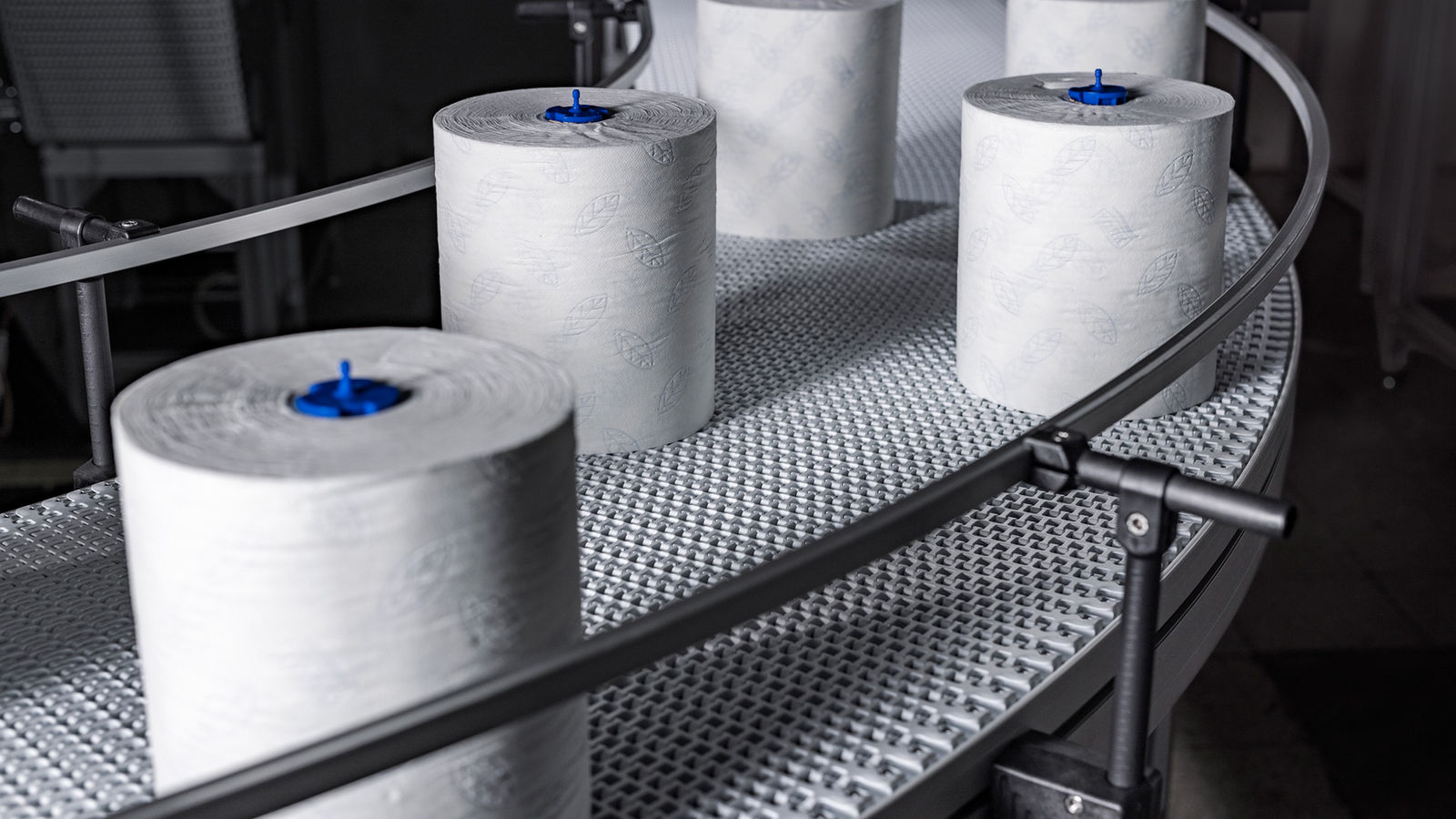
The VarioFlow belt conveyor from Bosch Rexroth ensures smooth transport with high adaptability, reliability, and easy integration. (Photo: Bosch Rexroth)
Pack Expo East drew more than 7,300 attendees and 2,700 exhibitor personnel to highlight the latest advancements in automation, smart manufacturing, sustainable materials, and AI-driven solutions. The regional event provided new machinery, breakthrough materials, advanced automation, and smart manufacturing technologies transforming the industry in 2026.
These meetings led to in-depth discussions on automation strategies, conveyance factors and how software helps manufacturers make well-informed decisions about productivity, maintenance, and efficiency. PTE was able to discuss these strategies with key personnel from Bosch Rexroth, Motion AI, and Siemens Digital Industries Software during the show.
Building an Automation Strategy with Bosch Rexroth
I had the pleasure of sitting down and discussing automation with Krupa Ravichandraan, sales product manager, assembly tech, at Bosch Rexroth during Pack Expo East. Most of the conversation involved where (and how) small to mid-sized manufacturing companies should begin their automation strategy and deployment.
Ravichandraan said not enough personnel understand the variety of processes taking place on the shop floor. They need to walk the entire floor, study each process, and manually observe how each machine operates. Where can automation improve production? How can automation eliminate bottlenecks?
“Once you understand your processes, you can begin to pinpoint the areas on the floor where improvements can help efficiency, throughput, and productivity. That is the first step for small and medium-sized organizations. It is simply seeing where an automation strategy fits,” Ravichandraan said.
If an organization needs to hire several people to meet their throughput demands, it is time to zero-in on the real bottlenecks in the production line. These are typically high ROI, low capital investments that organizations first look towards when automating the plant floor.
“Then you ask more questions,” he added. “What areas can I automate today? Do I have the money for this upgrade? If I do not, then typically people go for end of line automation because it is high ROI, labor intensive, injury prone assignments, and you can easily take liability away from the process. This is where someone might automate case packing with a robot or gantry system—the low hanging fruit that companies first think about in automation.”
Next, they examine the overall structure of the production line. Will they be running multiple types of products, shapes, and formats? What is this going to look like from both a financial and operational perspective? Are they considering what the production line will look like five years down the road?
“Is the space optimized for your production floor? Sometimes you draw up a useful design for your automation needs, but it uses a lot of floor space. Now, you are unable to add more capacity in the future. So, having that holistic view at the beginning will save the organization money in the future. How can I get rid of certain equipment, rearrange the manufacturing cell, and capture all the valuable floor space?”
In my previous job I was doing application engineering system integration. I was drawing the lines from end to end for all these big and small end-users for food and beverage companies. We would draw the whole layout, even for five years down the line. What would they need? What will it cost? In the future, when they thought about adding new products, they simply needed to give us a call and we already had a planned layout,” he added.
Flexible machines is another growing area of interest across packaging applications and a major talking point on the trade show floor at Pack Expo East in Philadelphia. Ravichandraan said most manufacturers are asking about flexible machines today. They do not want to get tied up with a “one off” or buy a dedicated machine for a single process.
Flexible machines combines automation with adaptability giving manufacturers the ability to manage multiple product types, batch sizes, and process sequences without extensive reconfiguration. This allows for quick adjustments to product design, volume or production orders, a perfect complement to areas like packaging and material handling where variety is key to success.
“In 2026, this should also be something manufacturers consider as they are designing or upgrading their production lines. Where can flexible machines add value to the production?” Ravichandraan said.
For conveyor technology, the topic of sustainability and energy efficiency continues to be an important subject. Although conveyors have not really changed in 40+ years, the industry is attempting to build more with less components. Can we run a large system with twenty motors instead of thirty? If we focus on energy efficiency when choosing conveyor designs, can we increase service time between maintenance intervals?
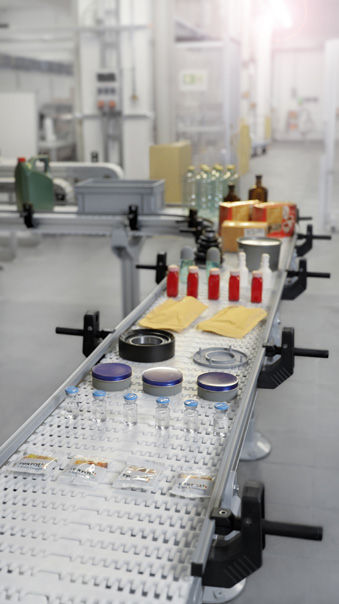
From electronics to consumer goods, VarioFlow plus fits multiple transport applications. (Photo: Bosch Rexroth)
“Flexibility is important here as well,” Ravichandraan said. “This ties back to looking at your system and asking how flexible it can be moving forward. Can we change the size and scope of the framing construction? Modular aluminum framing, for example, allows you to have different width connectors to go from a narrow conveyor to a wide conveyor, using the same side frame. If you are using a stainless-steel model, you would have to redesign the whole conveyor system.”
[advertisement]
In addition, AI was a significant part of the discussions at Pack Expo East.
Many people involved in packaging and material handling are not getting requests from the end users to incorporate AI into their machines quite yet. It is more hype rather than a real feasible solution on the plant floor, but they are executing it on the software side (Google, Meta, etc.).
There is a feeling that AI could be extremely valuable in PLC programming to make real-time changes on the production floor. This could involve retrofits or intricate changes to a manufacturing cell.
The biggest use of AI in packaging and material handling might be all the data collected from sensors across production lines.
“These companies are pulling so much data right now and have not found the best way to make sense of this information. AI will be able to process this information faster and produce floor strategies to get the most out of our analytic tools,” Ravichandraan added. “On the production floor itself, one day we will have an AI-assistant on each packaging machine to address maintenance or productivity issues. It will not only collect data but produce an action plan at the machine level and solve the problem.”
With the addition of AI expansion, Ravichandraan noted other areas where technology will advance in the coming years for packaging applications.
“Everything we are currently seeing in 2D bar coding will be incorporated in other areas like food safety, for example. People will have all the information they need from production to point of sale. This is already taking place today,” he said.
The use of vibration, temperature and vision sensors will expand across the board incorporating AI and helping to solve maintenance challenges in real-time on the production floor. Plant managers will receive instant updates on equipment—this conveyor needs to be upgraded, or this motor is going to stop functioning in six months. You will get a detailed predictive analysis report when a chain is worn down or a manufacturing issue you may need to take back to the original vendor.
“The power of predictive maintenance will expand exponentially. Instead of spending money on next day/overnight shipping for conveyor replacement parts, companies will invest in technologies that will catch potential maintenance challenges six months before they take place. There’s real power in having a detailed roadmap and an action plan in place before something goes wrong on the shop floor,” Ravichandraan said.
At the beginning of the year, Ravichandraan said the conversations he was having with manufacturers included predictive maintenance, digital twins, 3D visual simulation, and the ability to utilize flexible machines in the future.
“There’s technology coming into these markets that will make packaging applications more efficient. They will help drive the industry using software, AI, and sensors to make value-added decisions before upgrading machines or expanding shop floors.”
Conveyor interruptions are often quickly attributed to the belt. But Christian Suarez, division account specialist—fulfillment centers/distribution centers, for Motion Conveyance Solutions, counters that this assumption isn’t always correct. “The belt is just a belt. It performs its intended function.”
Many factors come into play when optimizing a conveyance solution. While the belt is often blamed, a conveyance system is much more complex and requires a great deal of time and effort to maintain optimal performance. I spoke with Suarez about the factors to consider when selecting the right belt for a packaging application and the changing needs of these components in 2026.
Suarez said every application should start by examining the conveyor characteristics. “It is important that you know your minimum pulley diameters: What kind of belt are you currently running? What are the width and length requirements? What is the maximum elongation we can expect in this spec of belt? How long of a take-up does the system have? You must be cognizant of the number of drives and their location. Not considering these factors can cause premature belt failure and can cost these companies tens of thousands of dollars in unplanned downtime,” Suarez noted. “Additionally, the customer should know the belt speed. They should know if it is on an incline or a flat surface.”
The second factor is the size, weight, and shape of the packages on the conveying system.
“What is the material of that package? Is it a cardboard box, a paper bag, or a plastic bag? Is this package abrasive, or does it have sharp edges? Does this package have characteristics that could damage the belt? These seem like basic questions, but we see these issues all the time, and you need an action plan before the belt is up and running,” Suarez said. “I was just with a customer with an incline system made up of 30 individual, 15-inch-long conveyors, and they are having issues with packages rolling back. We are attributing this issue to incorrect belt selection. Larger distribution centers do not consider these minute details.”
The manufacturing or warehouse environment is also crucial in determining the components needed for the application. Most distribution centers are climate controlled, but the ambient temperature can spike in the summer (not every place is air conditioned) and temperatures can significantly drop in the winter.
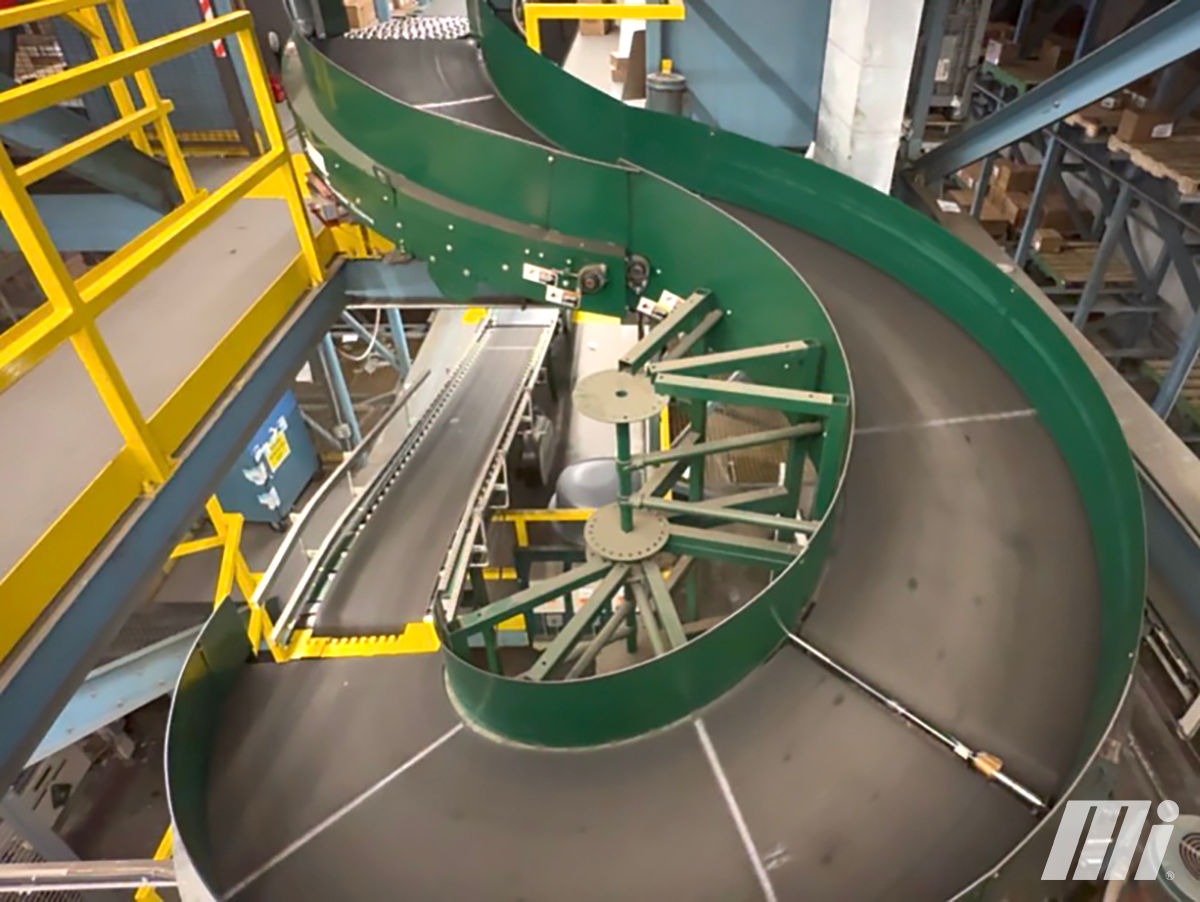
Size, weight, speed and environmental conditions are factors in belt selection. (Photo: Motion Conveyance Solutions)
Suarez advised to consider humidity, contaminants, and other environmental factors: “Again, things are not always thought about during installation, but say we are moving a package that has an oily substance on it. There is no way around that. We must make sure we specify a belt that will have a positive interaction with those oils and not have premature failure.
“By far, the biggest environmental factor is dust. In every location, there will be dust. We might try to spec in a belt that has different properties or compounds on the covers to interact with the dust particles or something that is easily cleanable. Proper belt selection can mitigate the situation,” Suarez said.
Another factor is the addition of robots on the production line. If you have packages or belts creating static, this is undesirable. Robots and static are not good together; an antistatic belt should be considered.
Belt material selection is equally important. Suarez named additional factors at play. What is on the conveyor? How will the product react to the belt? Do we want the product to slide across the belt, or do we want a belt that grips the product?
A PVC belt conveyor, for example, is a material handling system using a polyvinyl chloride (PVC) belt reinforced with fabric (polyester/nylon) for light-to-medium–duty transport. It is known for its durability, chemical resistance, ease of cleaning, and versatility in industries like food processing, logistics and packaging.
“This is the bread and butter in the packaging industry,” Suarez noted. “This is one of the most popular belts out there, and it is very inexpensive. Now we are getting away from PVCs, and getting into softer, polyurethane material at a higher price point. In some applications, getting away from the traditional PVCs and investing in the more expensive polyurethane belting can aid in increasing the overall life of the belt on the system, decreasing cost of ownership because the maintenance team is replacing the belt less often, .”
As the packaging and material handling sectors evolve, there is more emphasis on longitudinal ribs and rough tops, designed for high grip. “We’re having fewer conversations about flat belts. There’s character in these belts, and each has its own specific purpose. Our customers are asking for less friction, which results in less energy consumption, and a consolidation of belt specs used throughout their facility.”
To get the most out of conveyance equipment, Suarez said it is vital to collaborate with operations managers, engineers, and maintenance teams throughout the process. “One example is an operations manager tasked with increasing throughput across the shop floor. Let’s say a system was meant to manage 10,000 packages an hour, but now they have doubled this to 20,000 packages an hour. The maintenance managers call us up because they are having premature failure on the conveyor line, and they immediately blame the belt.
“Problem is, the belt is just one part of the recipe, and very rarely do you see a failure that is exclusively because of the conveyor belt itself. Damage to the belt is usually the most visible, and this is why it is often called out first, but this damage is typically a product of everything else around it. We hear the company directive was to double production per hour, but the system was not designed to manage that,” Suarez said. “Now we need to take a deep dive on the power transmission side and see how this impacts the motor gearbox and bearings, for example. This is where those relationships come into play, and we can put our heads together and make the necessary adjustments to get the most out of the system.”
For Suarez, the future of belt technology will center on predictive maintenance. This could be an AI vision system or someone tracking sensor data across the conveyor using vibration, heat, and speed analysis. AI reporting will increase in the coming days, months, and years. Maintenance managers will be proactive in their strategies and checking conveyor lines before unplanned failures occur.
“This will save companies thousands of dollars and change the way these distribution centers and warehouses are maintained,” Suarez added. “We’re going to see many new advancements around the belt in the coming years. This information will prove the belt is not solely responsible for failures that occur in the system.”
The following is a conversation with Robert Cook, Ph.D. senior director, Global SMB Program Lead Siemens Digital Industries Software conducted during Pack Expo East:
What are the primary challenges currently faced by small and medium-sized enterprises in the packaging sector?
Small and medium-sized packaging and processing companies are being asked to operate with the sophistication of a large enterprise—but without the same resources. They are managing tighter margins, more frequent product changeovers, and ongoing labor shortages. At the same time, they face increasing compliance requirements, sustainability expectations, and pressure to deliver higher throughput and quality.
One of the biggest challenges is visibility. Many SMB manufacturers have strong equipment and experienced people, but their data is fragmented across machines and systems. Without a clear, connected view of operations, it becomes difficult to identify root causes of downtime, optimize performance, or scale efficiently.
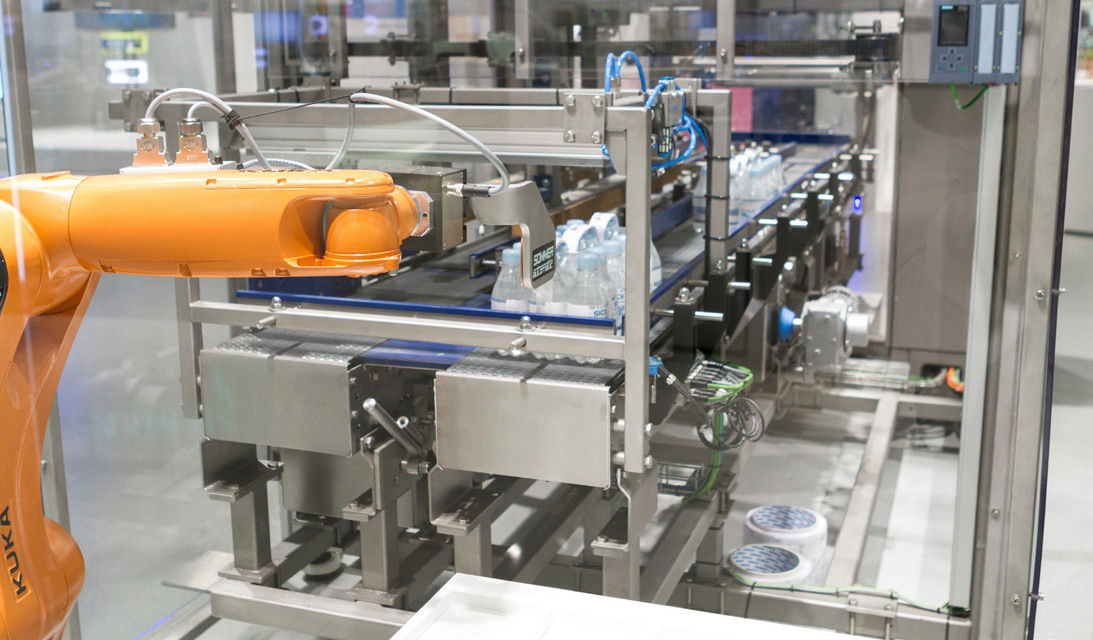
Siemens provides a digital portfolio from initial concept through full production. This includes digital twin technology for simulating packaging lines. (Photo: Siemens)
In what ways can these businesses utilize digitalization and artificial intelligence to enhance operational efficiency and reduce costs?
Digitalization allows manufacturers to move from reactive to proactive operations. It starts with connecting packaging equipment and collecting performance data-understanding downtime, quality losses, and energy consumption in a structured way.
From there, AI can be applied in very targeted, practical ways. For example, predictive maintenance can identify early warning signs of equipment failure before unplanned downtime occurs. AI can also help identify process inefficiencies, reduce scrap, and optimize machine settings to improve throughput and consistency.
What is important is that this is not about adding complexity. It is about giving operators and engineers better insight so they can make faster, more informed decisions. Siemens helps manufacturers implement these capabilities in a scalable way, so they see measurable improvements in productivity, quality, and cost control.
How can a strategic focus on robotics and automation facilitate the optimization of packaging operations?
Robotics and automation provide both consistency and flexibility—two things that are essential in today’s packaging environment.
Robotics can stabilize throughput by performing repetitive tasks like pick-and-place, case packing, and palletizing with high precision and reliability. This improves overall line efficiency while also reducing dependence on manual labor for physically demanding tasks.
Equally important, modem robotic systems enable faster changeovers and greater adaptability. Manufacturers can respond more quickly to new packaging formats, new SKUs, and changing customer requirements.
What steps can companies take to initiate their automation journey on a smaller scale, minimizing initial investments? What are the anticipated long-term advantages of this approach?
The key is to start with a focused, high-impact use case. That might be a bottleneck machine, an end-of-line operation, or a process that experiences frequent downtime.
By connecting that equipment and introducing targeted automation or performance monitoring, companies can quickly demonstrate measurable improvements. This creates immediate ROI while also building a foundation for broader digitalization.
Over time, these incremental improvements compound. Companies reduce downtime, improve throughput, and gain the ability to scale production without proportionally increasing labor or capital costs.
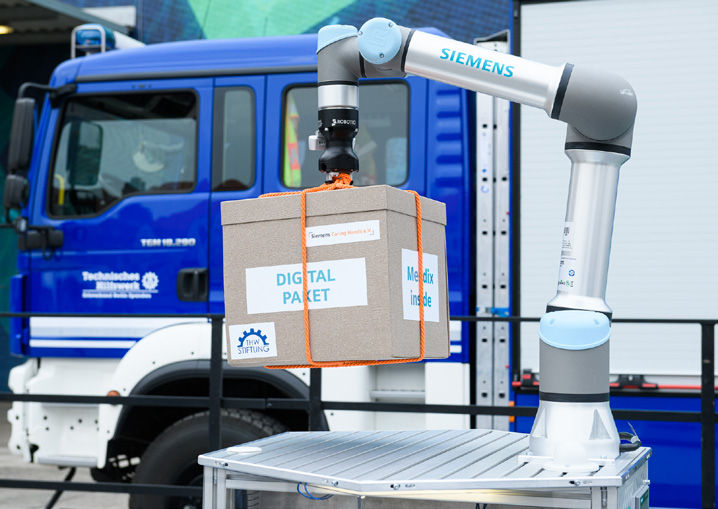
Robotics can stabilize throughput by performing repetitive tasks like pick-and-place, case packing, and palletizing with high precision and reliability. (Photo: Siemens)
What strategies can smaller organizations adopt to emulate the practices of larger OEMs in the packaging industry?
One of the most important strategies is standardization. Larger OEMs rely heavily on standardized designs, reusable engineering assets, and digital simulation to ensure predictable outcomes. SMBs can leverage the same approach by using digital twins to simulate packaging lines before deployment, validating performance virtually, and reducing commissioning risk. This allows smaller teams to operate more efficiently and avoid costly trial-and-error during installation and ramp-up.
How significant is customization in today’s packaging applications, and how is its importance expected to grow in the coming years?
Customization has become a major competitive differentiator. Consumers expect more product variety, more personalization, and more sustainable packaging options. At the same time, regulatory and labeling requirements continue to evolve. This means manufacturers must support shorter production runs and more frequent changeovers without sacrificing efficiency.
Digitalization and automation make this possible. By using standardized automation, recipe driven production, and simulation, manufacturers can adapt quickly and confidently.
This capability will become even more critical in the coming years, as packaging continues to evolve toward greater flexibility and responsiveness.
Why is it crucial for companies, regardless of size, to adopt a comprehensive approach to machinery and automation in 2026?
In today’s environment, performance is determined by how well the entire system works together—not just individual machines. Companies need continuity across design, engineering, commissioning, and operations. Without that integration, inefficiencies and risks increase.
A comprehensive approach allows manufacturers to design smarter, deploy faster, and operate more efficiently. It also reduces lifecycle costs and improves long-term scalability.
What solutions is Siemens providing to tackle the challenges present in the packaging industry?
Siemens provides a comprehensive digital portfolio that supports manufacturers from initial concept through full production. This includes digital twin technology for simulating packaging lines, integrated engineering tools that improve development efficiency, and operational analytics that provide real-time performance insights.
We also enable virtual commissioning, which allows manufacturers to validate automation systems before physical deployment, significantly reducing startup time and risk. Our goal is to help manufacturers improve productivity, reduce downtime, and increase flexibility—while making digital transformation accessible and scalable for organiations of all sizes.
How do you foresee technological advancements transforming the packaging industry over the next five to ten years?
Over the next decade, we will see digital twins, AI, and automation become standard capabilities across packaging operations. Manufacturers will increasingly simulate and optimize production before implementing changes physically. AI will help predict issues, optimize performance, and guide operational decisions in real time. Robotics will become more flexible and easier to deploy, enabling faster adaptation to new packaging requirements. These technologies will enable manufacturers to operate with greater agility, efficiency, and resilience.
The most important message today is that digital transformation does not have to be overwhelming. Companies do not need to do everything at once. The most successful manufacturers start with a clear business objective-reducing downtime, improving throughput, or increasing flexibility—and build from there.