[advertisement]
Revolutions

June 25, 2026


Matthew Jaster


Manufacturing Automation Material Handling Mechatronics Motion Control Robotics Components Bearings Controllers Controls Drive Systems Drives Motor Controls Motors MRO Condition Monitoring Motor Maintenance Predictive Maintenance Revolutions Assembly

Automate First Impressions

A3 Brings Industry Together to Shape the Future of Automation

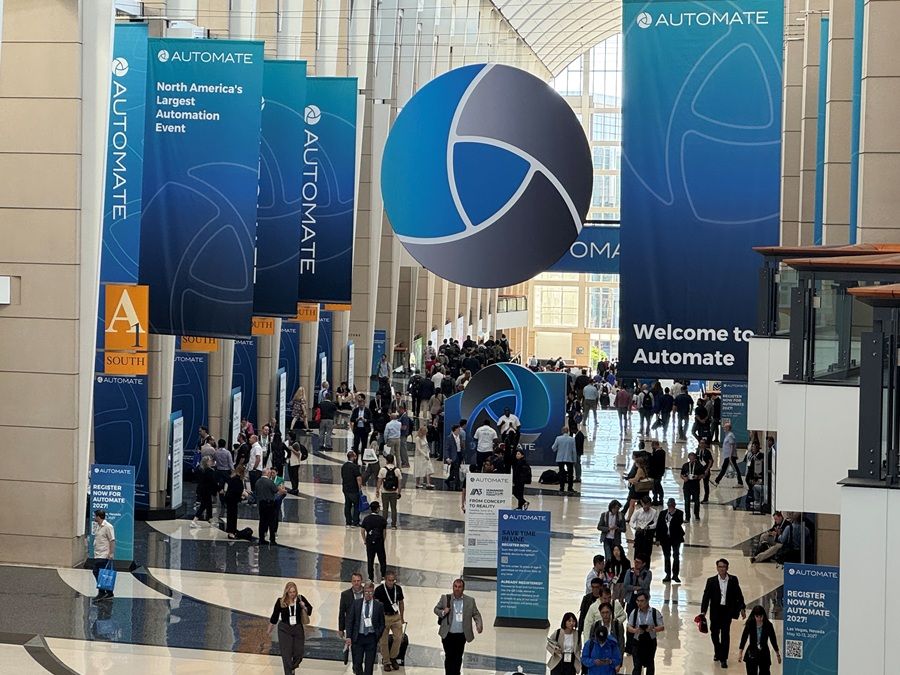
The Automate Show remains one of the trade show circuit’s premier events. Year-over-year technology advances are notable, especially in components serving a wide range of manufacturing sectors. While automotive has long been the foundation of automation and robotics, the market share is gaining momentum in food and beverage, consumer goods, and life sciences applications.

Real world challenges are being solved with unique solutions featuring Physical AI, prescriptive maintenance, motor management, mechatronics, IoT sensors, robotics, control technology and more. Here’s just a hint of the coverage to come on PTE online and in print in the coming weeks:

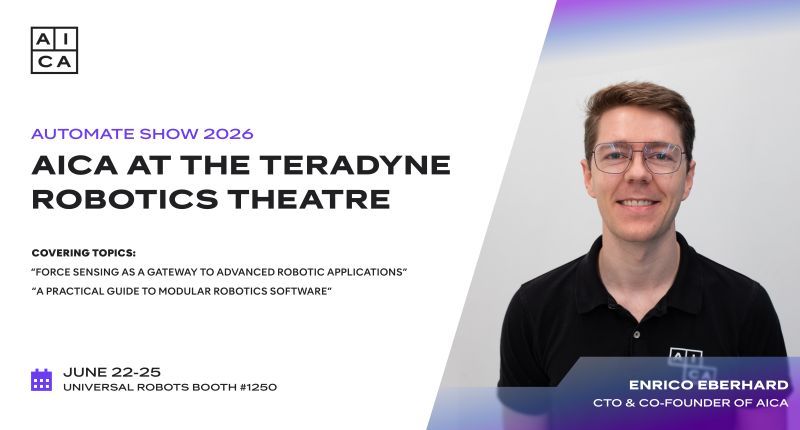
Universal Robots and AICA Turn to Force Sensing

The Universal Robots (Teradyne Robotics) booth featured a UR7e robot executing learned trajectories from human demonstrations that are both adaptive and force-sensing. The robot picked up a metal part and buffed it against a polishing wheel. 

“We’re taking you station to station across the booth to describe the evolution of Physical AI across several unique robotic applications,” said Christopher Savoia, global head of UR+ Ecosystem.

Both the e-Series and UR series robots, for example, have a built-in end of arm force torque sensor that can be leveraged for force sensitive control. In UR terminology, this feature is called force mode and can be used to perform motions along a desired direction or path while being force compliant in certain axes or directions.  According to Enrico Eberhard, CTO and co-founder of AICA, the hardware provided by AICA provides special tools and functionalities unique to UR robots including advancements to force sensing technology.

Share and save:


[advertisement]

This and many other Physical AI examples could be found across the booth at Automate showcasing how operators can automate tasks traditionally difficult for robots. We will be featuring more information on a gear-specific example on the website soon.

With partner AICA, a company providing smart software solutions for advanced robot control, this application enables safe interaction with the environment, making this type of control highly adapted for assembly, surface finishing and teleoperation tasks. 

teradyne.com

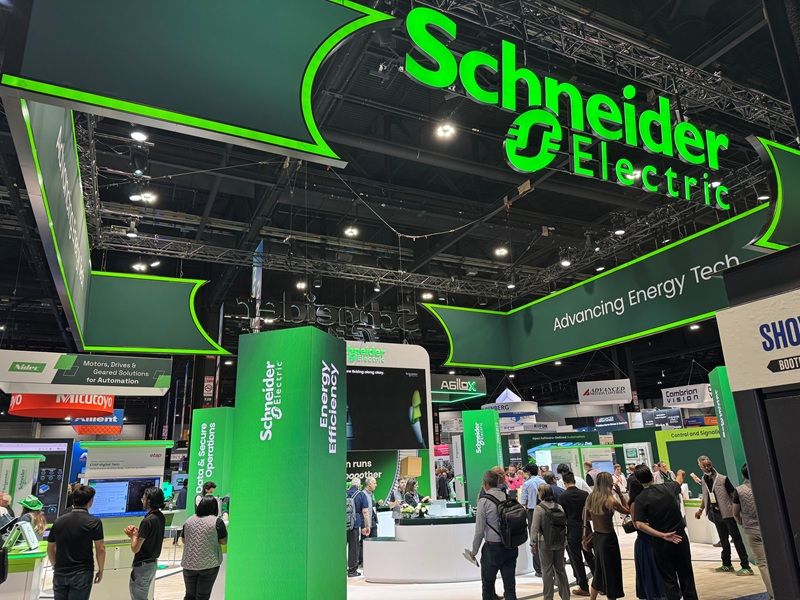
Schneider Electric Provides Automation Strategies for Motor Management

Schneider Electric is calling downtime an architecture problem instead of a maintenance problem and has some interesting stats to back up this argument:

  • 30 percent of maintenance activities require vendor-specific support
  • Nearly one quarter of facilities experience 10 to 24 hours of full production stoppage every month
  • For large manufacturers, unplanned downtime costs around $75,000 per hour
  • Open, software-defined automation reduces that drag by simplifying architectures and removing vendor lock-in.

I spoke with Marta Asack, senior vice president power products, Schneider Electric, on the importance of automation capabilities in motor management as well as how industrial motors management is reshaping operations to data-driven solutions that reduce downtime and boost efficiency. Stay tuned for extended coverage of this in PTE.

se.com

Kassow Robots Extends Cobot Capabilities

[advertisement]

Kassow Robots featured their unique spin on a humanoid robot at Automate with essentially two cobot arms on a small, energy efficient base that will make a huge difference in areas where heavy payloads and longer routes are the norm. The new models will significantly expand the capabilities of 7-axis cobots in production and logistics, according to Dieter Pletscher, global sales manager, Kassow Robots. 

“Where we really make a big difference is the footprint and the compactness of these robotic solutions,” said Pletscher. “The flexibility of the seven axes allows these units to rip around a corner, for example, giving operators a highly flexible and space-saving solution.” 
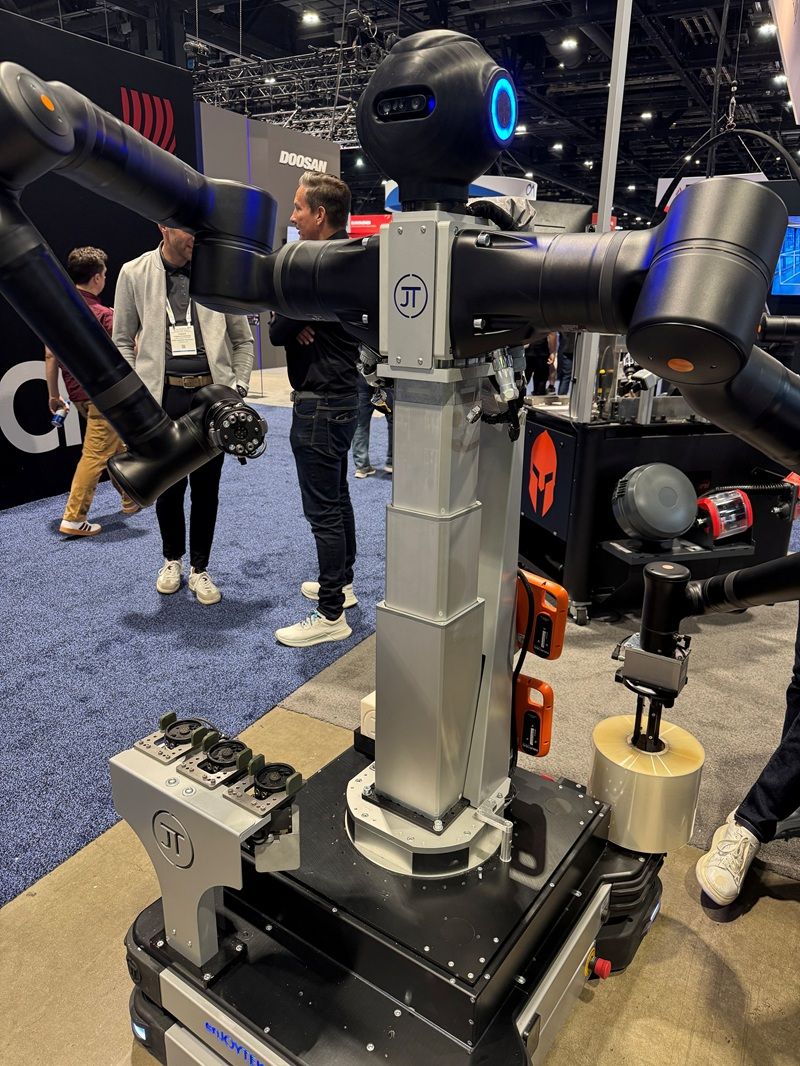
They can be controlled and monitored using a ctrlX app specifically designed from Bosch Rexroth. The app enables real-time integration of the cobots, enabling developers and operators to connect and monitor robots directly from the ctrlX OS environment. 

“This simplifies automation solutions and provides another level of system integration,” said Pletscher. “Bosch Rexroth is already hard at work at the next version of the app with additional features such as real-time communication with the robot, the interfaces and the components.” 

kassowrobots.com

CW Bearing Doubles Down on Precision 
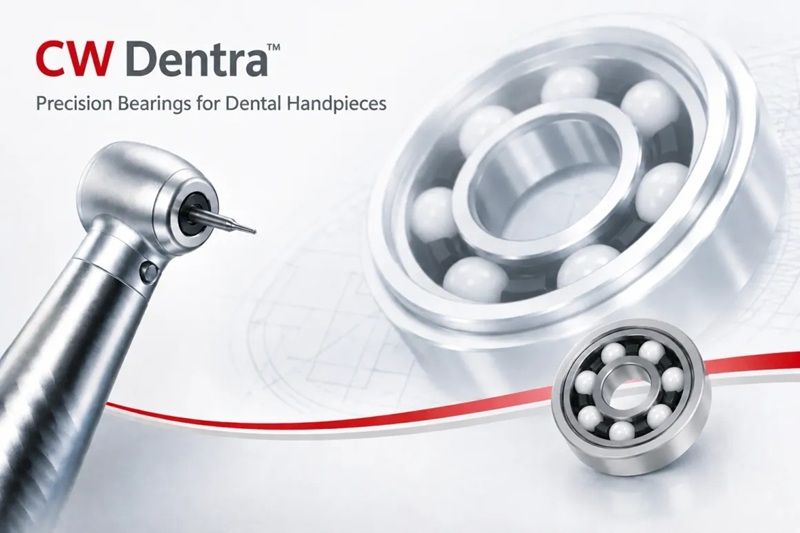
CW Bearing’s product portfolio includes deep groove and angular contact ball bearings, roller bearings, ball screws, and worm shafts, engineered for rotating and linear motion in compact, high-load, and high-speed environments. The company delivers both standard and custom-engineered solutions where accuracy, reliability, efficiency, and long service life are essential. 

At Automate 2026, one highlight at the booth was the micro bearing technology provided by CW Dentra. CW Dentra is an essential part of CW Bearing's range of dental bearings, meticulously designed to enhance the performance of high-speed bearings and electric handpiece bearings used in dental handpieces for both the OEM and repair markets. They feature high-speed and slow-speed dental handpiece bearings and electric handpiece bearings in repair/aftermarket and OEM configurations. 

cwdentra.com

Balluff Sensors Examines Data-Driven Maintenance in 2026

Tom Knauer, product management, Balluff GmbH, examined how engineers and MRO professionals can apply smart manufacturing technologies to foundational approaches developed as far back as WWII. 

Today, manufacturers face labor issues, supply chain challenges, economic uncertainty and the need for reduced energy consumption. Knauer noted that the goal in 2026 is to provide more automation/robotics technology, create flexible factories, utilize smart devices and get the most out of software and AI tools.
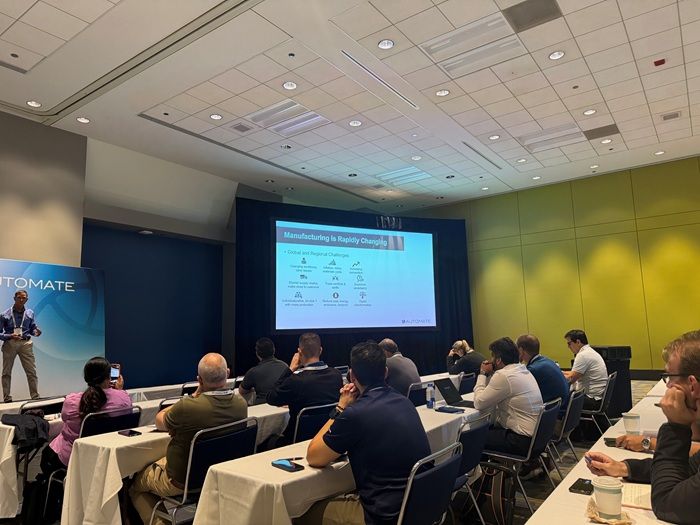
During WWII, the RAF used actual production data to address bottlenecks and optimize personnel/resource scheduling. They also analyzed failure data to implement condition-based monitoring and predictive maintenance strategies. The RAF implemented longer (rather than shorter) maintenance intervals when justified by the data. 

This comparison helped showcase how vital data-driven maintenance is to meet modern manufacturing challenges and provide OEE and Knauer provided a nice outline for MRO teams to start with a small pilot project and grow this over time. We’re moving past condition monitoring and predictive maintenance and heading into a era of prescriptive maintenance, an advanced, data-driven strategy that uses AI and machine learning to predict equipment failures and automatically recommend the exact actions, timing, and resources required to prevent the issues utilizing sensor-based data. 

balluff.com

[advertisement]