[advertisement]

Aerospace Gearboxes

TECHNICAL ARTICLES | 2025-09-22

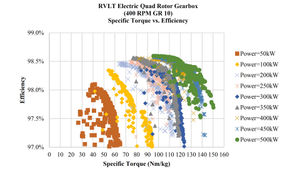
Genetic Optimization of Planetary Gearboxes Based on Analytical Gearing Equations

Future electric and hybrid electric vertical takeoff and landing vehicles will require high-efficiency and lightweight electric motor-driven propulsion systems. One key to designing an optimum electric motor-driven propulsion system, is to have a method for estimating the mass and efficiency of a gearbox for different power levels, motor speeds, and propeller speeds. Understanding the trade space for gearbox mass and efficiency allows the overall optimization of the propulsion system.

INDUSTRY NEWS | 2024-01-12

GKN Aerospace Invests in Additive Fabrication Capabilities

GKN Aerospace has boosted its commitment to sustainable manufacturing, with a £50 million (600 million SEK) investment in additive fabrication technology in Trollhättan, Sweden. GKN Aerospace has been at the forefront of additive fabrication for almost two decades, and has significant research and technology centers in Sweden, the UK and the US.
INDUSTRY NEWS | 2022-11-03

Timken Closes Sale of Aerospace Business to PCX Aerostructures

The Timken Company has closed the sale of its Aerospace Drive Systems (ADS) business to PCX Aerostructures, LLC. Terms were not disclosed. ADS is a supplier of drive system components and sub-assemblies for military and civil rotorcraft applications. ADS revenue is expected to be around $50 million in 2022.


TECHNICAL ARTICLES | 2016-03-01

Gear Design Effects on Performance of High-Speed Helical Geartrains as Used in Aerospace Drive Systems

The performance of high-speed helical geartrains is of particular importance for tiltrotor aircraft drive systems. These drive systems are used to provide speed reduction/torque multiplication from the gas turbine output shaft and provide the necessary offset between these parallel shafts in the aircraft. Four different design configurations have been tested in the NASA Glenn Research Center, High-Speed Helical Geartrain Test Facility. The design configurations included the current aircraft design, current design with isotropic superfinished gear surfaces, double-helical design (inward and outward pumping), increased pitch (finer teeth), and an increased helix angle. All designs were tested at multiple input shaft speeds (up to 15,000 rpm) and applied power (up to 5,000 hp). Also two lubrication, system-related, variables were tested: oil inlet temperature (160–250° F) and lubricating jet pressure (60–80 psig). Experimental data recorded from these tests included power loss of the helical system under study, the temperature increase of the lubricant from inlet to outlet of the drive system and fling-off temperatures (radially and axially). Also, all gear systems were tested with and without shrouds around the gears.
TECHNICAL ARTICLES | 2015-10-01

Space Shuttle Rudder-Speed Brake Actuator

The U.S. Space Shuttle fleet was originally intended to have a life of 100 flights for each vehicle, lasting over a 10-year period, with minimal scheduled maintenance or inspection. The first space shuttle flight was that of the Space Shuttle Columbia (OV-102), launched April 12, 1981. The disaster that destroyed Columbia occurred on its 28th flight, February 1, 2003, nearly 22 years after its first launch.
FEATURE ARTICLES | 2013-04-01

Up in the Air - Aerospace Gears

Volatile aerospace market keeps gear manufacturers guessing.