How HECO keeps critical components one step ahead of failure
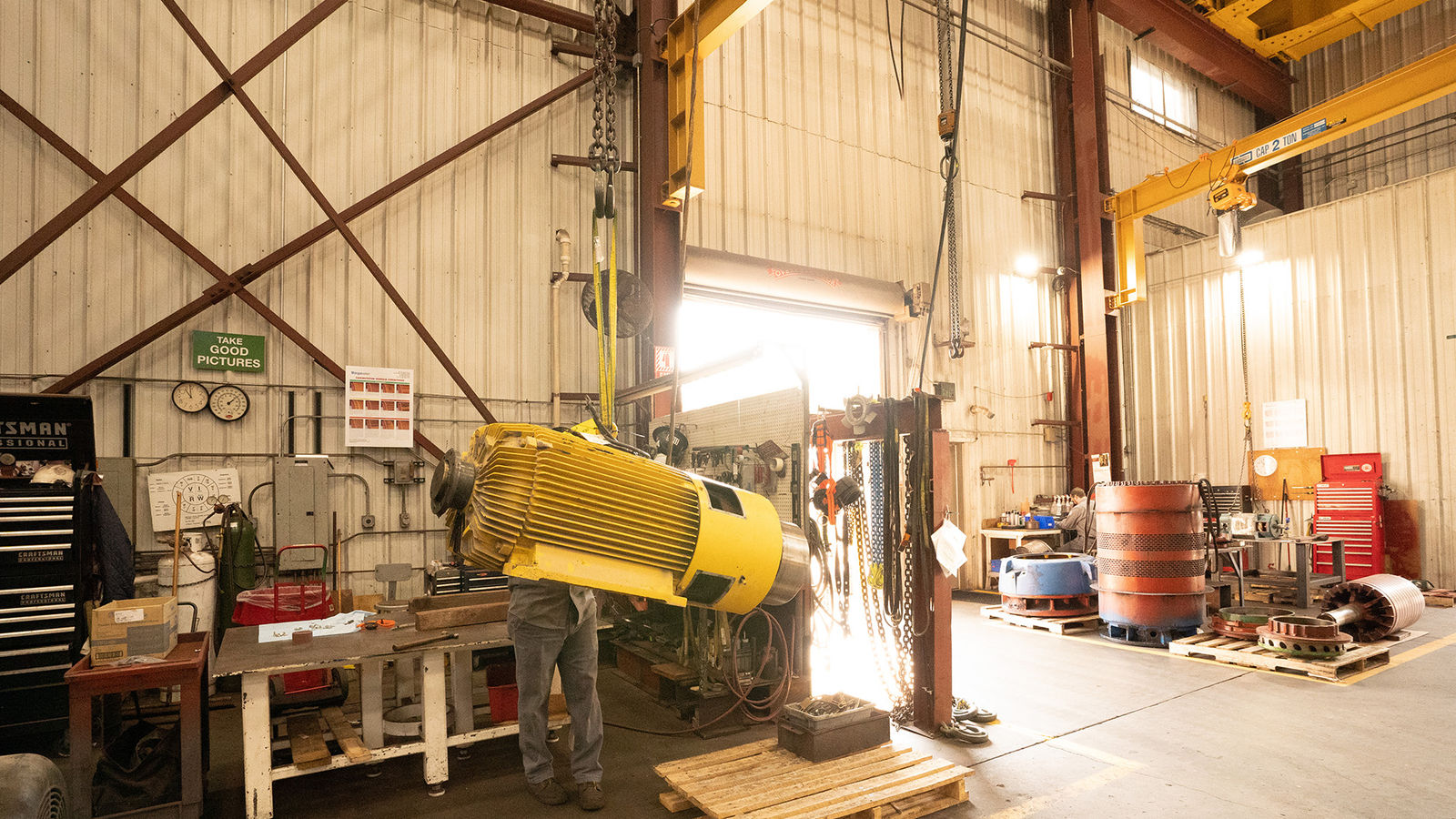
HECO specializes in serving power generation, steel and other metals, chemical processing, pharmaceutical, paper and pulp, wastewater, aggregate, and cement industries. (All images: HECO)
Kalamazoo earned the nickname “Paper City” thanks to a papermaking industry that dominated its economy for more than a century. The industry began in 1866 when the Kalamazoo Paper Co. built the city’s first paper mill. The area was well-suited to papermaking because of abundant water from the Kalamazoo River, good rail access, and proximity to timber resources in northern Michigan.
At its height, Kalamazoo was home to roughly a dozen paper mills and related operations, and papermaking was the city’s dominant employer. While large-scale mill operations are mostly gone, the “Paper City” identity persists in local branding, museums (like the Kalamazoo Valley Museum), and some smaller specialty paper operations that remain.
“When my grandfather started our company, he would go into the paper mills and ask to take a crack at the motor that always had issues. He asked if he could take a shot at fixing it the right way. This is really who we still are today,” said Justin Hatfield, president at HECO. “We’re the organization that wants to provide a long-lasting system solution in a motor repair industry that doesn’t always have the best reputation.”
Family Owned and Experienced
Hatfield’s grandfather, Terrell Hatfield, founded the Hatfield Electric Co. in 1959. He was an electrician’s mate in the Navy, and, once he left the service, he looked for motor repair work in paper mills, building a reputation to assist the local industrial markets by fixing the toughest, most troublesome motors other repair shops could not fix.
“He started the company in his basement, moved to the garage, built a shop, then moved in the 1960s to our headquarters here in Kalamazoo. We are still a family-owned business. My father and his two brothers purchased the company from my grandfather. My father is still my partner, but he is mostly retired at this point and works on a part-time basis.”
With three additions completed between 1968 and 1975, Hatfield Electric became the largest independent electric motor sales and service center in Michigan by both square footage and personnel. The company later changed its name from Hatfield Electric Co. to HECO Inc.
Solving Maintenance and Reliability Challenges
Today, HECO specializes in serving power generation, steel and other metals, chemical processing, pharmaceutical, paper and pulp, wastewater, aggregate and cement industries. They specialize in maximizing the reliability of rotating equipment through a purposeful mix of repair, product sales, predictive, equipment management and field services.
“Since 2013, we started focusing a lot on acquisitions particularly in the predictive maintenance market with the acquisition of a company called Predictive Maintenance Services Inc.,” Hatfield added. “In fact, many of these acquisitions were companies we had worked closely with in the past.”
The company has continued growing through additional acquisitions, including Warwood Armature Repair Co. in West Virginia and Fife-Pearce Electric Co. in Detroit.
Most recently, HECO announced the acquisition of Reliability Concepts LLC, and Alignment Supplies, Inc. The acquisition expands HECO’s vibration analysis, predictive maintenance services, ecommerce-based reliability product sales and practical reliability tools for industrial customers—marking HECO’s fifth acquisition in the predictive maintenance and reliability space since 2013.
The company has become part of HECO’s Predictive Service Group. HECO will continue Reliability Concepts’ existing products while also expanding sales, marketing, training, and support around the Belt Alignment Tool (B.A.T.), Digi-Belt digital belt tension tester, Fin-Loc motor mount, and related offerings.
The acquisition complements HECO’s broader investment in predictive and reliability technologies, including its involvement with Skyler.
Skyler includes partners from the electromechanical industry who share a common vision to leverage disruptive technology to create actionable insights for industrial solutions. One product, known as Rotate, is not just a remote condition-monitoring solution but a comprehensive approach to deliver transformative equipment reliability and performance.
“What’s really interesting is that we used many of these products ourselves here at HECO before we acquired these various technologies,” Hatfield said. “The B.A.T. is an example. Our field service team used it for belt alignment for years, and we thought it was a great fit to add to our portfolio.”
These moves have created a “one-stop shop” for rotating equipment technologies and services, a role that HECO has fully embraced as the organization continues to grow. “We have our service side and our products, and by adding good people we’re strengthening our predictive maintenance team and offering a variety of practical solutions,” he added.
[advertisement]
Adding Tools to the Toolbox
Hatfield’s favorite talking point about the technologies added to HECO’s portfolio is that they are “built by technicians for technicians.”
“Mike Olszewski [founder of Reliability Concepts] is a product development guy at heart. He’s always taking products back to the lab to find out how he can optimize the technology. How can we improve this product’s performance? That is just how his brain works,” Hatfield said.
This motor, pump, gearbox, and repair technology provides HECO with a unique opportunity to support customers, share product knowledge, and enhance maintenance and reliability moving forward.
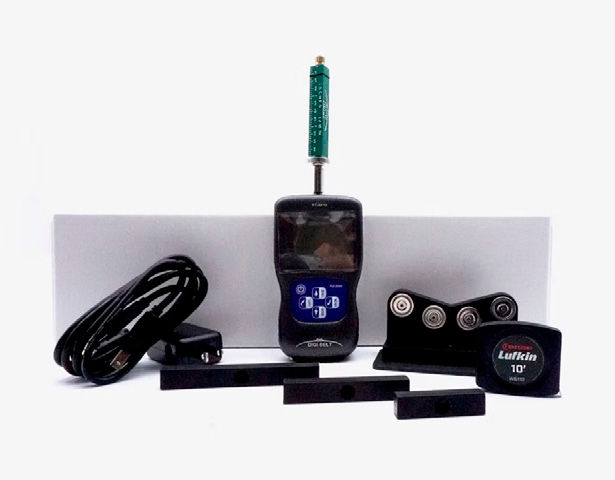
The B.A.T. is a laser-based belt alignment system designed to help maintenance teams quickly and accurately align belt-driven equipment. Misaligned belts and pulleys can contribute to premature belt wear, bearing problems, vibration, energy loss, and unplanned downtime. The B.A.T. helps maintenance and reliability teams identify alignment issues more clearly and make corrections more efficiently in the field. The product line includes laser alignment tools and related kits used for belt and pulley alignment across a wide range of industrial applications.
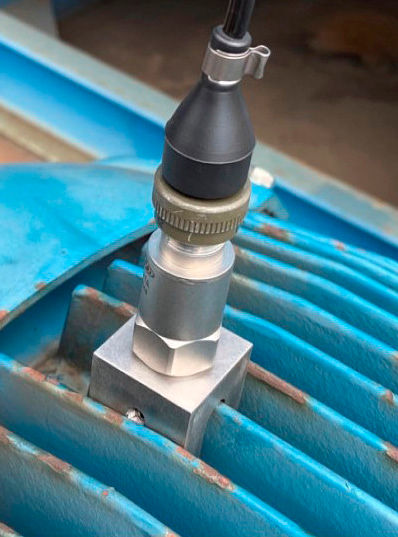
Fin-Loc Multi Mount is a fast, reusable sensor mounting solution for finned motors and machinery.
The Digi-Belt Digital Belt Tension Tester is an industrial digital force-deflection tool designed to ensure precise belt tensioning and extend machine life.
Digi-Belt complements the B.A.T. by helping technicians measure and verify belt tension, giving customers a more complete approach to belt-driven equipment reliability. Additionally, Fin-Loc adds another practical reliability product to the platform, supporting faster and more consistent vibration data collection on equipment with cooling fins.
“I am presenting a keynote address at the upcoming RPM Symposium where we will discuss how to connect all this data together and make a significant impact on MRO. We can diagnose an issue, we can fix it, we can replace the components, and then manage equipment inventory as well,” Hatfield said.
A Data-Driven Future
The end goal with these predictive maintenance acquisitions is to collect all the useful data and provide a technology platform that allows customers to identify all the areas where component failures occur and make the necessary updates.
“Vibration says one thing, ultrasound says another, and your repair vendor says a third thing, and these don’t always line up,” Hatfield said. “Right now, it is up to the maintenance team to diagnose all these issues and figure out what to do. We want all that connected in one spot with everything living in one hub. The only way to safely navigate labor issues in manufacturing today is through technology by making smarter decisions.”
Today’s MRO teams do not have the lengthy resume and work experience of those retired workers. There is not always a 30-year-old employee anymore that knows everything about the component and knows all the reasons why it did or did not work. Hatfield said new employees need a good set of tools and resources to help solve these challenges.
“This is what we’re seeing today—increased adoption of predictive tools across the marketplace. People need assistance, and they want to be successful at their jobs. So, let's get a tool that allows them to do it right from the start,” Hatfield added.
The future of component repair will involve doing more with less manpower. We will see staff shrinking, industrial plants consolidating, and manufacturers turning toward IoT solutions to help carry the load.
“We’re already at a point where we all have analysis paralysis, right?” Hatfield said. “The future will work best when we can bring all this data together to make quick and cohesive decisions on the shop floor.”
He also suggested that AI will continue to provide a blueprint for future MRO technologies.
“Most AI platforms for machinery are only seeing this tiny little portion of condition monitoring data. That is not a big enough picture. So once again, connecting all that data together with an AI layer that knows the repair history of the machine, knows if you have a spare, and knows how to catch a component failure before it happens, this is what the data scientists at Skyler are interested in moving forward.”
At its core, HECO is still a repair shop. Hatfield said motor and belt alignment is often compared to auto repair, where customers may wonder whether they are receiving the best value.
“We want to be as transparent as possible, and that is the best way to run a shop today. Our customers know that. We continue adding tools and product technologies that will strengthen our maintenance strategies moving forward.”
Power Transmission Engineering is THE magazine of mechanical components. PTE is written for engineers and maintenance pros who specify, purchase and use gears, gear drives, bearings, motors, couplings, clutches, lubrication, seals and all other types of mechanical power transmission and motion control components.
*Unsubscribe any time. Full details in our privacy policy









 Power Transmission Engineering is THE magazine of mechanical components. PTE is written for engineers and maintenance pros who specify, purchase and use gears, gear drives, bearings, motors, couplings, clutches, lubrication, seals and all other types of mechanical power transmission and motion control components.