

Sneaky & Supersonic
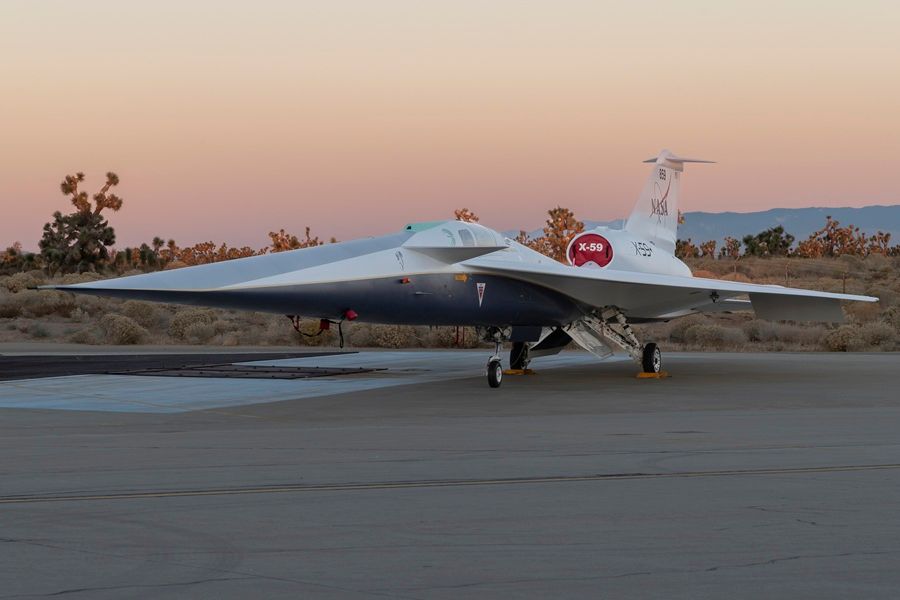
Lockheed Martin Skunk Works, in partnership with NASA, recently completed the first flight of the X-59, a revolutionary, quiet supersonic aircraft designed to pave the way for faster commercial air travel.
The X-59 is a one-of-a-kind supersonic aircraft designed to demonstrate the ability to fly at supersonic speeds while reducing the sonic boom to a gentle thump. In doing so, the X-59 aims to overcome one of the primary barriers to supersonic commercial flight, which is currently restricted over land due to noise concerns.
The successful development and flight testing will inform the establishment of new data-driven acceptable noise thresholds related to supersonic commercial flight over land, paving the way for a new generation of supersonic aircraft that can efficiently and sustainably transport passengers and cargo twice as fast as aircraft today. You read that correctly—twice as fast as aircraft today.
“X-59 is a symbol of American ingenuity. The American spirit knows no bounds. It's part of our DNA – the desire to go farther, faster, and even quieter than anyone has ever gone before. This work sustains America's place as the leader in aviation and has the potential to change the way the public flies,” said Sean Duffy, acting NASA administrator.
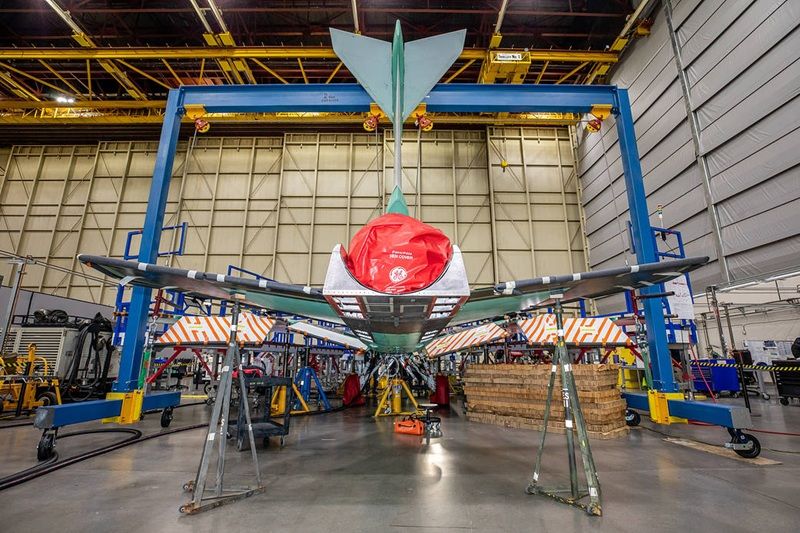
In June, conducted a full-scale “dress rehearsal” to prepare how it will measure the noise generated by the X-59 quiet supersonic research aircraft in a stretch of California’s Mojave Desert.






 Power Transmission Engineering is THE magazine of mechanical components. PTE is written for engineers and maintenance pros who specify, purchase and use gears, gear drives, bearings, motors, couplings, clutches, lubrication, seals and all other types of mechanical power transmission and motion control components.