
Schaeffler Showcases Portfolio for Integrated Energy Management at the 13th Schaeffler Automotive Symposium
An important factor in the successful transformation to e-mobility is a holistic energy concept for electrified vehicles. Efficient energy management constitutes the essential precondition for driving, charging, battery conditioning, thermal control of the interior, and other vehicle-related functions. At the 13th Schaeffler Automotive Symposium, the Motion Technology Company will be demonstrating how the company is not focusing just on driving when it comes to energy management, but on all aspects that improve performance, efficiency, and customer benefits. After all, energy is never lost – it is transformed. The focus is therefore on integrated solutions for electrified vehicles that convert and distribute energy across systems.
“In electromobility, performance is not dependent on a single component, but on how systems interact. Energy management entails systematically viewing the high-voltage architecture, battery, and thermal management as a whole – with tangible benefits for customers, such as costs, efficiency, range, and performance. It is precisely this systems know-how that characterizes our current innovations at Schaeffler,” says Thomas Stierle, CEO E-Mobility at Schaeffler AG.
Performance is the product of the system
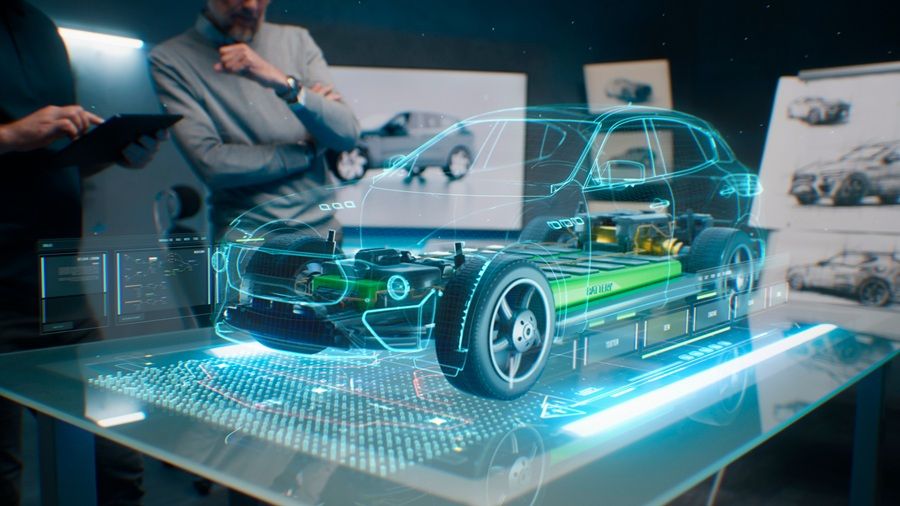
The core energy-management subsystems include the high-voltage powernet for distributing electrical energy, the high-voltage battery as a storage system and energy source, as well as the electric motor for drive and recuperation. In addition, thermal management comes into play, converting electrical energy into thermal energy using components such as the electric compressor, and actively using additional ambient heat. The Motion Technology Company integrates these functions in the Schaeffler Vehicle Control Ecosystem to control the energy flows in the vehicle holistically, efficiently, and sustainably.
“Schaeffler derives its integration strategy from this systems know-how. We consistently envision energy management way beyond just vehicle functions and focus on electric axles and battery-centric architectures. That way, installation space can be utilized efficiently and power density, overall efficiency, and performance specifically further developed,” explains Thomas Stierle.
Components taken to the next level
Targeted innovations at component level open up additional potential: Improved performance can be leveraged without impairing system integration – thus bolstering systems interaction overall.
For next-generation battery systems, the focus is primarily on optimized charging speed, energy density, and safety. Schaeffler therefore develops powerful cooling concepts, intelligent battery monitoring systems, and mechanical structures tailored flexibly to different cell formats and cell chemistries.






 Power Transmission Engineering is THE magazine of mechanical components. PTE is written for engineers and maintenance pros who specify, purchase and use gears, gear drives, bearings, motors, couplings, clutches, lubrication, seals and all other types of mechanical power transmission and motion control components.