

Robotics & Assembly Automation at Hannover Messe 2026
Wandelbots GmbH, based in Dresden, is developing NOVA OS and NOVA Cloud—a software-centric platform for the intuitive automation of industrial robots—that is vendor-neutral and cloud-enabled, with the aim of making robotics smarter, more scalable, and easier to use.
Wandelbots GmbH was founded in Dresden in 2017, stemming from a research idea at the Technical University of Dresden that aimed to make industrial robotics accessible to non-programmers. Among the founders were Christian Piechnick and Georg Püschel, who recognized early on that the main barrier to automation in many cases lay in complex traditional programming.
In the early years, the team developed solutions such as the TracePen: a wireless stylus that allowed users to intuitively demonstrate motion sequences instead of translating them into machine-readable code. This no-code concept quickly became the startup’s hallmark and attracted significant investment—including from Insight Partners, Microsoft, and other top investors.
Wandelbots grew rapidly in terms of personnel and internationally, and partnerships with major robotics and manufacturing companies were established. In the course of this development, the company underwent a strategic shift: away from hardware-centric tools like the TracePen, toward a purely software-based platform vision.
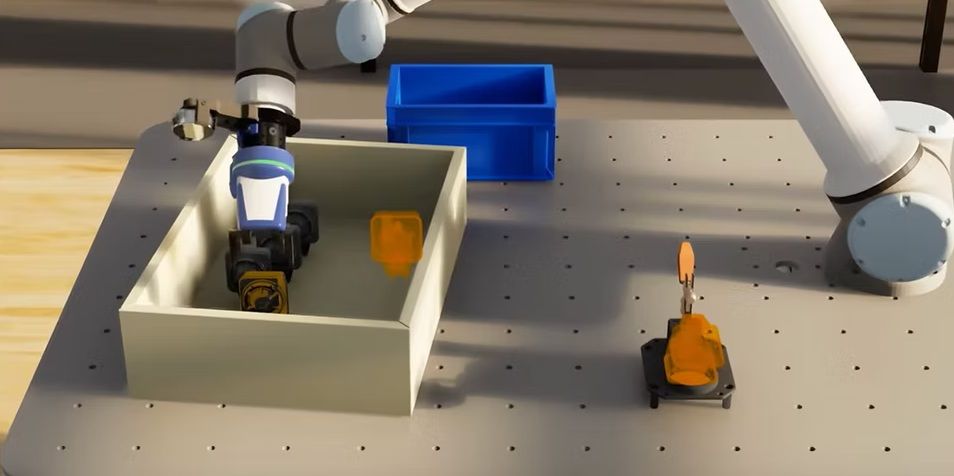
Today, Wandelbots focuses on two central technological pillars: the NOVA Operating System (NOVA OS) and NOVA Cloud. NOVA OS is a vendor-neutral operating system for industrial robotics that connects various robot and automation components via open, modular interfaces. Among other things, it enables the simulation, programming, and real-time control of robots from different brands within a unified software environment—a kind of “Android” or “Windows” for factory floors.
The operating system is cloud-native and can be flexibly deployed on local servers, private clouds, or virtualized environments. Developers and integrators are provided with APIs (such as Python SDKs) and modular tools to implement their own applications or automation workflows. This openness is intended to significantly reduce the complexity of the previously fragmented robotics landscape.






 Power Transmission Engineering is THE magazine of mechanical components. PTE is written for engineers and maintenance pros who specify, purchase and use gears, gear drives, bearings, motors, couplings, clutches, lubrication, seals and all other types of mechanical power transmission and motion control components.