

ONYX Insight Cuts Wind Farm Costs with Ecoblade
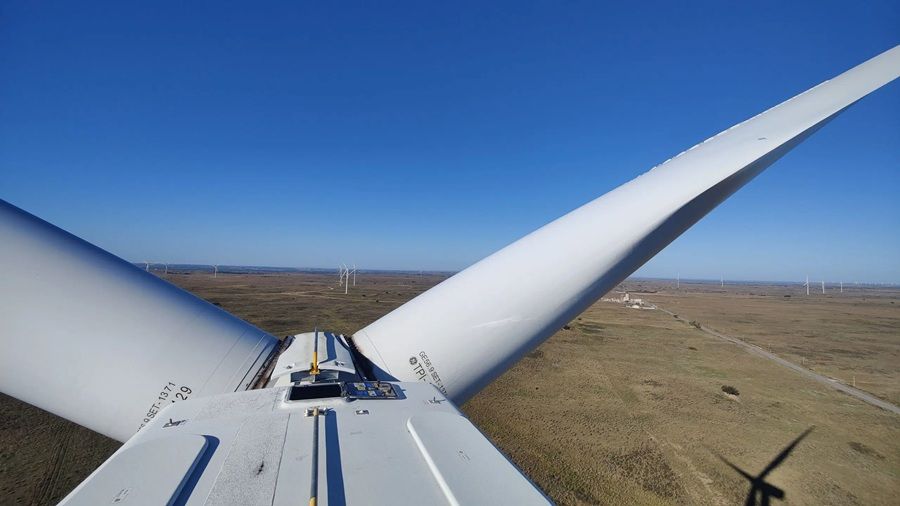
ONYX Insight launched Ecoblade, a new condition monitoring system (CMS) providing continuous visibility and analysis of blade behavior and health, unlocking millions in savings for wind farm owners and operators worldwide in April.
Ecoblade provides continuous monitoring of health from within an individual blade. With two 3-axis accelerometer sensors per blade, it can detect cracks, structural faults, and other damaging behavior early – even short-lived and high-energy events. This information provides owners and operators with vital and early intelligence to address issues weeks or months before they escalate into something potentially catastrophic.
This early detection provides users with 10–100x cost savings – potentially higher for offshore turbines – within a very short period. Some costs are relatively straightforward to calculate, such as a $300k–$500k blade replacement, or a complete turbine replacement, which can exceed $5m. Indirect costs include the impact of business interruption, which can average around $100k per day in lost revenue.
Alexis Grenon, CEO of ONYX Insight, said: “For too long, blade management has been defined by what operators find out too late – damage that’s already progressed beyond the point of targeted repair. Ecoblade changes that fundamentally, giving teams continuous intelligence from inside the blade itself so they can act at the point when intervention is still feasible, targeted, and dramatically less costly.”
Ecoblade is able to detect even minor issues before they are allowed to escalate to potential blade failures, losses, full turbine collapse, or even whole-site shutdowns. By continuously analyzing blade behavior and health, the system gives operators the intelligence to run smarter and better-informed operations that prevent damage by providing insights into blade dynamics and behavior, fatigue and lifetime extension, and blade-specific conditions causing damage.
Ecoblade identifies damage at the point when an up-tower repair is still viable – enabling operators to shift from reactive inspections to predictive maintenance powered by real-time alerts.






 Power Transmission Engineering is THE magazine of mechanical components. PTE is written for engineers and maintenance pros who specify, purchase and use gears, gear drives, bearings, motors, couplings, clutches, lubrication, seals and all other types of mechanical power transmission and motion control components.