
Kollmorgen Looks at the Mechatronic Approach to Designing Motion as a System
When people talk about mechatronics, it’s often framed as something futuristic — the next big leap in automation. In truth, it describes something engineers have been working toward for decades: designing machines where the mechanical, electrical, and control systems work together as one. Arne Linder, product manager, drives at Kollmorgen, explores the benefits and key aspects of applying a mechatronic approach to designing motion systems.
A mechatronic approach looks at the entire system as a single organism where the motor, drive, controller, and software are not just compatible, but interconnected. Correctly applied to today’s motion systems, this concept can deliver greater precision, faster commissioning, and easier long-term support.
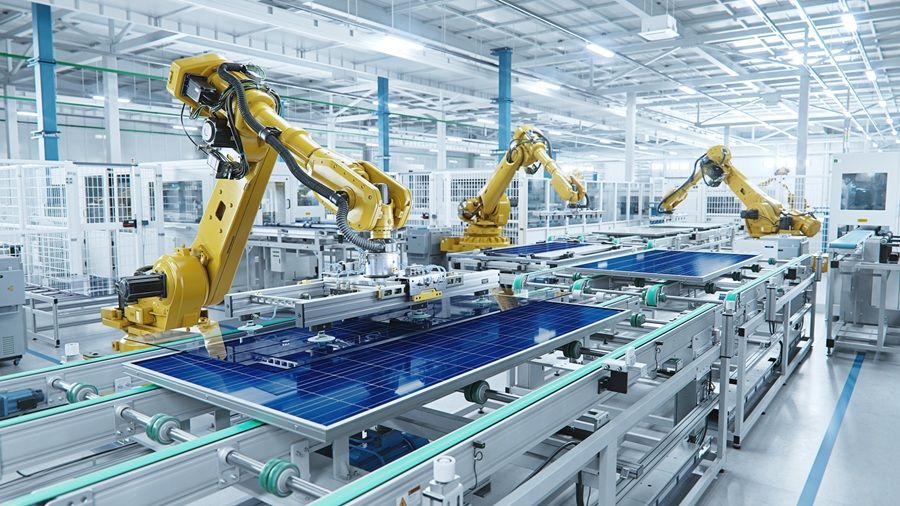
You can see this in how advanced machines are now designed and developed. Rather than treating electrical, mechanical, and control engineering as separate stages, they’re part of one continuous process: from virtual design and simulation to physical commissioning and maintenance. Each discipline informs the others, and the result is a machine that moves, and evolves, as a unified system.
For a long time, setting up a servo system meant – rather ironically, for automation projects – doing everything by hand. Engineers had to enter the motor parameters into the drive manually, refer to look-up tables, and hope nothing was mistyped. Small errors in those numbers could lead to poor performance, instability, or unexpected behavior. Even something as minor as a misplaced decimal point could have catastrophic consequences and potentially even cause a motor to damage itself or rapidly overheat.
Modern systems, such as Kollmorgen’s own SFD-M feedback device, can take much of that risk away. Today, a properly designed setup can allow the motor and drive to automatically identify and configure each other, loading the correct parameters for torque, current, and speed control without the needs for slow (and potentially incorrect) manual entry. That not only saves time but ensures that the system performs as designed from the first test move.
This is what we think of as the first stage of mechatronic integration: getting the key elements to cooperate automatically. It may sound simple, but it represents a big step forward for commissioning and consistency. The engineer can focus less on configuration and more on the dynamics of the machine itself.






 Power Transmission Engineering is THE magazine of mechanical components. PTE is written for engineers and maintenance pros who specify, purchase and use gears, gear drives, bearings, motors, couplings, clutches, lubrication, seals and all other types of mechanical power transmission and motion control components.