As industries undergo rapid transformation, driven by digitalization, sustainability demands, and evolving customer expectations, SKF Ventures will serve as a platform to identify and develop new opportunities to grow and create future business. By engaging with startups, technology partners, and external innovators, SKF Ventures will bring new perspectives and capabilities into SKF’s ecosystem.
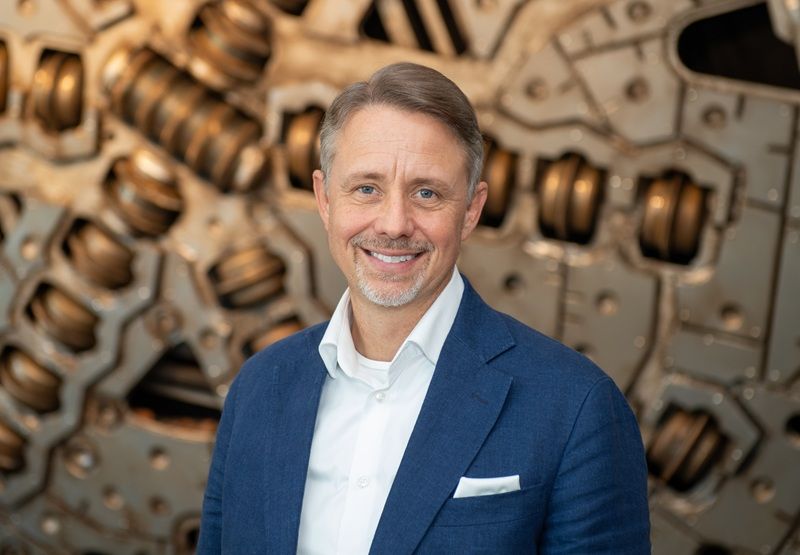
“SKF Ventures is about looking beyond today’s challenges and identifying the technologies and business models that will shape the future of our industry. It serves as a platform for testing, refining, and scaling innovative ideas into real-world solutions that deliver value for our customers and enhance our long-term competitiveness. This is how we stay relevant, resilient, and ready for the future,” says Mikael Krook, director, SKF Ventures.
SKF Ventures will operate across three key areas: scanning for emerging technologies, exploring and validating new ideas through open innovation, and building ventures that can scale into sustainable businesses. This approach complements SKF’s internal R&D and strengthens its ability to respond to fast-changing market dynamics.
The initiative is expected to deliver tangible outcomes, including faster innovation cycles, early access to breakthrough technologies, and the creation of new business models. Many of the ventures will focus on areas such as energy efficiency, circularity, and digital solutions which are key priorities for SKF and its customers.
SKF Ventures will also strengthen the company’s position within the broader innovation ecosystem, enabling it to partner more effectively with the startup and technology community. This will support SKF’s ambition to lead in industrial transformation and deliver long-term value through innovation.
skf.com
Bearing Megatrends with Schaeffler
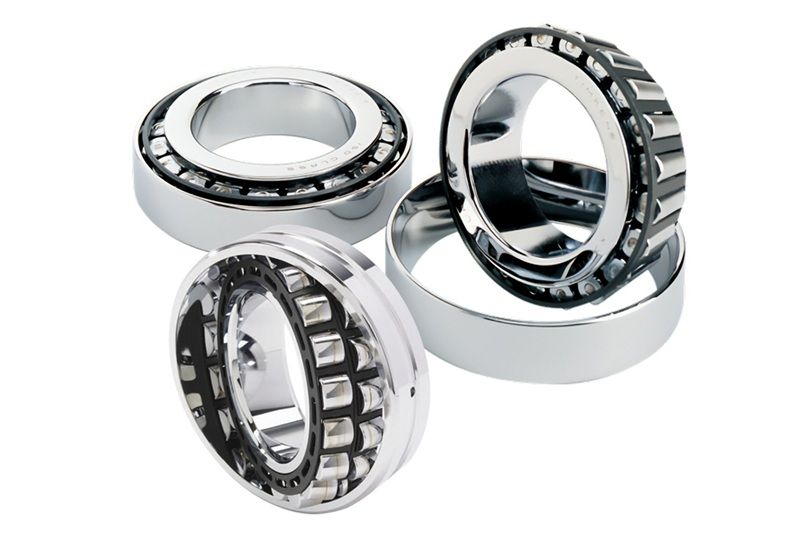
For decades, Schaeffler has been developing innovative precision rolling bearings and drive systems for leading machine tool manufacturers. Key components include linear guidance systems and linear motors for main axes, precision bearings for main spindles, as well as rotary table bearings and torque motors for rotary tables, milling heads, and portal milling machines. The industry’s megatrends – automation and multi-process machining – are having a direct impact on the development of new machine axes, and therefore on the rolling bearings and drive systems themselves.
Christian Straub, manager sector development industrial automation, explains: “For machine tool automation, we are now developing a dedicated class of rotary table bearings – streamlined to the essentials, with low-maintenance operation, tailored stiffness, and designed for lower speeds.”
For spindle bearings and rotary tables in multi-process machines, however, the requirements are quite the opposite. “Here, higher speeds and stiffness are required, which we achieve with high-end components such as spindle bearings made of the high-performance rolling bearing steel Vacrodur, and YRTS series bearings for turn-milling tables,” adds Straub.
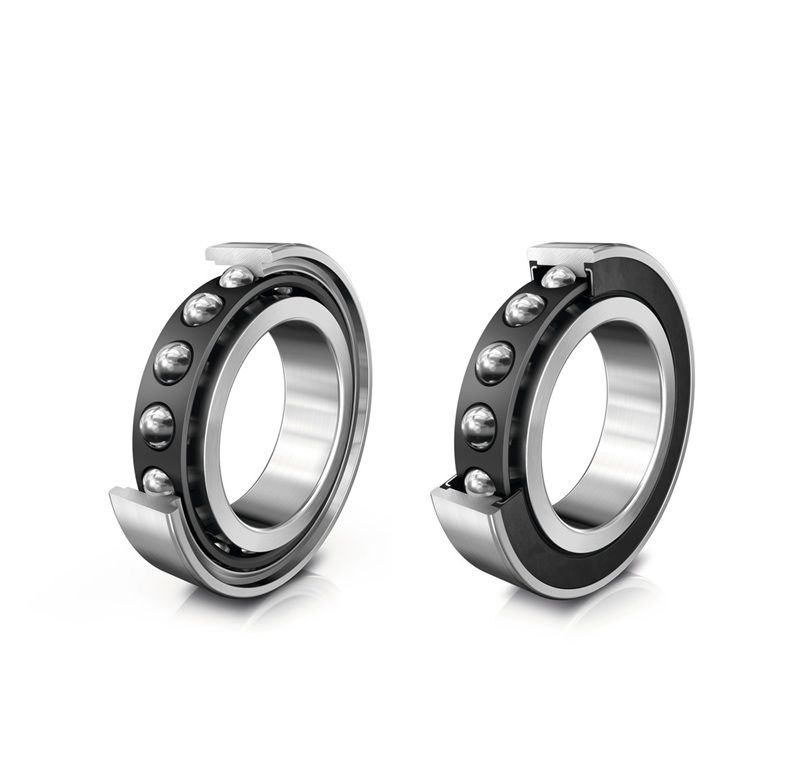
Schaeffler recently showcased these new precision angular contact ball bearings for driven tools at EMO in Hannover. The PTB (Precision Tool Bearings) series has been newly developed as a cost-efficient solution for both original equipment and the reconditioning of driven tools.
In addition to the double-row screw drive bearings ZKLN-HC and ZKLF-HC (with flange mounting), Schaeffler’s portfolio now also includes the three-row DKLFA screw drive bearings with ceramic rolling elements. These hybrid bearings provide a reliable solution to prevent false brinelling on the raceways. This damage pattern typically occurs in short-stroke applications, where small oscillating movements displace the lubricant from the rolling contact.
In the linear technology sector, Schaeffler is expanding its range of monorail guidance systems to include the newly developed KLLT series of four-row linear recirculating ball bearing and guideway assemblies, designed specifically for applications in production machinery peripherals and for lighter handling systems.
The defining feature of this series is its X-arrangement, which allows the assemblies to mate more effectively with substructures that have minor shape errors, without generating significant constraining forces.
For axes outside the machining area, such as pallet changers, Schaeffler is showcasing the new YRTA rotary table bearing series. Bearings in this series have been designed specifically for the requirements of highly rigid “automation axes.” A particularly innovative option is the YRTAG design, in which a customer-specific gear toothing is integrated into the inner ring of the bearing. This enables manufacturers to save valuable installation space, reduce weight, and, above all, shorten assembly time.
schaeffler.us
Sustainable Supply Chains
There continues to be a push toward corporate social responsibility and the integration of sustainable technologies in bearing manufacturing. Machines need to run faster, longer and safer. This is where low-friction, limited lubrication, lightweighting, remanufacturing and recycled materials can play a significant role in the future of manufacturing. Companies that collaborate with suppliers providing recycled materials and encouraging responsible material sources will be better prepared for the changes facing manufacturers tomorrow.