[advertisement]
Revolutions

February 12, 2026


Matthew Jaster


Automation Motion Control Robotics Components Drive Systems Drives Gearmotors Gears Motors Sensors Feature Articles Optimization Simulation IIoT Software Revolutions

From Assembly Lines to Algorithms

A Discussion on AI and Digital Transformation with Siemens Digital Industries Software

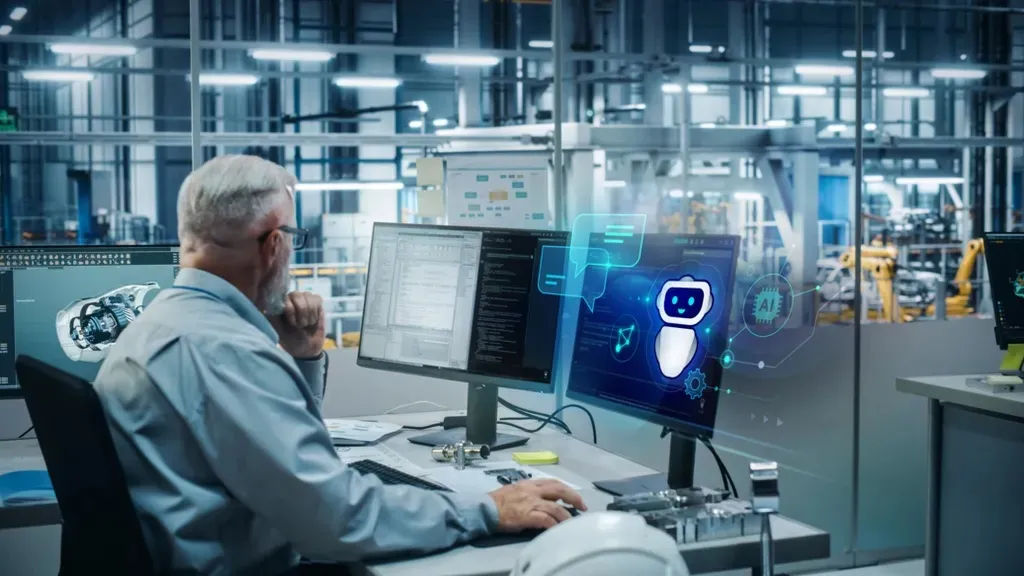
Siemens Digital Industries Software is in the business of solving shop floor challenges across manufacturing. From automotive to packaging, industrial machining to aerospace, the company builds systems with AI and digital tools to enhance efficiency, sustainability and quality control. Late last year, I had the opportunity to speak with Raul Garg, vice president industrial machinery, Siemens Digital Industries Software at the Motion + Power Technology Expo in Detroit. Our conversation began with the role AI will play in industrial machining, particularly for small to medium-sized manufacturers.

“Re-industrialization is happening globally, and, in its context, we’ll see a greater emphasis on AI and digital transformation in the future. AI is going to enhance capabilities to improve manufacturing processes, bringing more efficiency and flexibility to the shop floor,” said Garg. “The backbone of these efforts is going to be digital transformation. You need to have the digital capabilities to leverage the value of AI. Given all the investments that are being committed by many large corporations for manufacturing in the U.S.—potentially around $1 .8 trillion based on our research—you’re going to need to find different and unique ways to support these markets.”

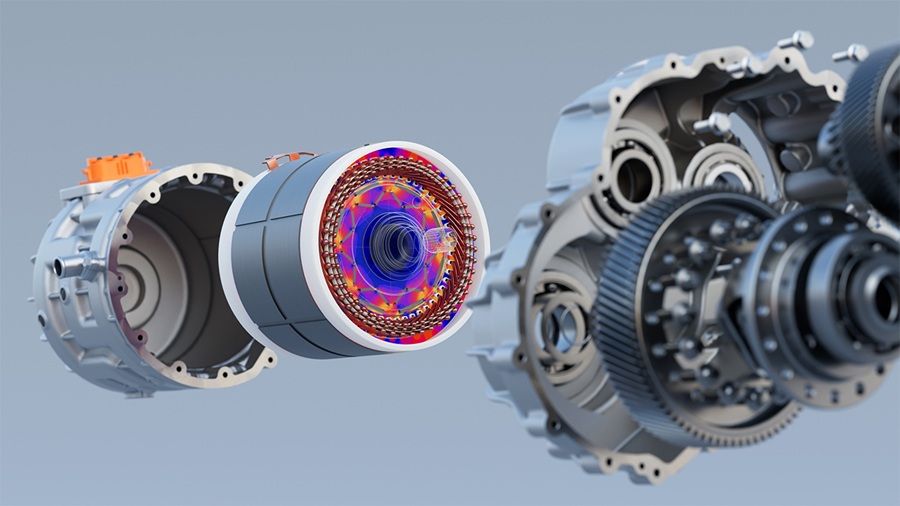
In 2025, Siemens completed the acquisition of Altair Engineering Inc. With this acquisition, Siemens extends its leadership in simulation and industrial AI by adding new capabilities in mechanical and electromagnetic simulation, high-performance computing (HPC), data science and AI. The addition of the Altair team will further enhance the most comprehensive Digital Twin and make simulation more accessible, so companies of any size can bring complex products to market faster.

Integrating Altair’s capabilities in the areas of simulation, HPC, data science and AI enhance the ability of Siemens to drive more efficient and sustainable products and processes. Now, all Siemens customers, from engineers to generalists, will have access to new simulation expertise, can optimize their high-performance computing processes, create new AI tools and perform data analytics to help accelerate innovation and digital transformation for companies of all sizes.

One area already undergoing significant change is machining capabilities. Garg said engineers and machinists want to know their machines are running without interruption and producing parts with maximum efficiency. This follows an industry-wide shift toward offering machines-as-a-service versus selling machines outright.

Siemens philosophy in this area is balancing revenue growth, workforce optimization and sustainability through machine-as-a-service strategies. Creating a digital twin of the customer’s service operations, for example, could unlock valuable insights into equipment performance and parts inventory.

Share and save:


[advertisement]

“This is quickly becoming a valuable asset for smaller companies,” Garg said. “You don't have to go through a significant capital investment. If you just offer the machine-as-a-service, you are buying it on a per-unit basis, on a per-product basis. So, it becomes cost of operations versus a capital expenditure. It really helps from a financial perspective, but to me, more importantly, it guarantees machine performance and throughput.

At a trade show built around gears, bearings and drives, we discussed how software tools are being optimized to serve these industrial applications.

Garg said when you look at gear and mechanical power transmission applications software can add significant value with the ability to monitor how equipment is performing and how quality can be enhanced.

“I see technical transformation capabilities coming in using AI. For example, when you're looking at a gearmotor you can monitor how it performs and detect any slight changes or anomalies using sensors. If you detect an issue fast enough you can proactively plan any upgrades or maintenance/service issues long before it becomes a real problem,” he added. 

“Siemens offers our own products and technologies to monitor components and leverage industrial aid devices utilizing the executable digital twin,” Garg said. 

In 2025, Siemens and several leading machine tool manufacturers – including Grob, Trumpf, Chiron, Renishaw, and Heller, along with the Machine Tool Laboratory (WZL) of RWTH Aachen and the Voith Group – formed an alliance that provides for a systematic exchange of engineering, manufacturing and machine data that will be used to develop new generative AI applications for industrial environments. 

This collaboration marks a decisive step toward the realization of an industry-specific AI model, the Siemens Industrial Foundation Model. Siemens first presented its vision for this model at Hannover Messe 2025.

“We recognize there is a significant dependency on data, right? For AI to be effective, you need quality data. And the data that's generated by different machine providers have different formats, different sources. You have many distinct components working in different machines. Our goal is to work in a more seamless manner where all these machines can collaborate and share real time data. This is where an alliance like this can be very valuable.”

Siemens long-term strategy includes bringing more companies on board – even beyond the machine tool industry – to leverage industrial AI across different industries.

[advertisement]

The industrial metaverse is the concept of a digital world to mirror and simulate real machines and factories, buildings and cities, grids and transportation systems. By seamlessly integrating technologies like cloud and edge computing, industrial AI and digital twins, the industrial metaverse can optimize processes and drive sustainable manufacturing practices.

Siemens has partnered with NVIDIA by bringing industrial automation capabilities into NVIDIA's Omniverse to tie this concept together. By using the Omniverse, users will be able to run through multiple simulations very quickly in a high computing power environment. Tasks that used to take days to execute can be completed in seconds.

“The industrial metaverse will help tremendously in being able to predict the efficiency and longevity of equipment. We are already seeing great examples of this using synthetic data. This is where we can really see how a motor or gear performs in different environmental conditions. We can see if dust is an issue or the heat is changing in the system more than we’d like,” Garg said. 

The influence of AI on the shop floor will become increasingly prevalent as fully automated systems communicate from one application to another.

“Everything from quality measurements to scheduling tasks to production efficiencies. We will no longer need to handoff a task to another department or another engineer. These AI systems will be able to make decisions on your behalf,” Garg said. “I think this is really going to transform how we conduct business in the future.”

sw.siemens.com


[advertisement]