The most efficient machine—according to Radley—is the one that is running at top capacity as much of the time as possible. Avoiding unnecessary machine shutdowns when safety cages are opened or light curtains breached, functionally safe systems can continue operating with specific protocols that provide operator safety. This can be particularly important when considering complex machines where a shutdown can entail significant time to reset and restart the machine.
Certifications and risk assessments
Any customer looking to take advantage of the previously discussed benefits of functional safety when implementing their motion system upgrade will need to perform a risk assessment.
“Risk assessment consists of a series of steps used to examine the hazards associated with machines. It consists of two stages, risk analysis and risk evaluation. The analysis and evaluation are used to make a risk estimation which is carried out for each identified hazard and hazardous situation. With this we can determine the required Safety Integrity Level (SIL) or Performance Level (PL) for the machine. This guides us as to the measures we will take, and the equipment we will use, to meet our required safety/performance level,” Radley said.
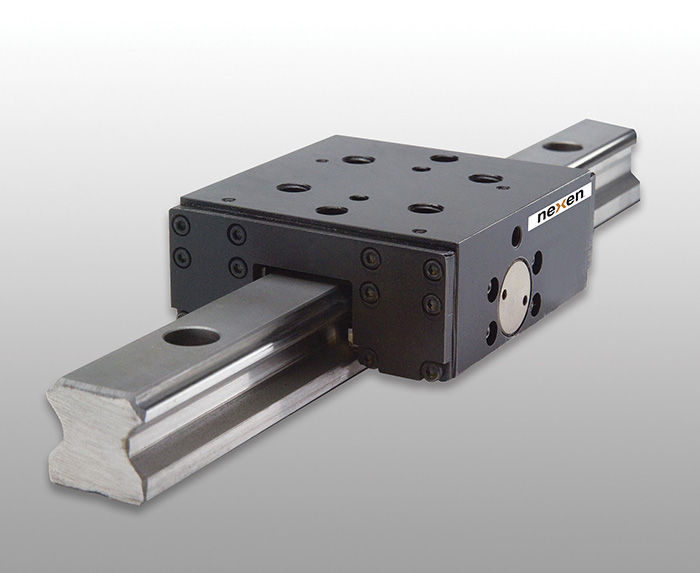
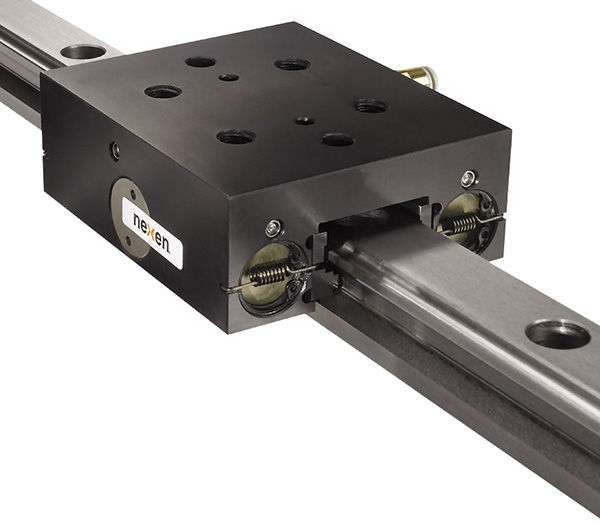
Safety certifications, like the Functional Safety Certification Nexen received for its Nexsafe products, give an increased level of confidence to the machine builder (courtesy of Nexen).
Additionally, safety certifications make the task of the risk assessment easier. Knowing that a product that will be part of your machine already meets a defined and certified level (such as SIL2 or PLd for example) makes the assessment teams task faster and more efficient while also improving confidence in the final determination. Having a stated SIL or PL for a given product is the data portion that helps with the risk assessment, however, it is the certification that tells the assessment team that the provided SIL or PL has been reviewed by a competent authority; it is not just the judgement of the supplier, Radley added.
Peace of mind also comes into play for machine builders.
“Safety certifications, like the Functional Safety Certification Nexen received for its Nexsafe products, give an increased level of confidence to the machine builder. They know that the product is held to design, quality, and performance requirements specified by industry standards, and verified by an international recognized certification body. Nexsafe products are evaluated and confirmed by 3rd parted evaluation to meet all requirements for performance levels a thru e and categories B thru 4 per ISO 13849-1,” Hillukka said.
Partnering on functional safety products and equipment
Beyond the obvious ability to supply the motion control products the machine builder needs, there are important considerations in the certification of the products and the equipment partners processes.
For the products, Radley said that the certifications need to be made by a competent, independent, third party such as TÜV.
“It is not enough that the equipment partner judges that they have designed the product to meet the requirement, the machine builder needs and wants that third party certification. It is also important that the equipment partner owns the safety certificate. It is less desirable to have a situation where the product is coming from another supplier and being labeled by the equipment partner. The lack of ownership of the safety certificate can create problems if the machine builder needs anything other than the standard product as changes may not be possible except by the safety certificate owner,” Radley said.
For the processes such as how the product is designed, built, and lifecycle managed Radley said there is also a need for certification. The equipment partner should have certification to IEC 61508-1 to 7, again from a competent, independent, third party such as TÜV. This is important for areas such as traceability for the products. This can be vital in case of an incident or a product recall.
“These certification requirements and processes are resource intensive, time consuming and expensive for equipment partners. Some equipment partners may want to gloss over their unwillingness or inability to make the investment. It is incumbent on the machine builder to ask the hard questions of their candidate partners- show me the certifications for the products, I need to confirm you are the certificate owner, show me your process certification, I’d like to review your process certification. In effect, asking ‘Are you certified by a competent, independent, third party?’ and I want the proof because I’m going to use that in my risk assessment process,” Radley continued.
Automation & the Factory of the Future
Demand for new safety functionality in response to the need for greater automation that maintains or enhances operator safety will increase in the coming years.
“The more we want collaborative work environments with machines and humans directly interacting the more we will demand those work environments be safe and efficient,” Radley said.
Improvements in electronics, and software architecture coupled with reductions in their costs will push more and more functionality to be integrated in the elements the machine must have, such as the motion control, rather than having to add additional hardware to the system.
“When we do need to expand beyond the core hardware the desire will be for standardized network-based solutions such as FailSafe over EtherCAT (FSoE) rather than extensive hardwired approaches, saving time, effort, and cost while making systems more reliable, easier to maintain, and easier to troubleshoot,” Radley said.
Kollmorgen offers a variety of control, drive and motor solutions that support functional safety from simple hardwired Safe Torque Off (STO) to complex implementations that need to bring together more advanced safety functions like Safe Stop, Safe Brake Control and even Safe Dynamic Braking. “These can require careful planning with our OEM machine builders to ensure that our portion works seamlessly with other hardware on the machine. When implementing functions like Safe Limited Speed or Safe Direction it’s important to work closely with these customers to know what their objective is for the function in relation to the machine operation,” he added.
Nexen’s approach has been to be aware how functional safety standards and industry requirements are changing. “Based on these changes over the past few years, Nexen has shifted our focus to provide more safety focused components for machine builders. Nexen is committed to supporting our Nexsafe Functional Safety Certified components and furthering this portfolio of products to support applications outside of the scope of the rail brake, rod lock, and servo brake applications,” said Hillukka.
In the future, sensor feedback requirements for safety and for Industry 4.0 will become the standard. “Especially as factories become more automated,” said Hillukka. “The need for monitoring and diagnosing problems thru internal machine trouble shooting will keep increasing in value.”
All of these safety capabilities come back to making informative design decisions from the very beginning of a machine build.
“It is important to take a holistic view of functional safety beyond the products themselves,” Radley added. “The certification for the products, along with the certification for the design, manufacture, and lifecycle management tests the strength of an organization and builds the process muscle required for the customer’s success.”
www.isa.com
www.kollmorgen.com
www.nexengroup.com