Helix delivers high-performance electric powertrains to a variety of industrial markets
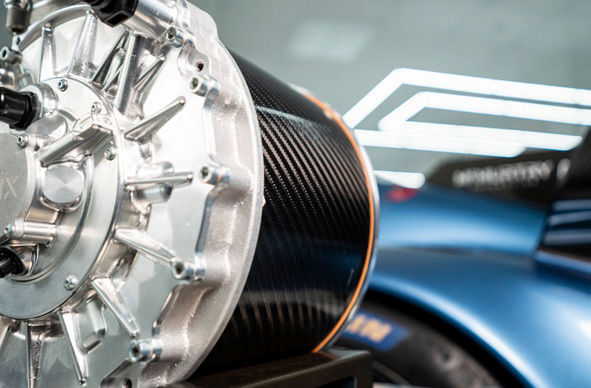
Helix worked on e-drive systems including areas like integration, thermal management and performance optimization. (All Images: Helix)
Helix develops motors, inverters, and e-powertrains for a diverse range of industries including automotive, marine, and aerospace. The company’s expertise, founded in decades of elite engineering experience, provides a diverse range of engineering technologies from a single-source.
PTE recently caught up with Simon Mead, a member of the technical and business development team at Helix, to discuss the development and manufacturing ingenuity the company brings to the electrification market.
Ambitious Growth
The original company, Integral Powertrain Ltd., was founded in 1999 by former colleagues within the Cosworth Technology business. By 2005, the company had developed two compact permanent magnet motors and established an e-drive systems group. In 2022, the company launched an ambitious growth plan supporting the growing trend of electrification across multiple industrial sectors. The company rebranded as Helix that same year.
Mead has been very enthusiastic about the path various organizations are taking to develop electrification solutions today.
“I lead teams through all aspects of solution engineering—from initial proposals through to design, validation, and production—ensuring every product meets its technical specifications and operational requirements,” Mead said. “I provide technical leadership across both motor and inverter projects, overseeing planning, execution, and critical decision-making. My role includes resolving technical challenges that may impact delivery, ensuring engineering excellence at every stage.”
Mead’s technical background is rooted in powertrain engineering, vehicle calibration, and control systems. He holds a First-Class BEng (Hons) from the University of Hertfordshire and started his career at Millbrook Proving Ground.
“Following a successful industrial placement with them, Millbrook sponsored me through my final year, and I returned to join their engine calibration team working on alternative fuel vehicles. This role gave me broad exposure to a variety of vehicle platforms and customers, laying a strong technical foundation and a ‘can-do’ mindset that I’ve carried throughout my career,” Mead added.
Mead then joined Visteon as part of the Systems Implementation team, where he was involved in developing and validating ECU core software functions. This included extensive bench testing and environmental validation work—from hot and cold testing to international field trips—ensuring robust performance in all operating conditions.
“In 2008, I joined Helix (then named Integral Powertrain) as a senior engineer, focusing on global vehicle and engine calibration projects for OEMs. I later led the testing and development of SuperGen, our electro-mechanical boosting system. This involved customer development support, climatic testing, and establishing an in-house testing infrastructure. I also built and led a team of development engineers to scale our capabilities,” Mead said.
As Helix grew, Mead became one of the first engineering managers, building a development department of 30 engineers covering electromechanical design, development testing, and running the emissions test facility. After successfully developing the team and handing over leadership to his successor, he stepped into the role of chief engineer. Today, he continues to lead multiple customer programs and support the development of e-drive systems.
Electric Hypercars
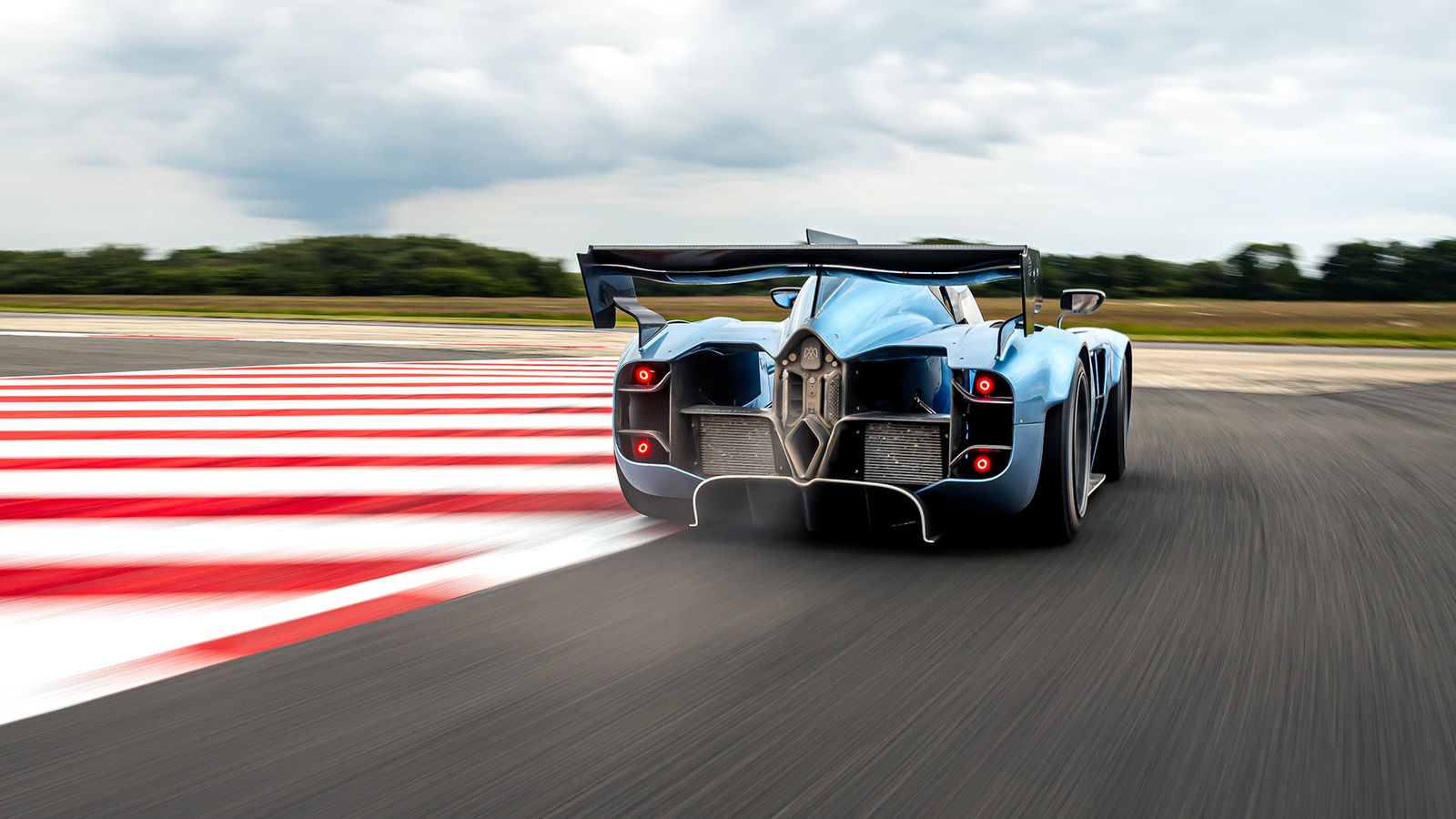
One of the key highlights of Mead’s career has been serving as chief engineer for two iconic electric hypercar programs: the Lotus Evija and Czinger 21C. For these roles, Mead managed the technical delivery of the e-drive systems, working across system integration, thermal management, and performance optimization. Both programs required innovative engineering solutions and the highest standards of precision, pushing the boundaries of electric performance.
“For the Lotus Evija, we deployed a series of four Electric Propulsion Units (EPUs) that brought together a motor, inverter, and transmission. With one EPU behind every wheel, the car could output peak power of 1,500 kW and peak torque of 1,700 Nm, allowing acceleration from 0-60 mph in just three seconds and a top speed of 217mph. A lot of this performance does come down to the sheer power of each EPU, but a lot was also owed to the efficiencies we achieved owing to the system integration. In fact, we were able to achieve a full 20 percent mass saving over comparable e-powertrain layouts that were used in other hypercars,” Mead said.
Each EPU brought together a Helix SPX242 motor and a MCU1200-640 silicon carbide inverter, and paired these with an ultra-efficient transmission from their partners at Xtrac. The four-EPU system allowed Helix to deliver precise torque-vectoring to maximize the efficiency of power delivered, all in a very lightweight package that had an efficiency of 98 percent.
“That sort of system integration and depth collaboration with best-in-breed partners is a big part of what makes us succeed in complex hypercar projects. This also rang true in our work on the Czinger 21C—there we paired two variants of our SPX177 motor platform with another Xtrac gearbox and a set of control systems from our friends at New Eagle in the United States. The efficiency, low mass, and sheer power of the EPU which followed was key to the Czinger 21C breaking major industry records—most notably setting the Laguna Seca production car lap record in December 2025.
Helix has been involved in two electric hypercar programs.
Additional Projects
[advertisement]
Mead works with senior management to identify opportunities for continuous improvement. He leads or supports the implementation of strategic changes aimed at improving engineering workflows, testing methodologies, and team capabilities. Because of the nature of the customers Helix is working with (early adopters of electrification) the company finds that many EPU and integrated e-powertrain projects vary considerably.
“Virtually all of them are underpinned by our motor technology,” Mead added. “To deliver this our team draws on decades of experience in thermal and electrical management, along with our own winding and cooling technologies. However, along with the technology itself, we bring to the table a sophisticated simulation and modeling capability along with a great track record with collaborations and partnerships, allowing us to ensure our technology is used as effectively as possible in a vehicle.
The tendency towards integration into all-in-one electric powertrains is going to keep going in the coming years. In terms of reducing the number of parts, exposed connections, and finding ways to optimise cooling loops, EPU integration is going to be impossible to resist. Helix has embraced this, by finding ways to realize EPU solutions and contribute to these projects.
One project, for example, is where Helix has collaborated with high performance transmission specialist Zoerkler to develop and validate a geared EPU for advanced air mobility applications.
Designed to support demanding eVTOL applications, the new EPU can be installed to support propellers in lift, cruise, and tiltrotor configurations. Historically, these high-torque applications have required EPUs set out in a ‘direct drive’ layout, which demanded wider and higher-mass motors. Thanks to the seamless integration between Helix’s motor and Zoerkler’s lightweight transmission, however, this new EPU can deliver high torque in a package just 50 percent of the diameter of an equivalent direct drive unit.
Intended to be the first in a family of advanced air mobility EPUs, the initial Helix-Zoerkler collaboration has resulted in a 32.2 kg package, which can deliver 100 kw of power with up to 1,600 Nm of torque when used in a lift configuration. The Helix motor within the EPU can be significantly narrower and lighter than a direct-drive alternative. This unlocks significant packaging opportunities for the EPU, with the initial unit having a diameter of just 26 cm. Combined with the low mass of the package, this means the EPU can significantly reduce nacelle size and drag in eVTOL applications, enabling greater payloads and ranges.
Helix is also continuing to strengthen its position in the UK Defense sector through an extended collaboration with SDO Associates, focused on targeted business development and market engagement. This next phase focuses on turning that insight into meaningful market engagement and commercial progress.
Defense organizations are increasingly prioritizing high-efficiency, low-signature and high-reliability propulsion solutions. Helix’s proven technologies, refined through demanding applications in motorsport, aerospace, automotive and industrial sectors, position the company uniquely to address these evolving defense requirements with strong engineering credibility and operational performance.
In the future, Mead plans to seek out new opportunities for the company across multiple industries involved in electrified powertrains.
“In my current role, I serve as the technical lead on multiple projects,” Mead added. “I guide cross-functional engineering teams, ensuring robust and innovative solutions are developed and delivered on time.”
Power Transmission Engineering is THE magazine of mechanical components. PTE is written for engineers and maintenance pros who specify, purchase and use gears, gear drives, bearings, motors, couplings, clutches, lubrication, seals and all other types of mechanical power transmission and motion control components.
*Unsubscribe any time. Full details in our privacy policy








 Power Transmission Engineering is THE magazine of mechanical components. PTE is written for engineers and maintenance pros who specify, purchase and use gears, gear drives, bearings, motors, couplings, clutches, lubrication, seals and all other types of mechanical power transmission and motion control components.