
Drive Lines Examines Screw Jack Specification
Screw jacks are often the solution for precise linear motion and positioning applications, they can even be supplied as a bespoke system complete with their own dedicated control system for particular applications. However, without proper consideration during the specification stage, it’s possible to miss some of the design advantages that the latest technology offers. Ian Carr, managing director of Drive Lines, recently explained the key considerations that should be made when specifying screw jacks.
"Unlike the cheap and imprecise car jacks that most of us have used when changing a flat tire, engineering screw jacks are based on a direct screw drive mechanism. They are precision motion systems capable of lifting large loads and holding position to a high degree of accuracy. With this in mind they can’t be considered a ‘one-size-fits-all’ solution."
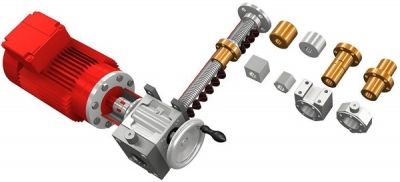
Typically available with cast aluminum or iron bodies and a choice of either trapezoidal or ballscrew spindles, the dimension, speed, load capacity and precision capabilities are so varied that no two screw jacks are alike. Jacks are mainly motor driven (though manual operation is often also allowed for) with the type and power of the motor matched to specific application needs. It’s also possible to specify unique control components which can be integrated into automated control systems.
As with many power transmission components, there are also multiple accessories available for screw jacks which enable them to perform specialized functions for different applications.
While screw jacks are relatively simple technology, with such variation it’s clearly important that engineers understand the different options available to them in order to secure optimal performance once installed. Working with an experienced distributor will help to ensure that all considerations are made so the right product is specified first time.






 Power Transmission Engineering is THE magazine of mechanical components. PTE is written for engineers and maintenance pros who specify, purchase and use gears, gear drives, bearings, motors, couplings, clutches, lubrication, seals and all other types of mechanical power transmission and motion control components.