

[advertisement]
Feature Articles

March 4, 2026


Matthew Jaster


Feature Articles

Battle-Tested Tech for Aerospace and Defense Operations

According to a recent study by Deloitte, the aerospace and defense industry stands at a pivotal crossroads as it enters the latter half of the decade. Forces that have shaped the sector in recent years—digital transformation, supply chain volatility, talent constraints, and geopolitical events—are converging with new catalysts such as agentic AI, emerging vehicles and the rapid evolution of autonomous systems. On the defense side, budgets are a key focus, with a growing emphasis on enhancing mission readiness. At the same time, defense priorities are shifting to accelerate the fielding of AI-enabled systems and collaborative combat aircraft. “Speed to field” is becoming the unifying metric across portfolios. (deloitte.com)

Northrop Grumman Expands Autonomous Portfolio

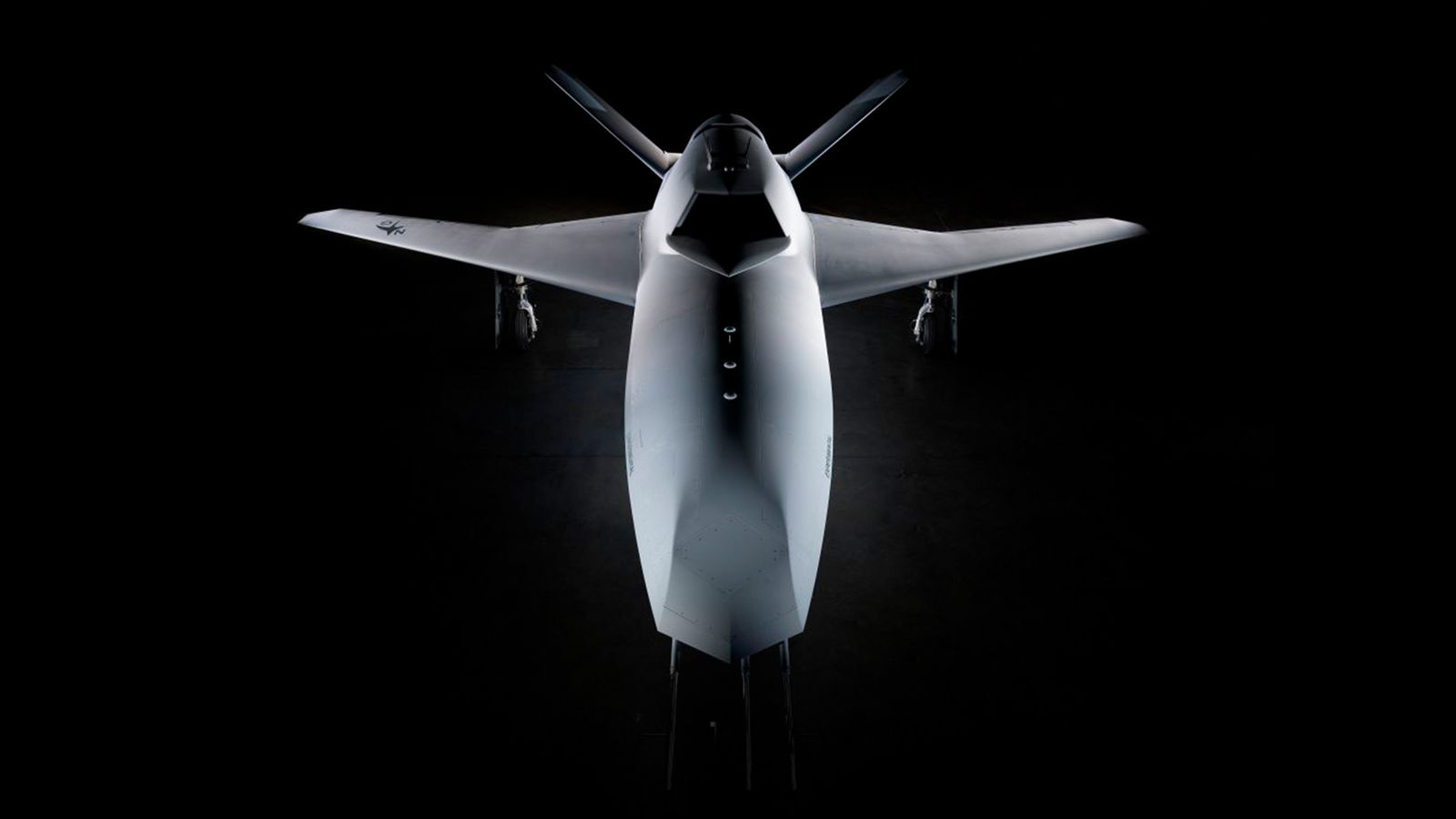
Northrop Grumman recently unveiled Project Talon, an autonomous aircraft built to fly alongside crewed fighters. As the latest addition to the company’s elite autonomous portfolio, Project Talon represents a paradigm shift in air dominance as an adaptive, collaborative teammate for combat missions.

Project Talon represents a paradigm shift in air dominance and showcases Northrop Grumman’s ability to quickly deliver mission-ready autonomy with streamlined manufacturing capabilities and innovative production processes. From the beginning, it has been designed for manufacturing. Its modular design exemplifies how efficient and adaptable manufacturing can meet the rapidly changing requirements of modern military operations, broadening appeal and effectiveness with domestic and international markets.

Additionally, Northrop Grumman successfully tested the first of two new solid rocket motors—SMASH!22 and BAMM!29 2.0—designed and manufactured in 2025 under the SMART Demo program. This milestone marks a key achievement in the project’s most ambitious year by delivering both motors in under 12 months.

The static test fire of SMASH!22, the 22-inch diameter Solid Motor Adaptable, Scalable, Half Time/Cost solid rocket motor configuration, evaluated several innovative incorporations such as advanced manufacturing and new materials that could speed development and production, boost performance and lower costs.

The test generated a comprehensive suite of data that will further the team’s understanding of the demonstrated technologies.

Share and save:


This article appeared in the February 2026 issue.


Read PDF

[advertisement]

The second motor, the 29-inch diameter Bombardment Attack Missile Motor called BAMM!29 2.0, is slated for static testing in early 2026, continuing the momentum of the SMART Demo initiative.

The SMART Demo program is designed to tailor solid rocket motor designs to meet specific industry needs. Northrop Grumman developed both the SMASH and BAMM motors leveraging knowledge from previous projects while integrating advanced tooling, additively manufactured components, and a diversified supplier base.

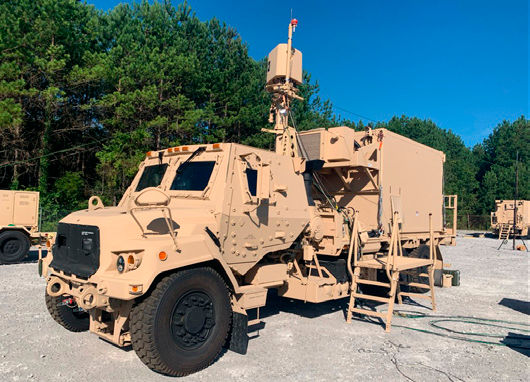
In October, the Integrated Battle Command System, built by Northrop Grumman for the U.S. Army, completed a pivotal flight test at White Sands Missile Range. This test was part of Follow-on Operational Test & Evaluation (FOT&E) to assess IBCS operational effectiveness in a tactical environment.

During the test, Army Air Defenders used IBCS in a complex environment that mimicked real-world operations, identifying and engaging targets via multiple interceptors. The flight test intercept of two surrogate cruise missile targets demonstrated IBCS’s capability to defeat realistic threats in operational environments and highlighted its ability to enhance joint missions, as it integrated with U.S. Navy participants.

Under FOT&E, IBCS is being assessed for its ability to defeat new threats and meet operational needs. The results of the FOT&E and this operational flight test will inform future IBCS development and fielding to the Army. IBCS's modular open systems design enables IBCS to evolve and adapt to changing requirements and threats.

Northrop Grumman is manufacturing IBCS under a full-rate production contract in a new, state-of-the-art manufacturing center in Madison, AL. The new facility has the capability to double the company’s manufacturing capacity in Huntsville and scale IBCS to meet growing demand for integrated fires, command and control in the U.S. and globally.

northropgrumman.com

Laser-Based Data Communication

Lithuanian space and defense tech company Astrolight has successfully demonstrated undetectable and unjammable laser-based communication and data transmission with its POLARIS terminal during NATO’s latest exercise. It was held in Latvia, on NATO’s Eastern flank, highlighting how the latest technologies can enhance battlefield capabilities in the region.

The exercise, called Digital Backbone Experimentation (DiBaX), took place from October 27 to November 7, at a Latvian Ādaži military base and virtually across the Alliance.

Astrolight placed two POLARIS laser terminals on land, operating continuously throughout all 9 days of the exercise, including in rain and fog. During the tests, POLARIS successfully demonstrated interoperability with military communication infrastructure, connecting a military base to an ad-hoc remote command post.

[advertisement]

“As GPS-jamming and interference cases are rising in NATO territories, military communication is becoming a full-scale battlefield. DiBaX demonstrated that our technology can provide the speed, volume, and security of data transmission needed for modern tactical operations on land, which traditional communication methods struggle to support,” said Laurynas Mačiulis, the CEO of Astrolight.

astrolightspace.com

Manufacturing Partnership for Automated Machining and Inspection Technology

Lockheed Martin and Hadrian have entered into a Memorandum of Understanding to accelerate the pace and value of advanced American manufacturing at Lockheed Martin, building a more resilient and scalable industrial base.

Under this agreement, Hadrian will deploy its factory-as-a-service model, which includes embedding a scalable machining manufacturing and inspection cell, to produce parts at a Lockheed Martin Missiles and Fire Control site. This flexible production cell is comprised of computer numerical control (CNC) machines, advanced robotics and Hadrian’s manufacturing execution platform, which will enable Lockheed Martin and Hadrian to increase rate for a variety of machined parts quickly and efficiently for products like PAC-3 MSE, THAAD, PrSM and GMLRS.

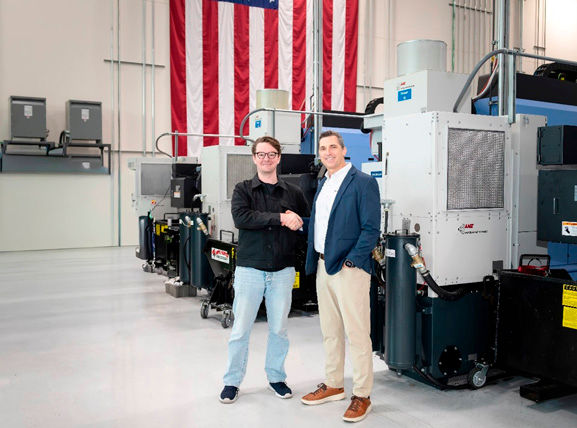
Tom Carrubba (right), vice president of production operations at Lockheed Martin, and Chris Power (left), chief executive officer of Hadrian, agree to a Memorandum of Understanding at Hadrian’s headquarters in Los Angeles.

“We are excited to collaborate with Hadrian to deploy their automated machining and inspection technology to strengthen our manufacturing capabilities and supply chain,” said Tom Carrubba, vice president, production operations at Lockheed Martin Missiles and Fire Control. “This project is a key enabler for Lockheed Martin to increase production output capacity, ensuring we can meet the high demand for our customers’ munitions needs.”

“This partnership is a model for how emerging and established players can work together to build faster, more resilient defense production,” said Chris Power, CEO of Hadrian. “By combining Hadrian’s advanced manufacturing capabilities with Lockheed Martin’s expertise, we’re streamlining production for current and future critical programs and laying the groundwork for more collaborations like this across the industry.”

By uniting advanced manufacturing with proven defense capabilities, this partnership aims to create a more resilient and responsive production ecosystem, one that becomes more capable as demands grow and challenges emerge.

lockheedmartin.com

hadrian.co

[advertisement]

×

Like What You see?

Power Transmission Engineering magazinePower Transmission Engineering is THE magazine of mechanical components. PTE is written for engineers and maintenance pros who specify, purchase and use gears, gear drives, bearings, motors, couplings, clutches, lubrication, seals and all other types of mechanical power transmission and motion control components.

E-mail

Choose at least one from the options below:

 Power Transmission Engineering magazine, published 8 times per year (print or digital).

 Power Transmission Engineering e-mail newsletter, published weekly.

 Special Offers and promotions via e-mail from Power Transmission Engineering's advertisers and partners.

*Unsubscribe any time.
Full details in our privacy policy
Already a subscriber? Log in