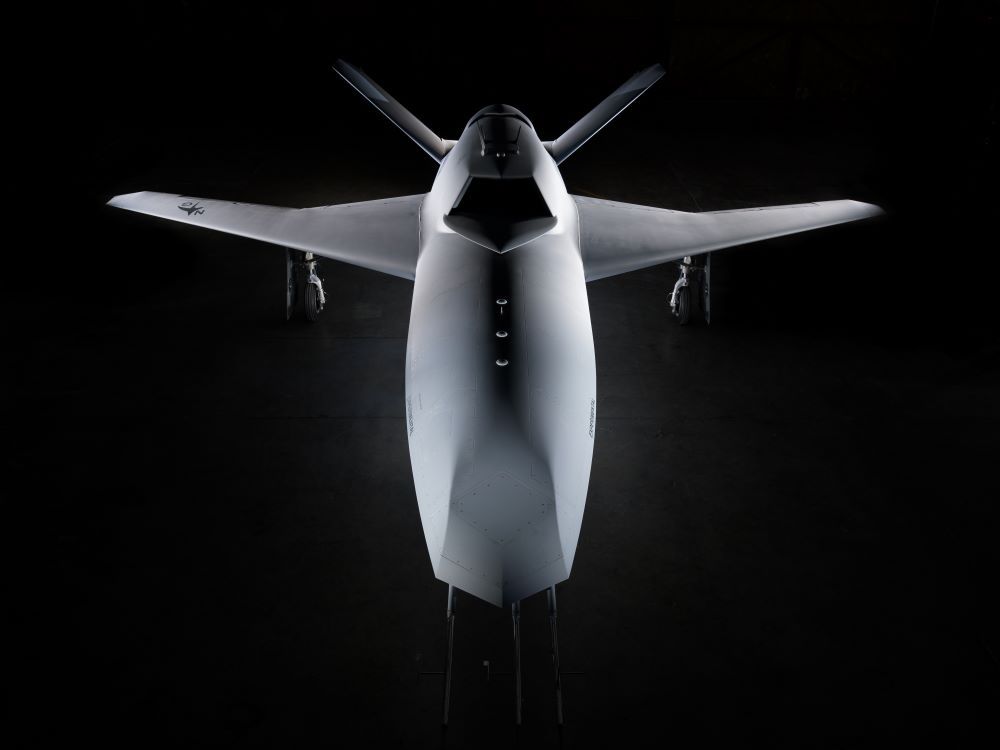
Under FOT&E, IBCS is being assessed for its ability to defeat new threats and meet operational needs. The results of the FOT&E and this operational flight test will inform future IBCS development and fielding to the Army. IBCS's modular open systems design enables IBCS to evolve and adapt to changing requirements and threats.
Northrop Grumman is manufacturing IBCS under a full-rate production contract in a new, state-of-the-art manufacturing center in Madison, Alabama. The new facility has the capability to double the company’s manufacturing capacity in Huntsville and scale IBCS to meet growing demand for integrated fires, command and control in the U.S. and globally.
Jeremy Knupp, vice president, global command and control solutions, Northrop Grumman: “IBCS continues to showcase exceptional performance as seen during this soldier-run FOT&E flight test. By defeating complex threats, IBCS proved its flexibility to integrate new technologies and unify systems regardless of source, service or domain.”
IBCS is a revolutionary system fire control quality and battle management, unifying current and future systems regardless of source, service or domain. IBCS fuses sensor data for a single, actionable picture of the full battlespace. Through its network enabled, modular, open and scalable architecture, IBCS can evolve and adapt to meet the changing battlespace. This proven capability gives warfighters more time to assess and respond to threats, serving as a foundational element for enabling joint and coalition, multi-domain operations IBCS is in production and will be fielded as part of the U.S. Army’s program of record for integrated air and missile defense modernization. Northrop Grumman was awarded a five-year contract valued at more than $1 billion from the U.S. Army for low-rate initial production and full-rate production of IBCS in December 2021.
(northropgrumman.com)
Laser-Based Data Communication
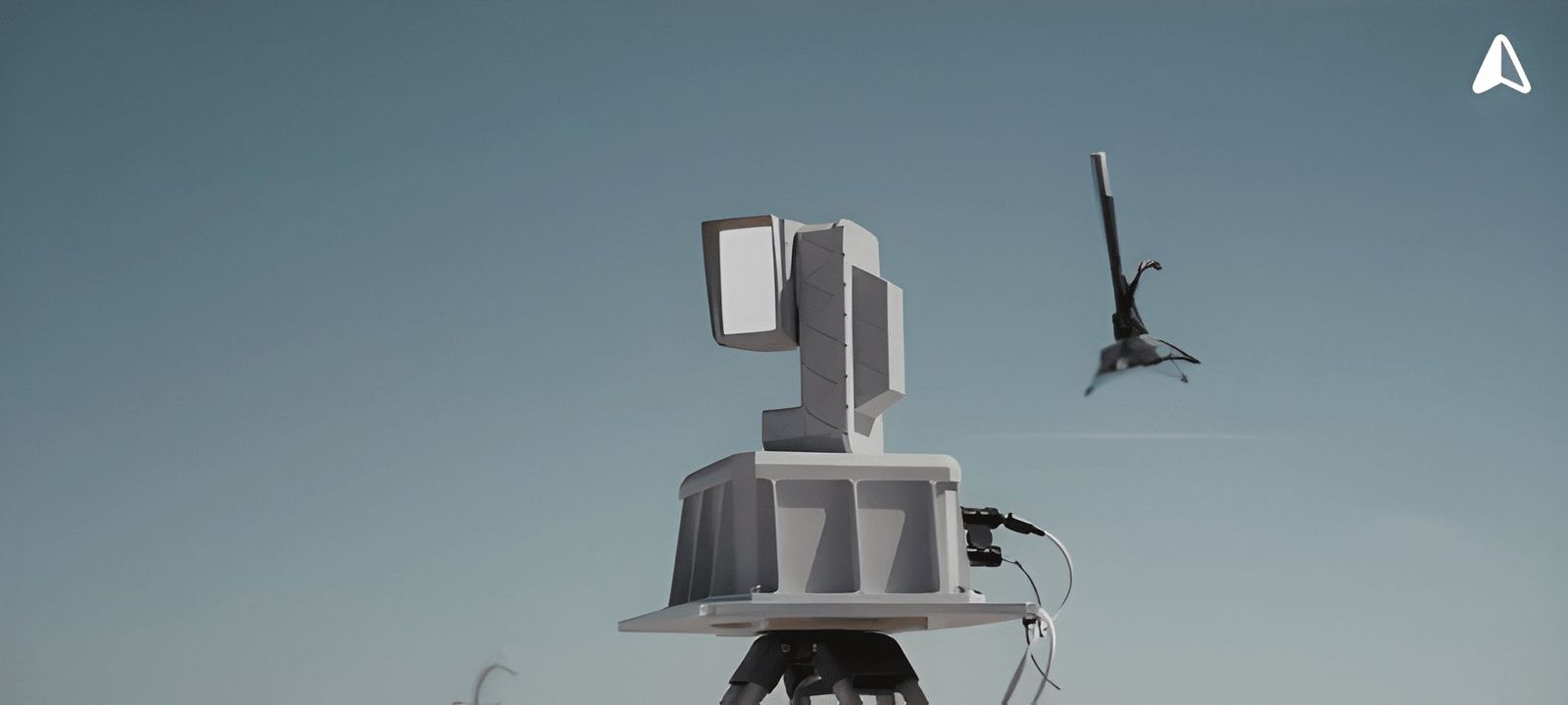
Lithuanian space and defense tech company Astrolight has successfully demonstrated undetectable and unjammable laser-based communication and data transmission with its Polaris terminal during NATO’s latest exercise. It was held in Latvia, on NATO’s Eastern flank, highlighting how the latest technologies can enhance battlefield capabilities in the region.
The exercise, called Digital Backbone Experimentation (DiBaX), took place last fall at a Latvian Ādaži military base and virtually across the Alliance.
Astrolight placed two Polaris laser terminals on land, operating continuously throughout all 9 days of the exercise, including in rain and fog. During the tests, Polaris successfully demonstrated interoperability with military communication infrastructure, connecting a military base to an ad-hoc remote command post.
“As GPS-jamming and interference cases are rising in NATO territories, military communication is becoming a full-scale battlefield. DiBaX demonstrated that our technology can provide the speed, volume, and security of data transmission needed for modern tactical operations on land, which traditional communication methods struggle to support,” said Laurynas Mačiulis, the CEO of Astrolight.
Currently, many military operations rely on radio frequencies (RF) for communication. However, radio has key limitations, such as low data transmission speeds and being susceptible to jamming. RF emissions can also be easily detected, revealing the position of military units.
The Baltic region is experiencing near-daily electronic warfare pressure, with GPS and RF jamming originating from Russia and the Kaliningrad region intensifying in recent months.
While the Eastern flank is among the most affected areas, these incidents are no longer isolated – similar jamming events have been reported across Europe, the Middle East, and other global hotspots, underscoring the growing need for communication systems that remain operational in contested, RF-denied environments.
In contrast, laser communications tested by Astrolight cannot be jammed using conventional electronic warfare equipment, and can transmit data at up to 100 times faster data rates than RF.
“We’ve also showcased that laser communications can deliver consistent and reliable data transmission despite harsh weather conditions: fog, rain, and wind,” Mačiulis said. “To meet demanding NATO requirements, we made Polaris compact, as well as easy to install and deploy across military units and vehicles in sea, land, air, and space operations.”
Astrolight successfully tested Polaris for ship-to-ship communications at the REPMUS/Dynamic Messenger exercise, led by the Portuguese Navy and NATO, respectively, and with the Lithuanian Navy.
DiBaX was led by NATO Allied Command Transformation and the Latvian Ministry of Defense, hosted by Latvian Mobile Telephone. The exercise focused on the use of unmanned systems in complex operational environments and applications of artificial intelligence.
In recent months, Latvia and other European NATO members, including Lithuania, Poland, and Belgium, have been monitoring and responding to a series of drone incursions coming from Russia, raising concerns about security in the region. (astrolightspace.com)
Manufacturing Partnership for Automated Machining and Inspection Technology
Lockheed Martin and Hadrian have entered into a Memorandum of Understanding to accelerate the pace and value of advanced American manufacturing at Lockheed Martin, building a more resilient and scalable industrial base.
Under this agreement, Hadrian will deploy its factory-as-a-service model, which includes embedding a scalable machining manufacturing and inspection cell, to produce parts at a Lockheed Martin Missiles and Fire Control site. This flexible production cell is comprised of computer numerical control (CNC) machines, advanced robotics and Hadrian’s manufacturing execution platform, which will enable Lockheed Martin and Hadrian to increase rate for a variety of machined parts quickly and efficiently for products like PAC-3 MSE®, THAAD, PrSM and GMLRS.
"We are excited to collaborate with Hadrian to deploy their automated machining and inspection technology to strengthen our manufacturing capabilities and supply chain," said Tom Carrubba, vice president, production operations at Lockheed Martin Missiles and Fire Control. “This project is a key enabler for Lockheed Martin to increase production output capacity, ensuring we can meet the high demand for our customers’ munitions needs.”
“This partnership is a model for how emerging and established players can work together to build faster, more resilient defense production,” said Chris Power, CEO of Hadrian. “By combining Hadrian’s advanced manufacturing capabilities with Lockheed Martin’s expertise, we’re streamlining production for current and future critical programs and laying the groundwork for more collaborations like this across the industry.”
By uniting advanced manufacturing with proven defense capabilities, this partnership aims to create a more resilient and responsive production ecosystem, one that becomes more capable as demands grow and challenges emerge. (hadrian.co) (lockheedmartin.com)
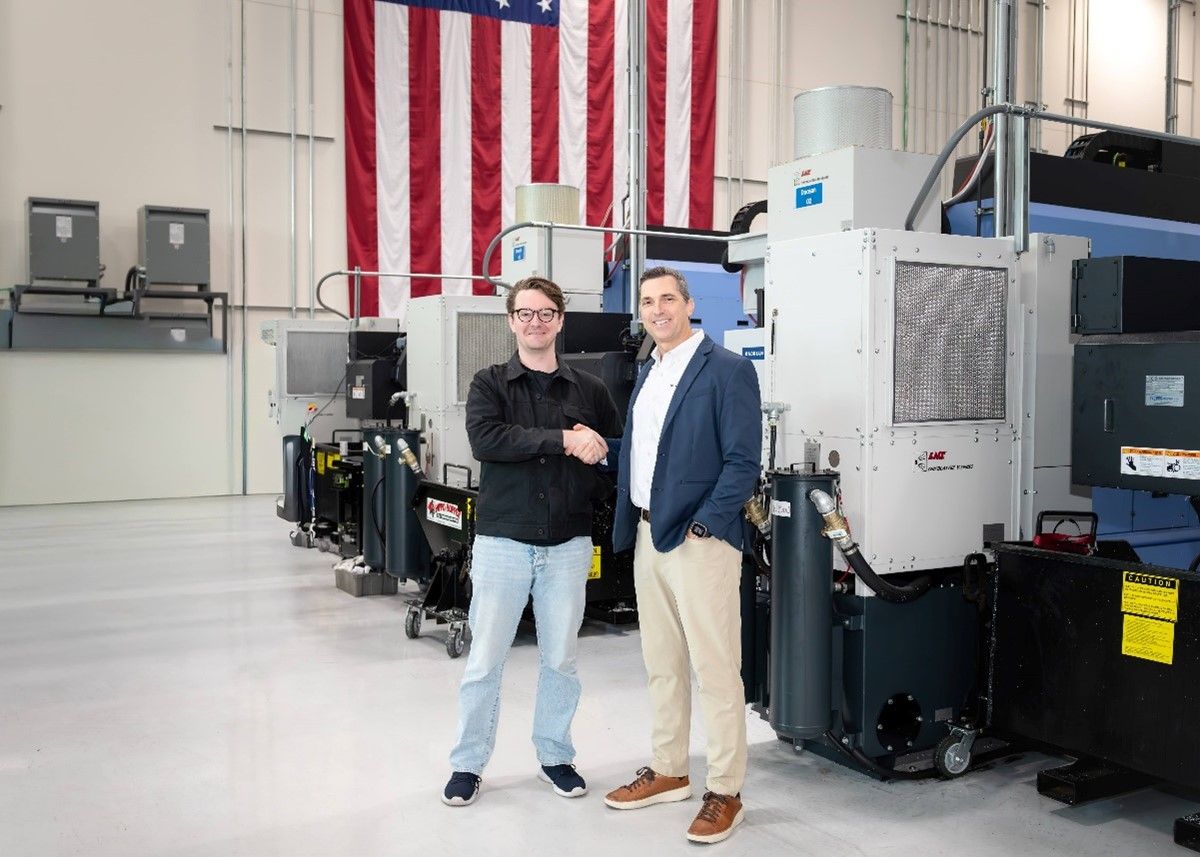
Tom Carrubba (right), vice president of production operations at Lockheed Martin, and Chris Power (left), chief executive officer of Hadrian, agree to a Memorandum of Understanding at Hadrian’s headquarters in Los Angeles.