ABB Strengthens Product Line for Cement and Aggregate Applications
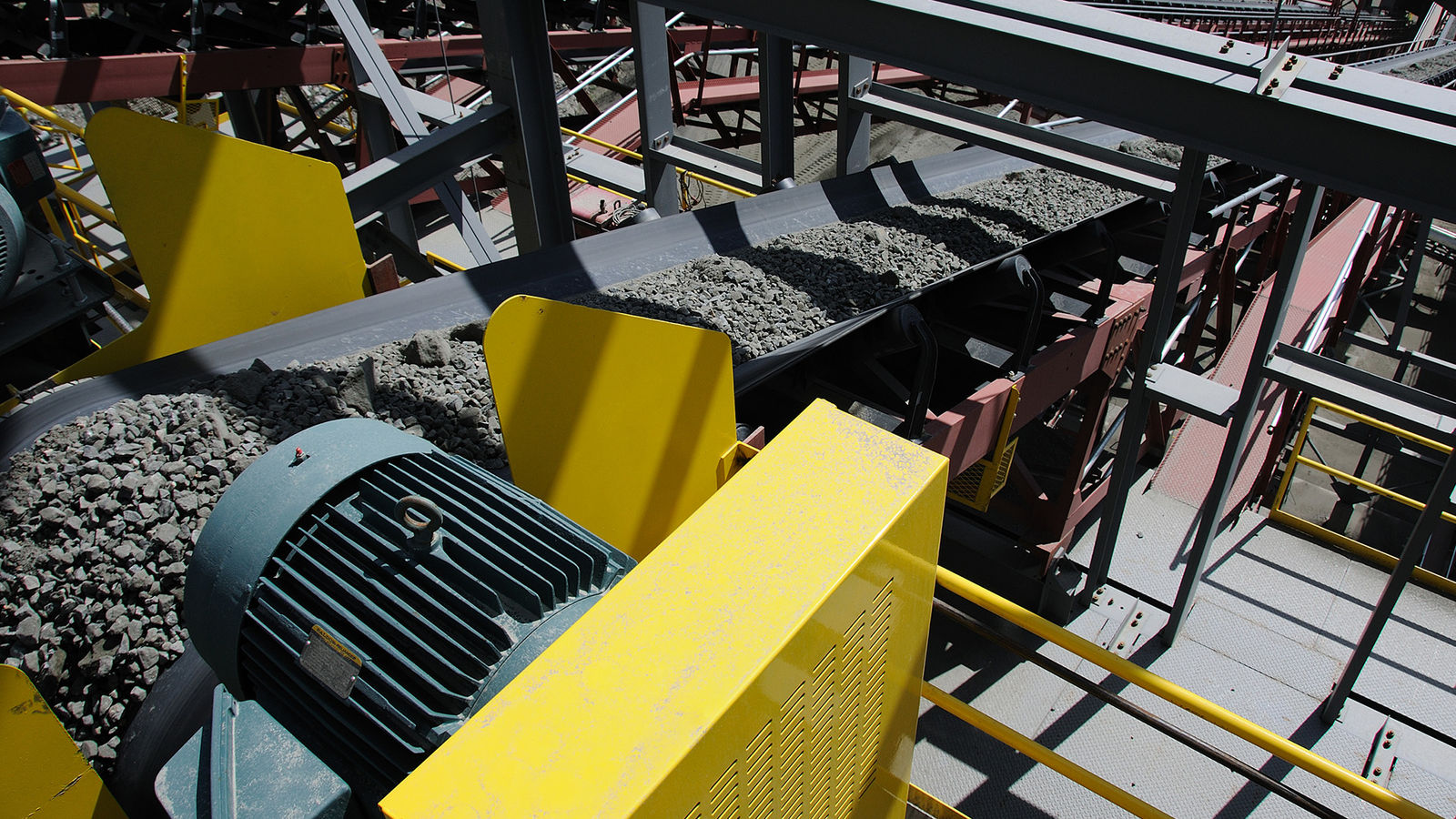
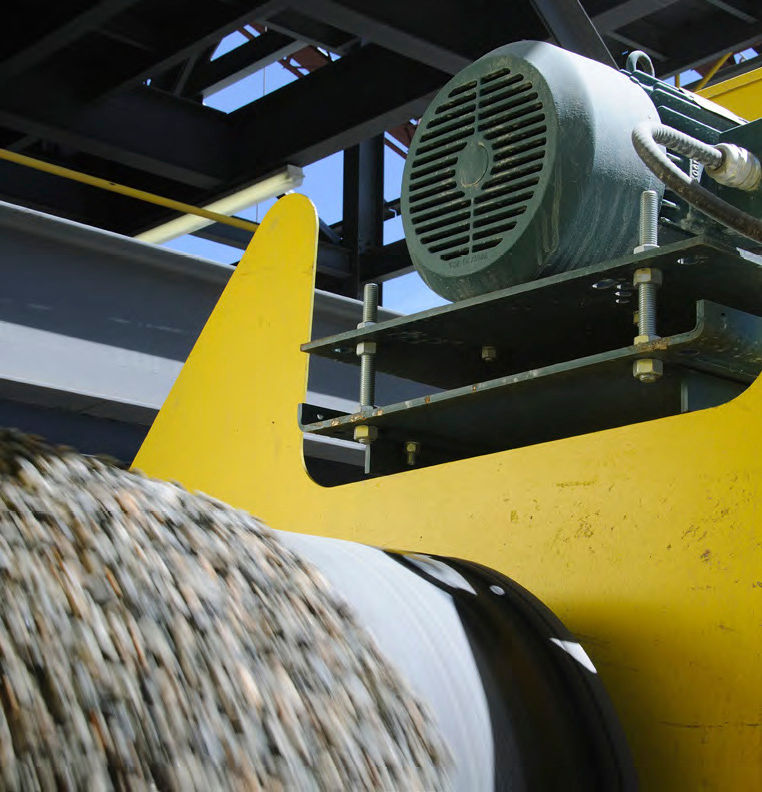
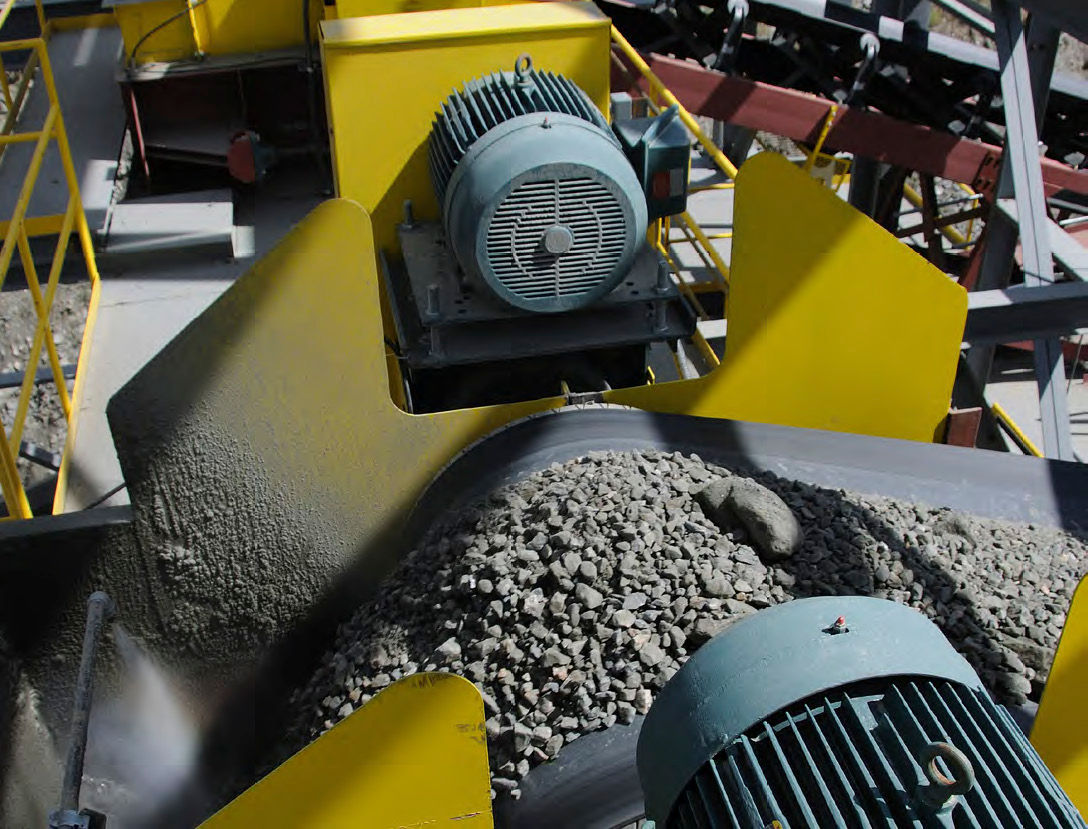
These motors achieve cooler running operation for longer life which means longer bearing life. This translates to longer motor life. (All images: ABB)
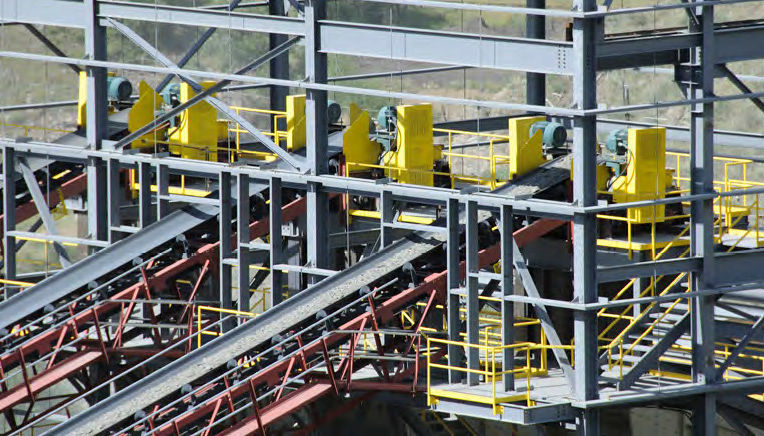
There’s a running theme throughout concrete and aggregate producers where the motors in crushers, conveyors and pumps need to operate efficiently, extend equipment life and cut downtime—easier said than done when dealing with dust, vibration and massive shock loads. These daily challenges can be the difference between having reliable onsite equipment or navigating the costs associated with unplanned failures.
We have learned covering these MRO topics for years in PTE that no matter what precautions you put in place, unplanned failures on a production line can cause major losses. Courtney Pickett, product specialist at ABB NEMA Motors and Stefanie Casimir, global product marketing manager for ABB NEMA Motors recently shared insight on new motor technologies in these harsh, industrial markets.
“Our customers are looking for products that are going to last in these harsh environments,” Pickett said. “We’re pushing for higher efficient motors, highly sustainable motors that will counter rising energy costs and comply with the various regulation requirements.”
Far too often, Pickett and Casimir see general-purpose motors (standard motors) being installed in these severe duty environments.
“This is not the same motor you should be running for a pump or a fan in a clean environment,” Casimir added. “They do not meet the harsh requirements you find in concrete or aggregate and they certainly don’t last long enough. It is important to have a robust supply chain and the right motors readily available when an upgrade is needed.”
ABB NEMA motors are essential components used to run equipment in industries such as food and beverage, oil and gas, mining & aggregate, and water & wastewater and in applications like those which move air, liquids, and units.
Pickett noted these motors are getting pummeled out in the field—taking hits from rocks and other debris. They need to outlast the warranty period and provide the maximum operating efficiency a severe duty motor SHOULD provide.
To specify the best motor for the application, ABB collaborates closely with the customers to gain efficiency in overall system performance. “Many of our customers aren’t taking a systematic approach when addressing the next generation of motor technology,” Pickett said. “It’s important to consider efficiency improvements early on in the process.”
On June 1, 2027, the U.S. Department of Energy (DOE) will require higher efficiency levels for a wide range of industrial motors. In a recent study by ABB, it was reported that this will be the most significant update in more than a decade. The timing is critical. Electric motors are the backbone of industrial productivity, powering pumps, compressors, conveyors and HVACR systems. They consume more electricity than any other industrial technology. Globally, motors account for more than 40 percent of power use, and in the United States they draw more than a trillion kilowatt-hours each year, costing $112 billion. Even modest efficiency gains across fleets of motors can reshape the economics of entire industries. The new DOE standards reflect that reality. For engineers, it becomes an exciting opportunity to guide smarter designs, lower costs and deliver measurable sustainability progress.
Real-Time Monitoring
The ABB Ability Smart Sensor converts traditional motors into smart, wirelessly connected devices. “This enables users to monitor the health of their motors and to plan maintenance in advance offering vibration, load and temperature data in real time,” said Pickett.
By combining connectivity and data analytics these sensors focus on making the motor efficient, predictable and safe even in the most hazardous environments.
“They’re not manufacture-specific so they can easily attach to any of the equipment to calculate energy savings and management whether it’s a conveyor, pump, or motor,” said Casimir. “These are particularly effective in hard-to-reach applications where safety is a concern for your operators. This condition monitoring technology eliminates the need for a human to physically go to the unit for inspection.
The heavy-duty frames on these motors can endure harsh operating conditions, while reducing the risk of damage under high-stress loads.
Using these data-driven tools onsite allows plant operators to assess, manage and optimize powertrains, giving them more time to focus on plant improvements and strategical tasks.
ConExpo Highlights
Despite all the conversations about energy regulations and efficiency requirements, attendees at ConAgg/ConExpo earlier this year were more concerned about the longevity of the equipment.
“These were the conversations we were having during the show,” said Pickett. “We offer a variety of application-specific motors intended for use in certain areas and we want to make sure they’re getting the most optimized motor solution to meet their critical equipment needs.”
With a catalog as extensive as ABB’s, the search for the perfect solution can be daunting.
[advertisement]
“The customization capability is what they really like about our products,” said Casimir. “We provide custom modifications for our OEM partners, and this is something we’re quite excited to offer.”
Technologies at the show included ABB Baldor-Reliance Crusher Duty motors, designed for belt-driven rock crushers, pellet mills and other applications requiring motors rated for high starting and peak torques.
The ABB Baldor-Reliance HydroCool XT is a water-cooled motor that is quiet and versatile, requiring little to no maintenance, which can perform in the toughest environments.
ABB NEMA Super Premium motors can offer up to 40 percent lower energy loss in comparison with a NEMA standard efficient (IE2) induction motor.
The water-jacket cooling technology extends motor life while saving space, energy and maintenance costs.
The DP200 Crush+ exceeds demands for reliability and safety in the harshest environments, raising the standard of motors used for crushers and other applications. Engineered with the user in mind, it delivers high starting and breakdown torque alongside flexibility and design modularity. Built upon the proven SD200 framework, its rugged and reliable design optimizes performance, efficiency and total cost of ownership.
SD100 Severe Duty motors are built for demanding applications, offering high efficiency, durability and reliability in harsh environments, making them ideal for industries where long-lasting performance under heavy loads is essential. These powerhouse motors are tailor-made for the rigors of severe duty industries. SD100 motors offer the ultimate in rugged construction, cool operation, high performance, and application flexibility.
The Future of Motor Technology
While the world continues to debate energy efficiency, Pickett is interested in seeing where else motor technology will evolve in the coming years.
“We are starting to see motor technology shift as the current generation of AC motors, for example, are reaching their limits. They are about as efficient as they’re going to get. We are excited to see how and when these industrial motors will evolve further,” Pickett said.
Where else will the focal point be outside of efficiency or custom motor requests?
“In many cases, it’s no longer about the motor, but the entire system. The time is coming when we are going to need to evolve the technology into something else entirely,” said Casimir. “We’re going to see things change in motors in areas like material handling, food and beverage as well as these industrial markets.”
The modular design of ABB NEMA motors offers a high level of flexibility for customers and makes it easy to upgrade or retrofit existing systems in the field or implement future equipment designs and requirements.
ABB Baldor-Reliance SP4 motors achieve NEMA Super Premium efficiency across-the-line, independently of a drive. The SP4 product line builds on the simplicity of ABB’s proven AC induction motors and features a range of durable motors tailored to meet diverse, severe-duty applications. These motors are compatible with pumps, fans, compressors, and conveyors and are ideal for all industries. The new cast-iron motors cover a power range of 25 to 300 hp and the rolled steel models are available in ¼ to 20 hp.
Both Pickett and Casimir acknowledge that the competition is starting to catch-up so it’s pushing the team to make even more robust motor products.
“We’re really excited to show off the motor technologies we’re working on in the next couple of years to enhance everything from motor design to service and support and motor monitoring,” said Pickett.
“One more thing I’ll add is we’ve been in the market for 100+ years and have a very large portfolio of motor technologies to draw from,” Casimir said. “Even in industries like concrete or aggregate where change doesn’t happen overnight, we’re excited to enhance our product offerings and deliver solutions that will keep our customers equipment running for a long time.”
Power Transmission Engineering is THE magazine of mechanical components. PTE is written for engineers and maintenance pros who specify, purchase and use gears, gear drives, bearings, motors, couplings, clutches, lubrication, seals and all other types of mechanical power transmission and motion control components.
*Unsubscribe any time. Full details in our privacy policy









 Power Transmission Engineering is THE magazine of mechanical components. PTE is written for engineers and maintenance pros who specify, purchase and use gears, gear drives, bearings, motors, couplings, clutches, lubrication, seals and all other types of mechanical power transmission and motion control components.