


The Hidden Workforce Behind Smart Automation
A book review of Waiting for Robots
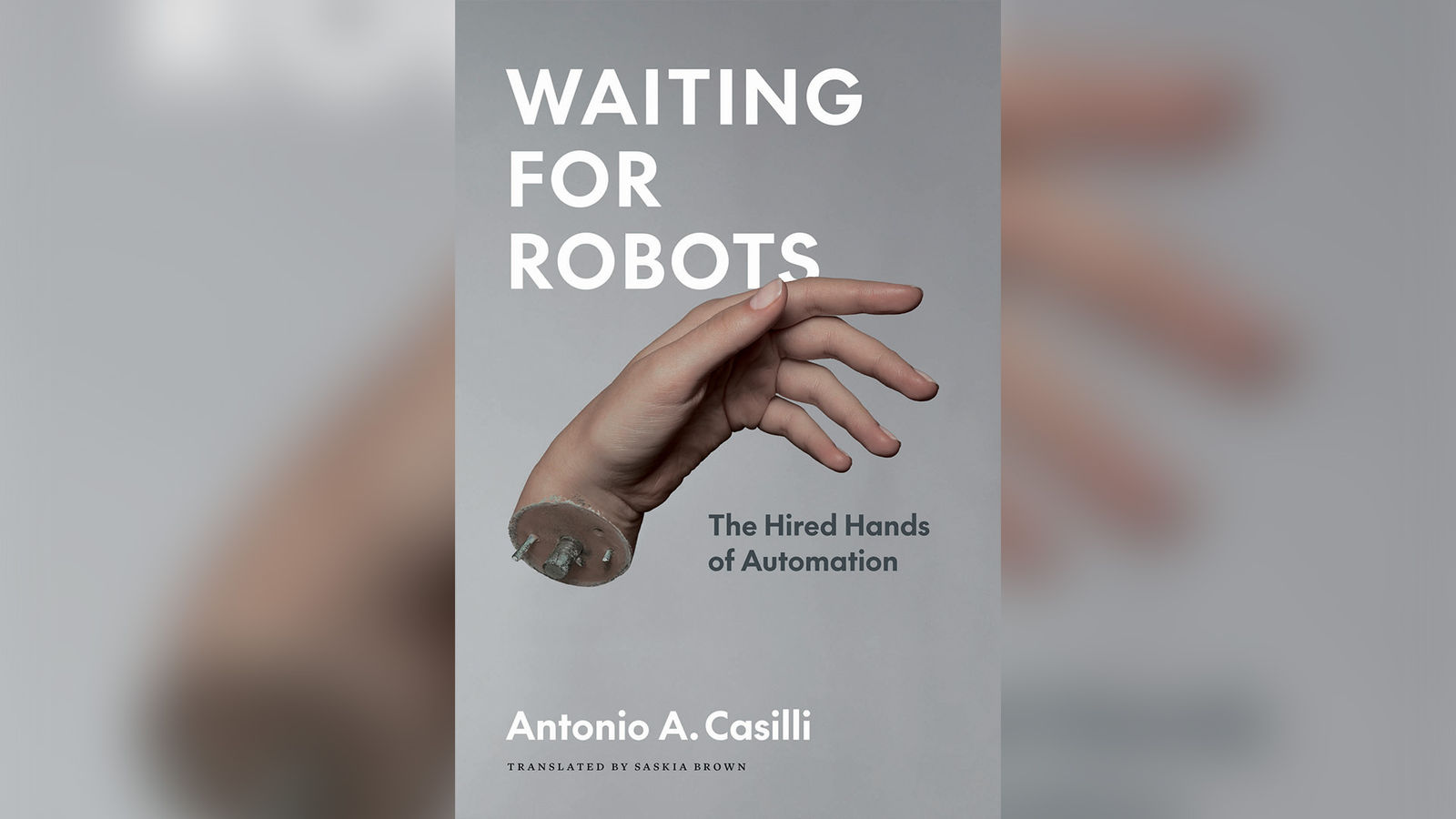
In an industry built on motion, efficiency, and precision, it’s easy to accept the idea that artificial intelligence and automation are ushering in a post-labor future. We hear daily that machines are learning, adapting, and replacing human intervention across the supply chain—from predictive maintenance to intelligent inspection and beyond. But Waiting for Robots (a title that knowingly echoes Samuel Beckett’s play Waiting for Godot) by Antonio A. Casilli offers a critical counterpoint that deserves attention from anyone working in automation or industrial systems. Like Beckett’s elusive Godot, the fully autonomous future we’re promised never quite arrives—and meanwhile, humans keep doing the work.
Casilli, a sociologist of technology, argues that today’s automation is far from autonomous. Whether it’s the AI in your smart sensor or the algorithm managing your warehouse logistics, it almost always relies on a vast layer of invisible human labor: underpaid workers tagging images, verifying outputs, or providing the training data these systems can’t function without.
Casilli’s analysis hits close to home for industries embracing digital transformation. Behind the dashboards of AI-enabled condition monitoring, vision systems, and predictive maintenance tools are thousands of human workers performing repetitive digital tasks—like labeling vibration signatures, validating image recognition outputs, or cleaning sensor data—often under contract in low-wage regions. Far from being fully autonomous, many so-called intelligent systems still rely on this hidden layer of human input to function reliably.
For readers in mechanical power transmission and manufacturing, Casilli’s insights are a wake-up call. As companies integrate more AI-enabled tools into operations, from predictive maintenance software to generative design, understanding the human scaffolding behind these systems is crucial. Not just for ethical sourcing or supply chain transparency, but because recognizing the real limits of automation leads to better planning, smarter systems, and more sustainable strategies.
Casilli doesn’t argue against automation; he argues against magical thinking. Automation, he reminds us, doesn’t eliminate labor—it redistributes it, often invisibly and unjustly. His call for greater transparency and accountability in how digital systems are built and maintained is especially relevant as industries integrate AI tools more deeply into operations. “We are the ones who make the robots, with our own labor,” he writes. “We make the criteria according to which they operate. And then we teach them to learn how to improve. The problem is not that robots are stealing our work, but that we continue to work more and more, and that the platforms are fragmenting and rendering invisible the labor that is necessary to make the algorithms work.” In a world increasingly shaped by hidden hands, recognizing the real human costs of seamless technology is not just ethical—it’s strategic.
This is a provocative, well-researched, and timely read for engineers, executives, and system designers. In the age of smart machines, the most powerful force in automation may still be human labor—only now it’s harder to see. And just like Godot, the robots we’re waiting for might never come—at least not without us working quietly behind the curtain, keeping the show running.