

[advertisement]
Feature Articles

December 4, 2026

Marta Asack


Feature Articles

The Electric Motor as a Data Source

Condition monitoring starts at the motor and ends at the work order

Electric motors are critical to data center operations, powering cooling systems, pumps and other equipment.

At Automate in Chicago this June, I was asked what predictive maintenance involves and why it is happening now. When I started as an engineer designing control systems, we collected data all day long, and in many cases, we did very little with it. We had plenty of sensors and very little ability to turn what they collected into a decision in time to matter.

Computing speed, real-time data and artificial intelligence (AI) have since arrived together, and the value in motor data is now within reach for a plant of almost any size. The part I care most about has not changed. A plant can get into a loop of continuously monitoring everything, and if nobody takes the right action on what the data shows, the effort is wasted. That is how I look at condition monitoring. Start at the motor, and judge the program by what happens after the alert.

Why Condition Monitoring Should Start at the Motor

Power transmission is a mechanical world of shafts, gears, bearings and couplings, and nearly all of it is turned by an electric motor. The motor is the one component in that train that reports on itself. The equipment that starts it and protects it has to measure how hard the motor is working, every minute it runs. Every motor in a plant is a data source, whether or not anyone is reading it.

Electric motor systems account for 72 percent of industrial electricity consumption, according to the International Energy Agency’s Electric Motor Systems Annex. That makes the motor the place where a plant’s energy costs and its reliability risks meet. Ask a reliability engineer what fails first on a motor, and the answer is the bearings. It has been the answer in the industry’s reliability surveys since the 1980s.

Mechanical problems downstream of the motor change how hard the motor has to work, and the motor’s data reflects that. When a coupling goes out of alignment, or a gearbox starts to lose efficiency, the motor draws more current to do the same job. The same is true of a pump fighting a partial blockage or a conveyor with a seized idler. A trend on that data will usually show the change before a technician can hear or feel it on the machine. It works the other way too. A small voltage imbalance at the motor produces a current imbalance six to 10 times larger, and with it extra vibration, heat and wear on the coupling and the bearings.

Share and save:


This article appeared in the December 2026 issue.


Read PDF

[advertisement]


What Motor Data Can and Cannot Tell You

Every condition monitoring program is trying to widen the same window: the time between the first sign that something is going wrong and the moment the asset stops doing its job. Inside that window, a repair is a scheduled job. Once it closes, the same repair becomes an outage.

A single reading rarely opens the window. The value is in the trend against a baseline: a motor that works a little harder each week to do the same job, or one that starts far more often than its duty cycle assumed. AI has sped that up. Instead of relying on a model of a healthy motor built by an engineer years earlier, the model keeps learning from the plant’s own data, so a shift gets flagged while there is still time to schedule the repair.

The data also has limits. It will not tell you which bearing is wearing or why. Vibration analysis, thermography and oil analysis answer those questions. The electrical data tells those tools where to look and when, from equipment in the panel, with nothing mounted on the machine. It also catches what a vibration sensor cannot, such as a power quality problem or a slow rise in load that means the process itself has changed.

Energy is part of the same picture. A motor-driven process that uses more energy than its baseline to produce the same output has added resistance somewhere in the train. Plants usually track that number for the utility bill, and it is also one of the earliest health signals they own. Uptime and efficiency go hand in hand. With demand on the grid climbing, a kilowatt a plant does not waste helps its own cost structure and takes pressure off the grid.

Where Predictive Maintenance Programs Stall

In my conversations with plants, the programs that stall tend to share the same habits.

They start with the technology instead of the problem. As an engineer, I like the most accurate tool available, but the plant does not always need it. The first question is what problem the plant is trying to solve. The answer decides which data matters.

They try to replace the whole system. People get nervous about new techniques because they think they have to tear out what they have. The best solutions are modular: add a layer, a sensor, or an algorithm to the systems you run today, prove the value, and expand from there.

They ask for trust before earning it. Some customers keep their traditional maintenance schedule until they trust the new insight, others are ready to act on forecasts, and a few will let the model decide. All three are legitimate. The mistake is asking a crew to trust a prediction before the system has caught one real problem for them.

They forget the spare parts. Time-based maintenance meant carrying a lot of inventory. Predictive maintenance can bring that closer to just in time, but only if the prediction reaches the people who order parts and schedule the crew.

[advertisement]

Each of these is a decision about how the plant will run the program, and the technology delivers far more once those decisions are made.

Schneider Electric showcased motor and condition monitoring technologies at Automate 2026. (Image: Matthew Jaster)

Building a Condition Monitoring Program That Lasts

Start with criticality. Not every motor deserves instrumentation. Find the handful of assets whose failure costs the most, whether in lost production, in damage to the coupling and gearbox behind the motor, or in risk to people.

Baseline before you alarm. Instrument the asset, establish what normal looks like, alarm on deviation, and only then layer in prediction.

Close the loop into the work order system. An alert should turn into a work order in the CMMS with an owner and a due date. That connection to the way people already work is what makes the data pay off.

Keep protection local. Whatever monitoring gets added, the equipment protecting the motor should keep doing that job when the network does not.

Choose open systems. A motor that will run for 20 years should not be tied to one supplier’s data format, and I say that as someone who sells the equipment. Equipment built on open standards can be read by analytics tools that do not exist yet, so the data outlives the supplier relationship.

For U.S. plants, there is now a standards reason as well. NFPA 70B, the standard for electrical equipment maintenance, went from a recommended practice to a standard in its 2023 edition. The 2026 edition recognizes continuous monitoring data as an input to the condition assessments that set maintenance intervals.

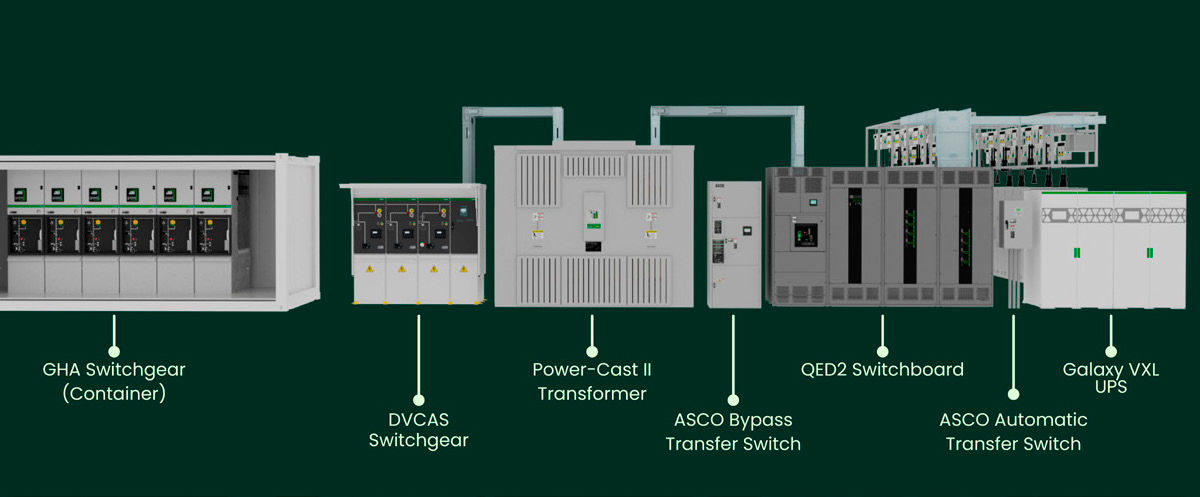
An end-to-end power architecture: switchgear, transformer, transfer switches, switchboard, and UPS, working as one system to deliver reliable power to critical loads. (Image: Schneider Electric)

Retrofit First: Intelligent Motor Management for the Plant You Have

Most facilities are not starting from a blank sheet. They run equipment installed over the last 30 or 40 years, and the plant manager is usually fighting daily downtime. Nobody in that position wants to hear that they have to replace their controls to get started, and they do not.

The workforce makes the timing urgent in North America. A generation of experienced maintenance technicians is retiring, and many plants are short of people with the skills to integrate and maintain new technology. That means capturing the judgment of experienced people in data before they leave and choosing tools simple enough that a newer technician can commission, use and maintain them.

The retrofit path is more practical than most people expect. Modern motor management devices combine protection, control and monitoring in one unit and can be added to an existing motor control center one critical motor at a time. One example is TeSys Tera, a motor management system Schneider Electric introduced in North America in April 2026 for new installations and retrofits. It is designed to flag overheating, imbalance, electrical faults and mechanical degradation before they lead to an outage, and to share what it sees with the systems a plant uses today.

The biggest barrier I see is that plants do not know what they need. That is what an energy technology partner is for: helping a plant choose the few things that fit the problem it has and the infrastructure it owns, prove the value on a handful of critical motors, and grow from there. Customers who start at that scale come back and expand it.

Bearings will keep wearing and processes will keep changing. Condition monitoring does not change that, and no program should promise otherwise. It changes how early the plant knows and what it does with the notice. Corrective work lands in a planned window instead of arriving as an emergency.

We were collecting this kind of data when I started as an engineer 20 years ago. The computing, the connectivity, and the tools have since reached a price an ordinary plant can justify. The plants that come through the next decade of workforce turnover and grid strain in good shape will be the ones that started at the motor and finished at the work order.

se.com


[advertisement]