
[advertisement]
Feature Articles

October 14, 2025


Matthew Jaster


Manufacturing Gears Feature Articles Lubrication

The Advantages of Automatic Lubrication Systems

Atlanta Drive Systems examines grease vs. oils, single point vs. multi point strategies and the evolution of lubrication technology

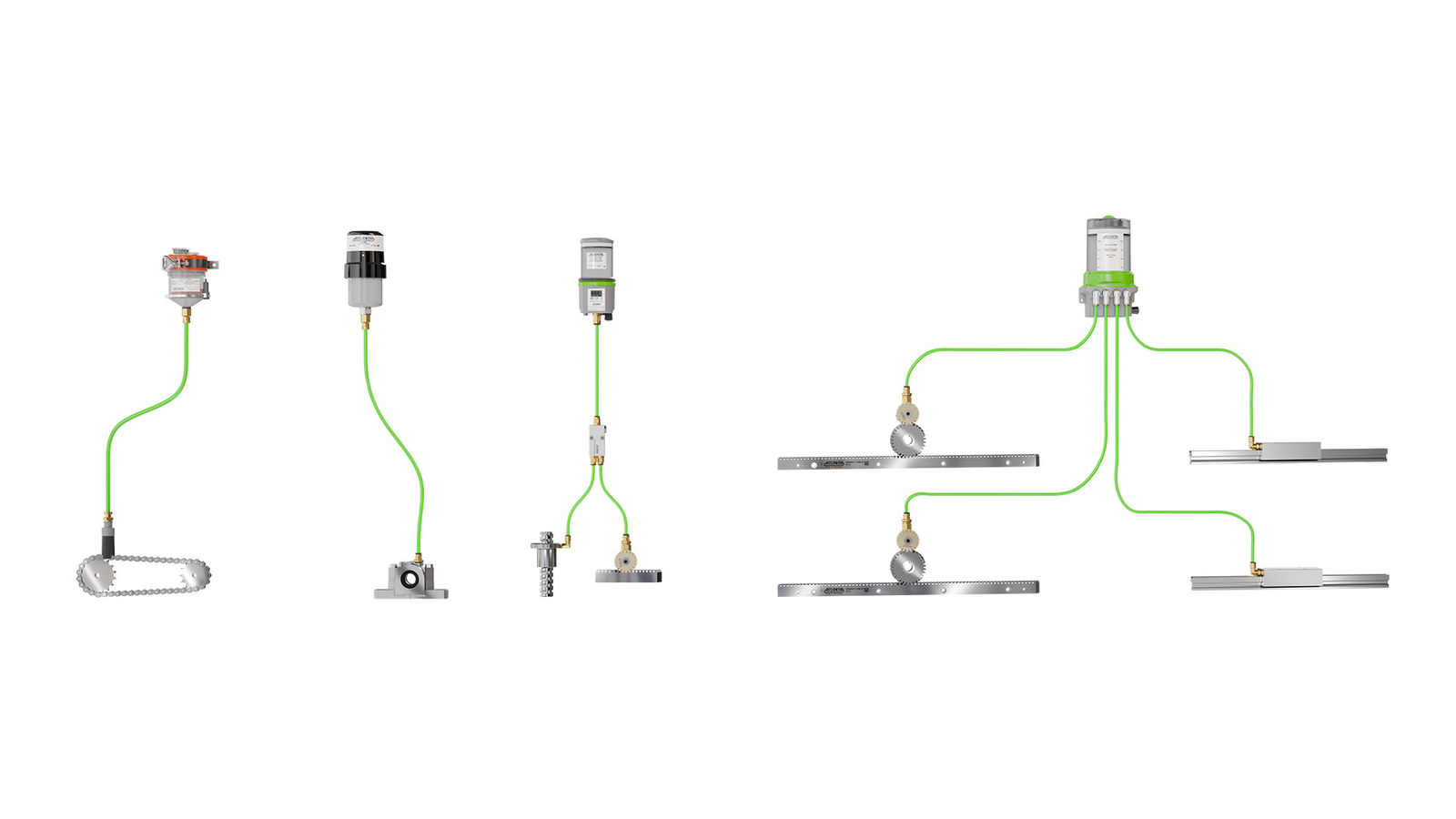
Whether single-point or multi-point lubrication, customers increase the performance of their machines and systems with a permanent and controlled supply of the necessary lubricant.

Atlanta Drive Systems, Inc., Farmingdale, NJ, offers rack and pinion systems, actuators, gearboxes, servo reducers and lubrication systems for many different industries including machine tool, automation, aerospace, woodworking, material handling, robotic, food, packaging, stone and special machinery. PTE recently discussed the company’s lubrication solutions with Peter Alfano, senior applications engineer.

Why is a reliable lubrication system so critical to open gearing applications?

Trustworthy and reliable lubrication systems are critical to ensure the life of open gearing primarily to prevent metal-on-metal contact. A proper layer of lubricant is required to reduce friction while increasing allowable loading and prevents premature wear of the contact surfaces. Lack of lubrication may result in loss of precision due to wear and the eventual failure of the gearing if it is not maintained.

Describe the differences between manual and automatic lubrication systems. What are the key advantages of an automatic lubrication system?

Manual application of lubricant can be effective in some cases, but it can be unreliable. The maintenance schedule of the system may not always coincide with when the system requires additional lubrication. This may result in messy over lubrication and other times of inadequate under lubrication. This is especially true if the location is difficult to access. Using an automatic system provides the advantage of a steady and uniform supply of lubricant. Automatic systems are typically sized with an appropriate volume to not require service for 12+ months.

Automatic systems have changed from basic self-contained electro-chemicalor electro-mechanical systems to more advanced versions featuring multiple outlets, multiple pumps and PLC integration.

How is lubrication technology evolving in manufacturing today?

Lubrication technology is evolving largely through dispensing methods. The automatic systems have changed from basic self-contained electro-chemical or electro-mechanical systems to more advanced versions featuring multiple outlets, multiple pumps and with PLC integration.

What do your lubrication experts recommend between selecting greases or oils? What are the advantages/disadvantages of both options?

We recommend NLGI 0 (very soft) or 00 (semi-fluid) grease. This consistency range works for many open gearing applications because of the balance between flowing freely through any accessory components for distribution while also staying in place once applied. Oils are not ideal for open gearing because they are more likely to flow resulting in more mess and positionally not enough surface coverage.

Give our readers some insight into single point and multi point lubrication strategies and discuss functions, applications and benefits for each system.

Share and save:


This article appeared in the October 2025 issue.


Read PDF

[advertisement]

Every system has unique lubrication challenges so having options to choose from single point or multi-point lubrication is critical.

Single point systems are perfect for when a simple solution is required. They come in a wide range of sizes and generally they are more compact compared to multiple-point solutions. Lubrication dosages are straightforward to calculate and adjust when you are dealing with only a single point. This is normally done through DIP switches or an LED display. Power options using batteries or eternal power supplies are available depending on what the system design allows. Single point systems can be electro-chemical or electro-mechanically driven

Multi point systems are ideal for larger systems. They can be used for multiple lubrication points of the same type or different types. Combinations of open gears, chains, bearings, spindles, or linear guides could utilize a multi-point system to reduce the lubrication reservoirs. Multiple outlets and multiple pumps are common features. This allows for variable flow rates for the different lubrication points. Multi point systems typically include more advanced features and optional PLC controls. PLC integration provides feedback on the lubrication unit like low lubrication levels, lubricating pressure, and pump errors. This feedback is valuable for identifying issues between regular maintenance. Power options using batteries or eternal power supplies are available, but most are externally powered in our experience. These systems are generally mechanically driven and operate at higher pressures compared to single point systems.

With its precise operation, this lubricator is suitable for automatic lubrication of roller and sliding bearings, gear racks, open gears and more.

What accessory components/technologies should customers consider for installation and maintenance of lubrication systems?

Maintenance is fairly straight forward for most automatic lubrication systems. For electro-mechanically driven systems spare lubrication or lubrication cartages are needed. For electro-chemical systems a pressure chamber is also needed. Electro-chemical systems are sometimes cost-effective to the point where the entire lubrication unit can be replaced at the end of its life.

When lubricating open gearing the best additional component to consider is lubrication gear. This is a gear made from felt or a similar absorbent material that lubrication is pumped through. This method ensures even distribution of lubrication across gear teeth. Many varieties of mounting shafts, hoses, splitters, distributors and check valves are available to complete the automatic system.

How should gear customers approach a lubrication strategy in 2025?

The range of automatic systems on the market is very wide. Solutions can be found for any type of application and for any budget. Taking the extra step to account for proper lubrication should be considered by every mechanical system designer using open gearing. Maintaining the life and precision of the gearing can be extremely simple.

How will lubrication systems change in the future?

There have been many advancements in recent years connecting mechanical components to digital technologies. Industry 4.0, for example, focuses on smart manufacturing and an Internet of Things. We could expect there to be continued developments where automatic lubrication systems provide more feedback in real time when combined with feedback from the other machinal components.

atlantadrives.com