


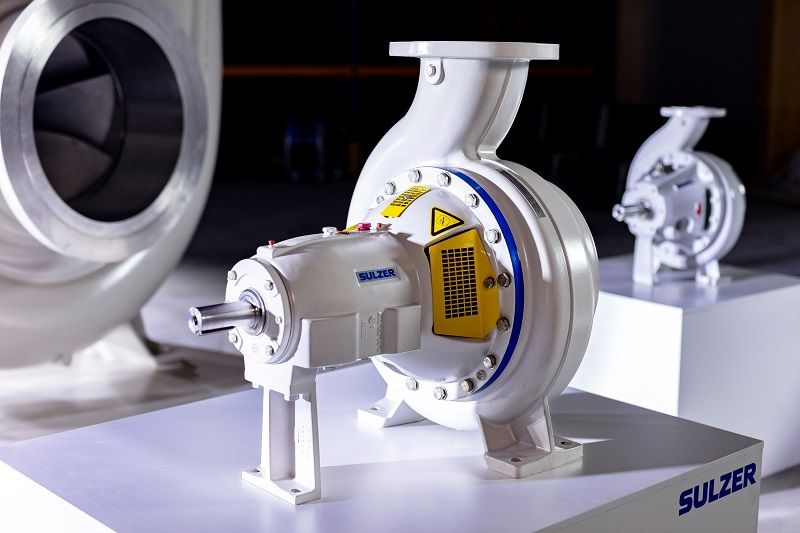
Sulzer Examines Cost-Effective Solutions for Pumps and Mixers
Pumping systems are responsible for over 20 percent of the world’s electrical energy demand, and in some industrial plant operations, they can account for up to 90 percent of energy usage. Improving the energy efficiency of pumping and mixing systems is crucial in reducing production costs and supporting a more sustainable future. Several options can be available and with energy prices reaching new heights, the return on investment is rapidly reducing.
Saku Vanhala, head of product management at Sulzer, looks at how equipment operators can make positive changes to improve efficiency and help to meet corporate goals in sustainability.
Energy efficiency is becoming increasingly important in industry applications due to rising energy costs. Improving pump and agitator performance can result in substantial savings, both in terms of reducing energy consumption and operational costs. The key to improving energy efficiency is matching the design of the pump, installation, process conditions, and operation to each other and taking into account any changes to process parameters that may have occurred over time.
Huge saving potential
With increasing demand, combined with global price rises, energy usage and how to reduce it, is rapidly becoming a priority for all countries. Among several initiatives, many governments are also supporting businesses with grants to upgrade equipment to more energy-efficient alternatives, to help reduce demand on national power grids.
Pump operators should have access to pump data and performance curves, which can be used to calculate current efficiency levels and identify areas for improvement. An expert appraisal of the pump can also provide information on the remaining service life of the pump and help make an informed decision on the best course of action to improve performance.






 Power Transmission Engineering is THE magazine of mechanical components. PTE is written for engineers and maintenance pros who specify, purchase and use gears, gear drives, bearings, motors, couplings, clutches, lubrication, seals and all other types of mechanical power transmission and motion control components.