Nidec Drives Provides FAE with Complex Drive Control Solutions
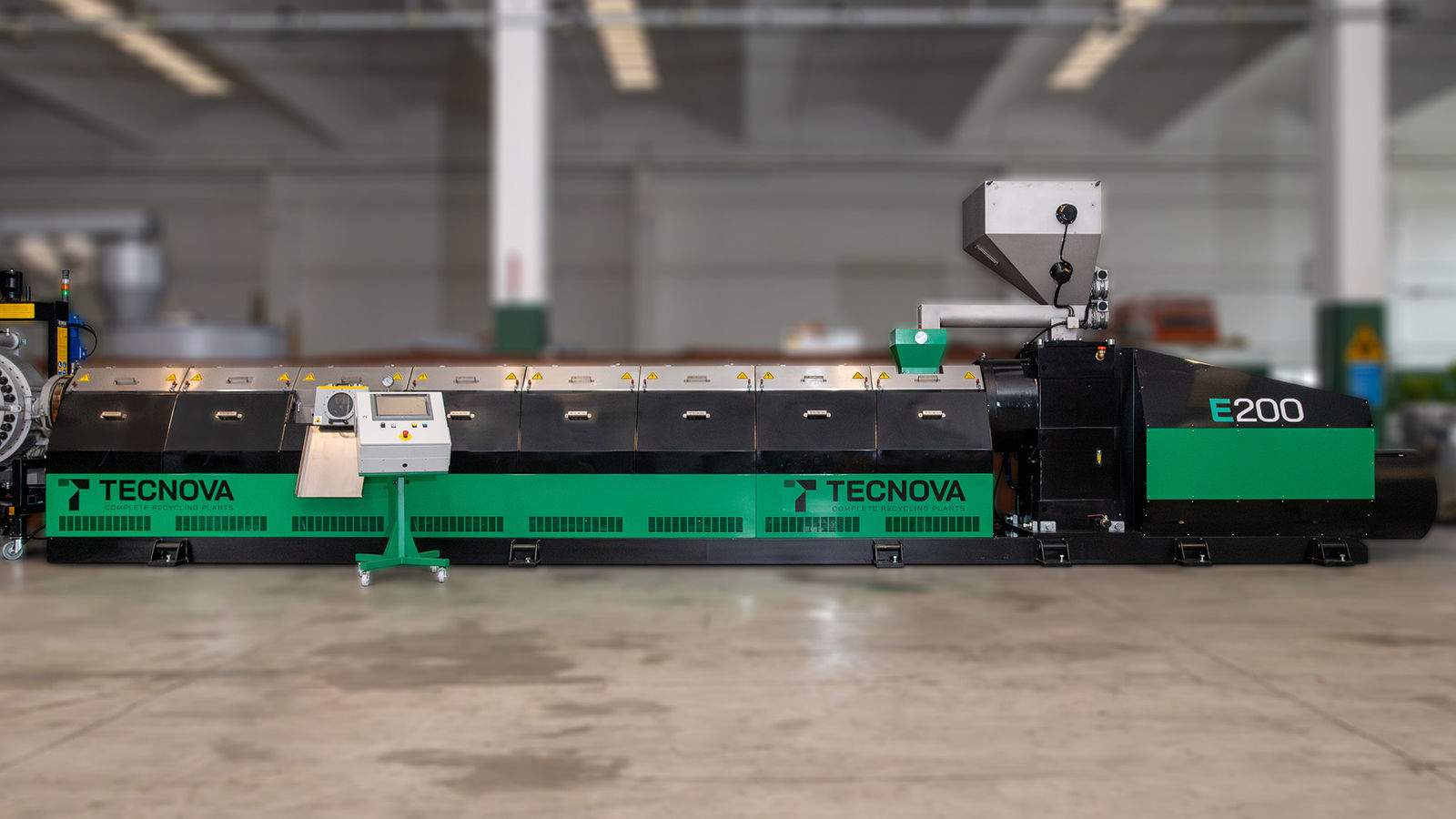
The E200 is a recycling system dedicated to processing HDPE plastic material, mainly bottles for personal and household hygiene products. (All images: Nidec Drives)
In high-demand industrial environments like plastic recycling and extrusion, system efficiency, thermal management, and drive reliability are critical to operational success. FAE SRL, specialists in electrical panel design for OEMs in the plastics sector across Italy and Switzerland, needed a drive solution that could meet the rigorous demands of continuous operation, high power density, and seamless integration with modern control architectures.
With a long-standing relationship with Nidec Drives, the company turned to Commander C300 and Unidrive M700 drives to power its latest generation of extrusion systems.
For more than 40 years, FAE has been a globally active Italian company that designs and delivers custom automated systems for industrial clients. A trusted provider of automation engineering services; FAE aids factories and production lines to run more efficiently, safely, with less intervention, and following internationally recognized quality management practices. Responding to global competition and market demands FAE adopted lean management and lean production, thus entailing their operations are streamlined to reduce waste, improve efficiency and manufacturing processes are optimized for better quality and faster delivery.
For their latest project, FAE once again turned to Nidec Drives building on decades of trust, product reliability, and exceptional technical support that have defined their long-standing partnership.
What is a Plastic Material Regeneration System?
Also known as plastic granulation or extrusion recycling, this process converts landfill-sourced or post-consumer plastic waste into reusable plastic granules. These granules support a circular economy by serving as raw materials for new plastic products.
To do this, plastic waste is collected and organized by type such as, polyethylene terephthalate, high-density polyethylene, low-density polyethylene and polypropylene. Proper sorting is crucial to ensure quality and avoid contamination. They then go through a thorough wash to remove dirt, labels, and residues, to prepare for processing.
Clean plastic is then shredded into small flakes. If the material is too light, it may be densified, a process that compacts it to improve handling and extrusion. The flakes are fed into a hopper containing a screw mechanism that pushes the material into an extruder. Inside, the plastic is melted and formed into long strands. These strands are then cooled and cut into uniform plastic granules, also known as pellets, which are then ready for reuse in manufacturing.
Why does this matter? This process not only diverts plastic from landfills, reducing environmental pollution and conserving space, but also significantly lowers the demand for new plastic production, which is energy intensive and reliant on fossil fuels. This places responsibility and opportunity firmly in the hands of manufacturers. By regenerating plastic into reusable granules, OEMs can reduce their carbon footprint and contribute to a more circular economy. Global environmental regulations have tightened, industries are facing increased pressure to adopt sustainable practices, and recycling plastic granules have emerged as a critical resource. Widely used across sectors such as packaging, construction, consumer goods and automotives, they offer a cost-effective and eco-friendly alternative to new plastic materials. Thus, not only does it support sustainability goals, but also enhances supply chain resilience by reducing dependence on raw petrochemical inputs.
FAE’s Approach to Plastic Regeneration
Powered by a carefully engineered combination of mechanical precision and intelligent drive control, this complex system relied on Nidec Drives solutions for their ease of integration, compact design, and communication flexibility. All of which make up key features that align with the demands of their advanced recycling systems.
At the heart of the operation are Commander C300 drives, which control conveyor belts and pumps throughout the system, ensuring smooth and efficient material flow.
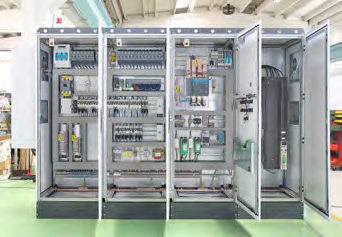
Nidec Drives supplied drive control technology to enhance FAE's recycling systems.
For the high-power demands of the extruders and densifiers, FAE implemented three M700 drives, 500 kW each, a choice driven by their compact footprint, simplified commissioning, and ability to meet power and control requirements without compromising panel space or thermal management.
Commissioning was carried out via Connect software through Profinet, which significantly reduced setup time, compared to other systems that can take up to an hour to program. Nidec Drives intuitive interface allowed FAE to complete the process in just 15 minutes. This ease of programming, combined with competitive pricing and short delivery times, helped FAE stay on schedule and within budget.
The system’s design also accounted for flexibility. While the densifier isn’t continually in use, it plays a crucial part when processing lighter materials, helping to ensure consistent feed into the extruder. Thanks to the adaptability of the drive system, integrating this component posed no operational challenges. Proving FAE’s trust was well placed in a company that shares a commitment to innovation in sustainable manufacturing.
Nidec Drives Upgrades Servo Solutions with EnDat3
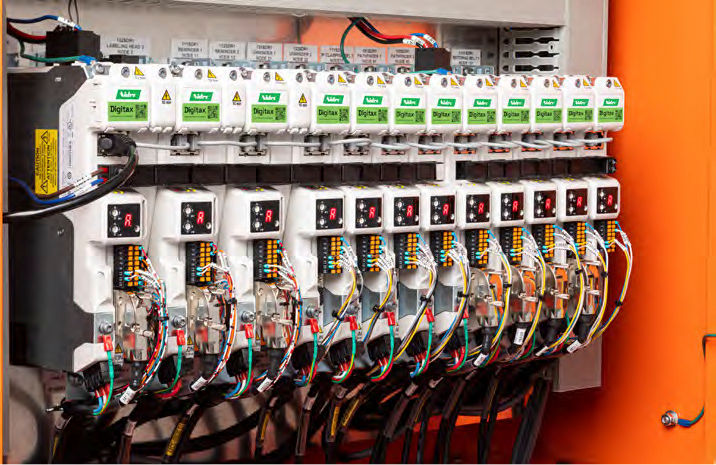
Nidec Drives has unveiled a major upgrade to its servo solutions, delivering full packages for Heidenhain’s next generation EnDat 3 encoders. These comprise of Digitax HD and Unidrive M700 drives, Unimotor hd motors and a selection of standard cut-to-length cables and premade connectors. Ideal for more compact machines, Nidec Drives’ solutions with EnDat 3 encoders brings smarter and faster systems. Key benefits include single cable 2-wire technology for simplified cabling, smaller panel sizes and faster commissioning as well as enhanced diagnostics such as real-time monitoring of vibration, temperature and encoder health for predictive maintenance.
“The support for EnDat 3 disposed many of the traditional pain points associated with system setup and performance tuning. As a product team, our goal is to simplify the complex and empower our customers to innovate faster. Introducing new tools and features ensure we provide a major leap forward in usability, diagnostics and flexibility,” said Ian Shorthose, product manager for motion at Nidec Drives
[advertisement]
All Nidec Drives EnDat servo solutions work out of the box with electronic nameplate data ensuring all components are properly matched. Each Unimotor hd EnDat encoder is pre-programmed for instant recognition, so your system configures itself on power-up with no manual intervention required.
System optimization is made simple with the latest Connect V3 commissioning software which ensures rapid, error-free set-up taking minimal time using step-by-step support.
After its recent significant update, Connect has been reimagined with servo systems at the core of its redevelopment. Whether you’re a motion control expert or a first-time user, Connect makes commissioning fast, reliable, and user friendly.
“Through the integration of EnDat and Nidec Drives, evolution turns into synergy,” added Oscar Arienti, sales manager automation division, Heidenhain Italy. The advancement of our EnDat encoder platform, combined with Nidec’s servo drive technology, expands the product portfolio, enhances application versatility, reduces commissioning times, and ensures high precision and operational reliability.”
Real World Energy and Cost Savings
By selecting Nidec Drives products, FAE achieved more than just performance, they unlocked measurable efficiency gains. Compared to alternative solutions, the M700 drives reduced panel power dissipation by up to 2,800 watts, resulting in an estimated 24,528 kWh of energy saved annually. This translates to approximately £3,679 in yearly cost savings, based on average industrial electricity rates. Beyond the direct energy reduction, the lower heat output also decreased the demand for panel cooling systems, contributing to further operational savings and improved system longevity. These benefits, combined with the compact size of the drives, allowed for a more streamlined panel design, maximizing space and minimizing thermal load.
The success of FAE’s plastic regeneration system is a testament to the power of collaboration, innovation, and reliable engineering. FAE was not only able to achieve technical excellence but also benefited from simplified commissioning, reduced energy losses, and a streamlined panel design. Feedback from technicians and operators has been overwhelmingly positive, highlighting the system’s ease of use and minimal technical issues.
FAE summed it up best: “We are very happy with the collaboration we are having with Control Techniques, and we expect even more partnerships for upcoming projects!”
As the demand for sustainable, high-efficiency systems continues to grow, partnerships like this one demonstrate how smart technology and trusted relationships can drive meaningful progress, both for business and the planet.
Power Transmission Engineering is THE magazine of mechanical components. PTE is written for engineers and maintenance pros who specify, purchase and use gears, gear drives, bearings, motors, couplings, clutches, lubrication, seals and all other types of mechanical power transmission and motion control components.
*Unsubscribe any time. Full details in our privacy policy










 Power Transmission Engineering is THE magazine of mechanical components. PTE is written for engineers and maintenance pros who specify, purchase and use gears, gear drives, bearings, motors, couplings, clutches, lubrication, seals and all other types of mechanical power transmission and motion control components.