


Reducing Rolling Bearing Friction
Construction machinery reaps benefits of increased efficiency and sustainability
Rolling bearings possess especially low friction characteristics. They make it possible to reduce bearing friction by half, offering the construction machinery sector the opportunity to achieve significant carbon dioxide savings without imposing high development costs. This article will examine the current solutions from Schaeffler.
Rolling bearings with optimized friction and performance characteristics can have a significant influence when it comes to reducing the power loss, design envelope, and weight of hydraulic motors and pumps, as well as gearboxes and axles in construction machinery. If correctly designed, rolling bearings can make a significant contribution to reducing carbon dioxide emissions.
X-life: Reduced Friction, Higher Dynamic Load Ratings
The vast majority of today’s construction machinery is still operated conventionally, using diesel engines and hydraulic components. In the widely used adjustable axial piston pumps and motors, the input and output shaft are usually supported by two tapered roller bearings that are adjusted against each other. When designing the bearing support, it is advisable to reduce the preload to precisely the required minimum allowed by the load spectrum. The lower bearing preload leads to permanently lower axial forces between the tapered roller end face and inner ring rib and, therefore, to a corresponding reduction in frictional torque.

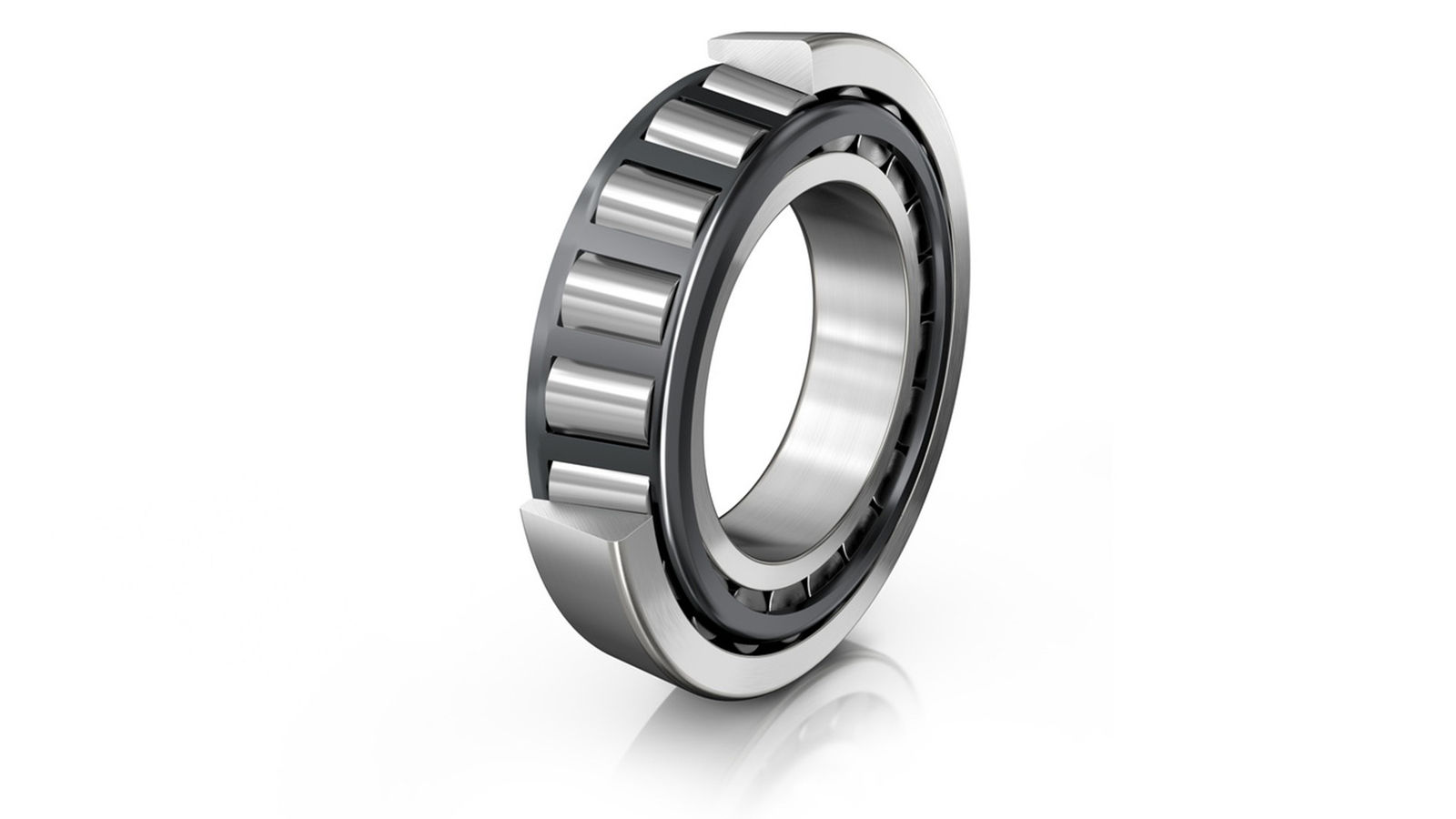
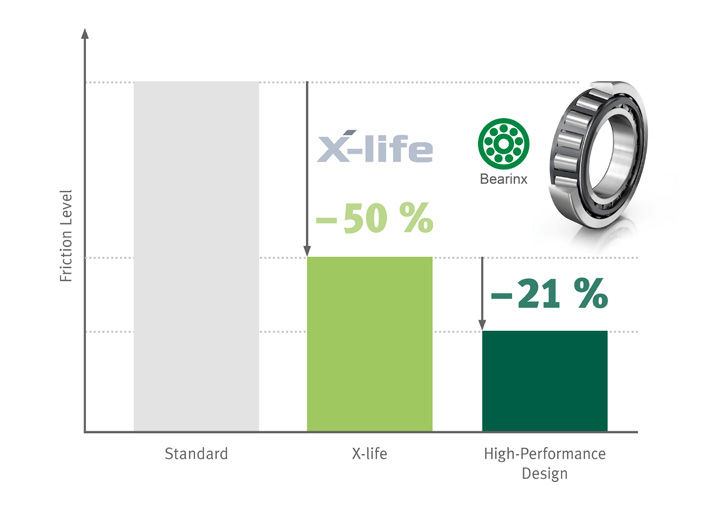
Schaeffler tapered roller bearings in X-life quality are another option for reducing friction without making a design change. Friction can be halved compared to conventional bearings through specially machined raceway and roller surfaces as well as optimized geometry in the contact between the end face of the rolling element and the inner ring rib. Even at the low speeds during the start-up process, an elastohydrodynamic lubricant film forms due to the improved surfaces and osculations, which reduces the wear and friction under the already very low viscosity lubrication conditions. The optimizations to the internal design also led to a significant noise reduction along with approximately 25 percent higher dynamic load ratings as compared to standard tapered roller bearings from Schaeffler, resulting in a calculated rating life increase of more than 100 percent. Similar progress can be achieved by using cylindrical roller bearings in X-life quality. The high dynamic load ratings allow a changeover from full-complement cylindrical roller bearings to cage-guided cylindrical roller bearings with significantly less friction.
Friction-Reducing Coating
For rolling bearings and cylindrical roller bearings with radial and axial loads as well as tapered roller bearings, Schaeffler offers its proprietary friction-reducing coating Triondur C. This diamond-like carbon (DLC) coating is specifically optimized for loads in the rolling element contact and reduces the friction in a “dry steel-to-steel contact” by around 80 percent.
Reduced Friction Through Downsizing
Downsizing or higher power density is not only associated with a lower consumption of materials and energy during manufacturing; it also leads to reduced friction in drive systems. As described above, rolling bearings in X-life quality offer the required reserves thanks to their load ratings. With high-performance rolling bearing steels from Schaeffler, such as Cromadur, it is possible to unlock further potential for increasing the power density.







 Power Transmission Engineering is THE magazine of mechanical components. PTE is written for engineers and maintenance pros who specify, purchase and use gears, gear drives, bearings, motors, couplings, clutches, lubrication, seals and all other types of mechanical power transmission and motion control components.