When corrosion resistance is important, races and balls
can be made of precipitation-hardened stainless steels or
coated with a thin — yet dense — chrome, such as Endurakote
plating.
Limiting Speeds
Four-point contact bearings are primarily used for slow-tomoderate-
speed applications. Under combined loads, some
of the balls are loaded across both sets of contacts. Since they
cannot roll about two axes simultaneously, they tend to rotate
about one axis. This leads to more skidding or slippage on the
other set of contacts, increasing friction and wear — especially
at high speeds.
Maximum allowable speeds vary with bore size, section
size, ball size, retainer type, type of lubrication, and type of
loading. As a rule, this type of bearing performs best at pitch
line velocities under 1,100-feet-per-minute. However, the
variable effects of preloading, lubrication and simultaneous
individual loads can overcome this limitation. For applications
requiring higher speeds, the bearing manufacturer
should be consulted.
Under a single loading (radial or thrust), speed is no more a
factor for a four-point contact ball bearing than that it would
be for a conventional radial bearing or an angular contact
thrust bearing.
Lubrication and Maintenance
In most applications, four-point contact ball bearings need
no more maintenance than any other anti-friction bearing.
Often, they need even less.
Grease lubrication is typical, since so many applications
involve low speeds or oscillating motion. If the application
involves full rotation, two grease fittings — mounted 180°
apart — should allow sufficient access. But if a design calls
for heavy loads as well as full rotation — or if the bearing is
located near other moving parts that must be lubricated with
oil — oil lubrication is used instead.
While many bearings are pre-lubricated at the factory, the
lubricant must nevertheless be replenished and replaced as
needed. The incorporation of holes or fittings into the bearing
races facilitates this, which is especially true when the bearings
have integral seals — a possibility even in large-diameter
bearings (e.g., 100 inches).
Separators. Separators should always be used in fourpoint
contact bearings, the style varying with the application.
Material options include steel, stainless steel, bronze, phenolic,
nylon, Teflon, and stainless steel wire (spring-type). The
most common style is the retainer found in a Conrad deepgroove
bearing, which can be inserted into the bearing from
the side through the gap between the race lands.
A full, one-piece retainer is usually the strongest option,
but inserting it into a four-point contact bearing requires
splitting one of the races or providing a loading plug. This is
not practical in light-section bearings because the race is too
thin to split and cannot be reassembled with rivets or screws.
 David VanLangevelde
is Kaydon's product
engineering manager
for slewing ring bearing
products.
David VanLangevelde
is Kaydon's product
engineering manager
for slewing ring bearing
products.
 Rick Burgess is Kaydon's
senior engineering manager
responsible for thin-section
and custom bearing
products
Rick Burgess is Kaydon's
senior engineering manager
responsible for thin-section
and custom bearing
products
When a thin section bearing application demands maximum
capacity in a slow-speed bearing and separation of the
balls, a wire separator is a good choice. Spring-type separators
are used in low-frequency, oscillating, or slow, full-rotational
applications where low, uniform bearing torque is important.
The springs act as free-floating bodies to keep sliding
friction very low.
Conclusion
Today's design engineers are challenged to simplify designs
in order to reduce cost and weight. In many applications,
four-point contact ball bearings — which do the job of multiple
bearings by handling radial, thrust and moment loads
simultaneously — are an ideal solution.
For more information:
Kaydon Bearings
2860 McCracken Street
Muskegon, MI 49441
Phone: (231)-755-3741
&nsbp;&nsbp;(800) 514-3066
Fax: (231) 759-4102
bearings@kaydon.com
www.kaydonbearings.com
Reprinted courtesy Kaydon Bearings.







 Figure 1 A four-point contact bearing can resist radial, thrust and moment
loads individually — or in any combination.
Figure 1 A four-point contact bearing can resist radial, thrust and moment
loads individually — or in any combination. Figure 2 This rotary table design has a conventional center post supported
by two bearings.
Figure 2 This rotary table design has a conventional center post supported
by two bearings.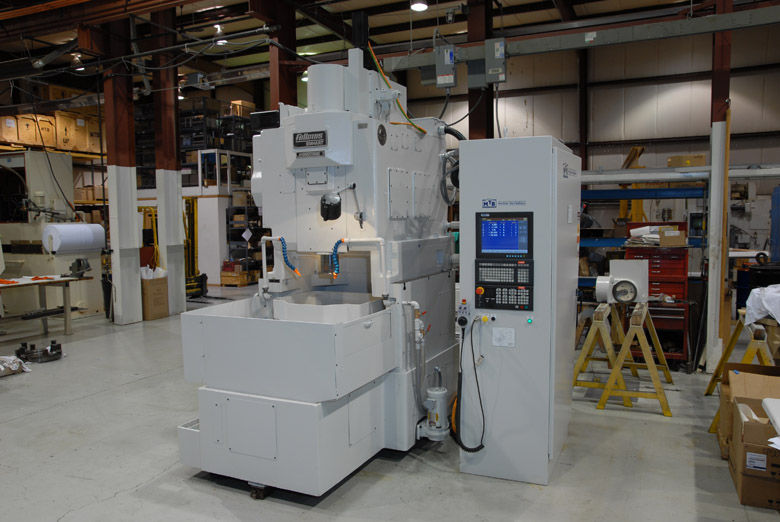 Figure 3 Eliminating the center post reduces the height and weight of the
table and frees space for use by other components.
Figure 3 Eliminating the center post reduces the height and weight of the
table and frees space for use by other components. Figure 4 Holes or fittings in the bearing races facilitate lubrication when
the bearings have integral seals — a possibility even in largediameter
bearings (e.g., 100").
Figure 4 Holes or fittings in the bearing races facilitate lubrication when
the bearings have integral seals — a possibility even in largediameter
bearings (e.g., 100").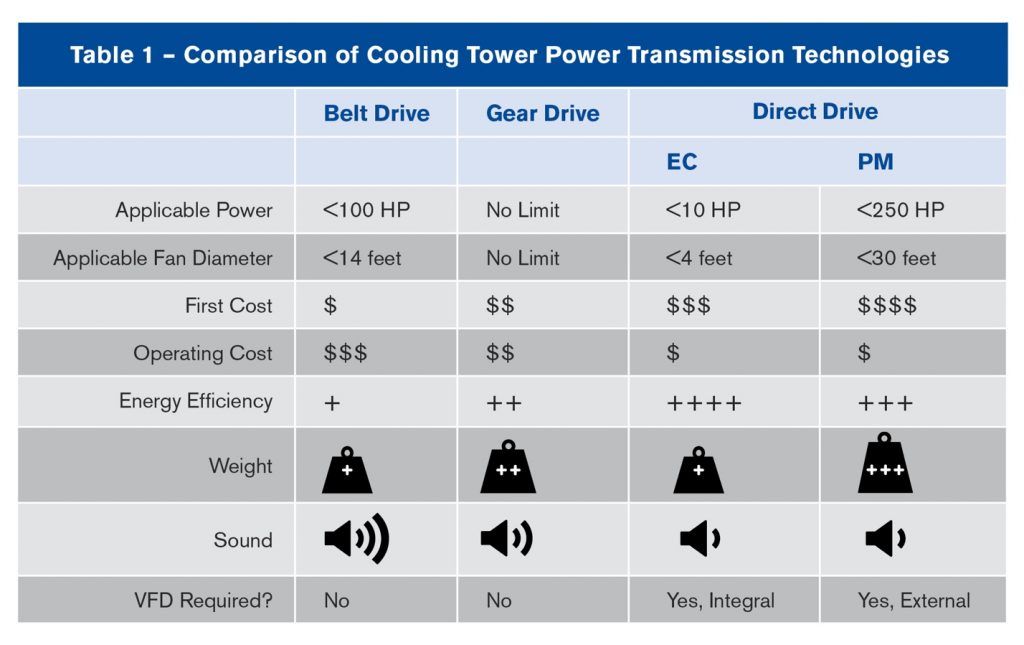 Figure 5 Thin section and slewing ring bearings in four-point contact
configurations.
Figure 5 Thin section and slewing ring bearings in four-point contact
configurations.


 Power Transmission Engineering is THE magazine of mechanical components. PTE is written for engineers and maintenance pros who specify, purchase and use gears, gear drives, bearings, motors, couplings, clutches, lubrication, seals and all other types of mechanical power transmission and motion control components.