How safety functions are reshaping motion control today
Factory automation and manufacturing production will rely on safety standards as the industries adapt to new technologies.
The days of safety being simply an add-on to motion applications has ended. Today’s machine builders need to integrate functional safety in the earliest stages of their servo-drive architecture. This helps designers simplify system architecture, reduce external safety components and cabling and build smaller more efficient machines.
With their completion of the Functional Safety certification, Elmo Motion Control now provides machine builders with advanced motion control technology that combines performance, compactness, intelligence and safety into a single platform—perfectly suited for demanding industries such as industrial automation, robotics, semiconductor manufacturing and autonomous systems. Simone Gianotti, application engineer manager at Elmo Motion Control, recently discussed the evolution of safety standards for drive technology in these applications.
For decades, safety has been extremely important in Europe, but today there is a greater emphasis on the global motion and drives market embracing tighter and more regulated safety standards. “Whenever you have a piece of equipment running by itself, whether it’s a robotic arm or an autonomous vehicle, anything in the proximity of humans, safety should be one of the main drivers,” Gianotti said.
Industrial robotics is at the top of that list where collaborative robots work side-by-side with human counterparts. “In those situations, it is common to have safety features implemented such as safety limited speed or safety limited torque. They make sure that when the sensor detects that the human is entering a certain area defined as potentially dangerous, the robot slows or shuts down.”
Safety architecture ensures the organization is limiting the extent of what can and will go wrong. Safe Brake Control, for example, provides safe control of an external power-off brake and is used on vertical axes. If a redundant braking system fails, the drive typically invokes Safe Operating Stop where the drive holds the motor at zero speed without removing torque.
“During operation, these features help ensure the brake is working properly and allows the system to manage a fault while maintaining a predefined safety level. This becomes an even more crucial factor in applications like AGVs and AMRs where these machines are working in dynamic operating environments and require standards that partially overlap,” Gianotti said.
Looking specifically at humanoid robots, Gianotti said one of the most critical safety concerns involves the robot potentially losing balance or a leg losing power for whatever reason. So now you have an unstable system where a robot could topple on top of a human causing injury.
Gianotti said there is an international standard for this hitting the market some time in 2027. ISO/CD 25785-1 states the safety requirements for industrial mobile robots with actively controlled stability and their systems, which include robots that have an unspecified number of legs, wheels or other types of mobility.
The devil—will certainly—be in the details of the standard.
“It covers much of the information already available in safety for robotic and motion control technologies but brings new needs and objectives based on the development of robotic technology available today,” Gianotti said.
Mix and Match Safety Configurations
The role a feedback device plays in safe motion today depends on the drive manufacturer.
Gianotti said there are companies in the market that developed intrinsically safe feedback. They created the feedback in such a way that they can bring that feedback to a third-party company like, for example, TÜV, and get TÜV to say, “This feedback is certified safe up to C3 PL e, a highly reliable safety classification for machine control systems.”
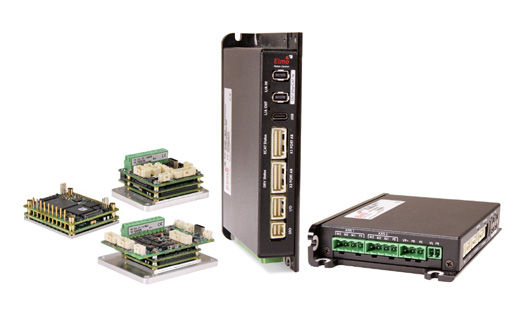
Elmo Motion Control announced the completion of Functional Safety certification for its Titanium line of servo drives, marking a significant milestone in the company’s next-generation motion control technology. (Image: Elmo Motion Control)
Many manufacturers—including Elmo Motion Control—are taking different feedback configurations and bringing those safety configurations to TÜV and getting them certified.
“For example, if you’re looking again at our drives, you can use a functional safety feature like safety limited speed using a safe beast encoder, but maybe you can reach the same result using a dual standard B-type encoder, or maybe a B-type encoder plus a standard SinCos encoder, or an optical incremental encoder and another absolute encoder. So, there are different combinations of standard feedbacks that can still guarantee you reach the desired level of safety,” Gianotti said.
The challenge remains that the drive manufacturer needs to take that configuration and prove that they have all the diagnostic coverage and redundancy to reach that level, even if you are using standard devices instead of safety-certified ones.
[advertisement]
So how are safety protocols changing safety architecture compared with traditional hardwired safety relays?
The technology is making machine manufacturers happier. Well, the whole idea is that having a drive with embedded safety is saving the machine manufacturer quite a bit because now you don’t need an external safety relay with additional wiring—basically it’s like the safety relay is embedded in your servo drive, so you have already eliminated one piece of hardware.
“Now, if you use hardwired safety to the drive, it works, no problem whatsoever. But you still have wiring coming in, so you are using copper. Then you must make sure that your electrical schematics are correct and that your electrician is doing all the work, which might require a lot of pulling cables,” Gianotti said. “Now if you can bring the safety on the same bus interface, then you use a standard Ethernet cable and you have safety running on that Ethernet cable together with your standard communication protocol.”
Reducing Downtime and Providing Operational Flexibility
When you have mounted equipment like a robotic arm or machines moving around the factory like AGVs or AMRs, you will inevitably have humans working near their robotic counterparts. Old school safety functions would shut everything down the second a human operator triggered a sensor. Gianotti said by implementing more sophisticated safety features inside the drive today, you can change these parameters.
“You can parameterize the drive in such a way that when a human enters the working area and is ten feet away, I can reduce my speed by 50 percent and my torque by 50 percent. If a human gets closer, the speed and torque reduces another 25 percent. The robot never stops—he just keeps producing. In the past, we were shutting down everything and losing time to restart, now we can keep things moving in safer ways without interrupting production,” he added.
The challenge the industry is currently facing is figuring out how to make everything safe according to the standards while minimizing productivity loss. It is no surprise that workers on deadlines with KPIs need to meet certain production levels. If the equipment fails or shuts down, they will do what they need to do to get production moving again.
“One of the greatest challenges is creating safety systems that are difficult to tamper with,” Gianotti said. “We used to have a dead man’s switch designed to automatically stop, disable or trigger if the human operator was physically removed from the controls and they could work around this safety feature simply by placing a piece of tape over the switch.”
The operator could do whatever they needed to do without the machine realizing that it should stop or slow down. Gianotti mentioned this example because the technology has changed through the years. “Manufacturers have developed new sensors in which you cannot just keep it squeezed, you have to double tap it or apply and keep a certain amount of pressure (not too strong and not too light), which is much more difficult to replicate with a piece of tape.”
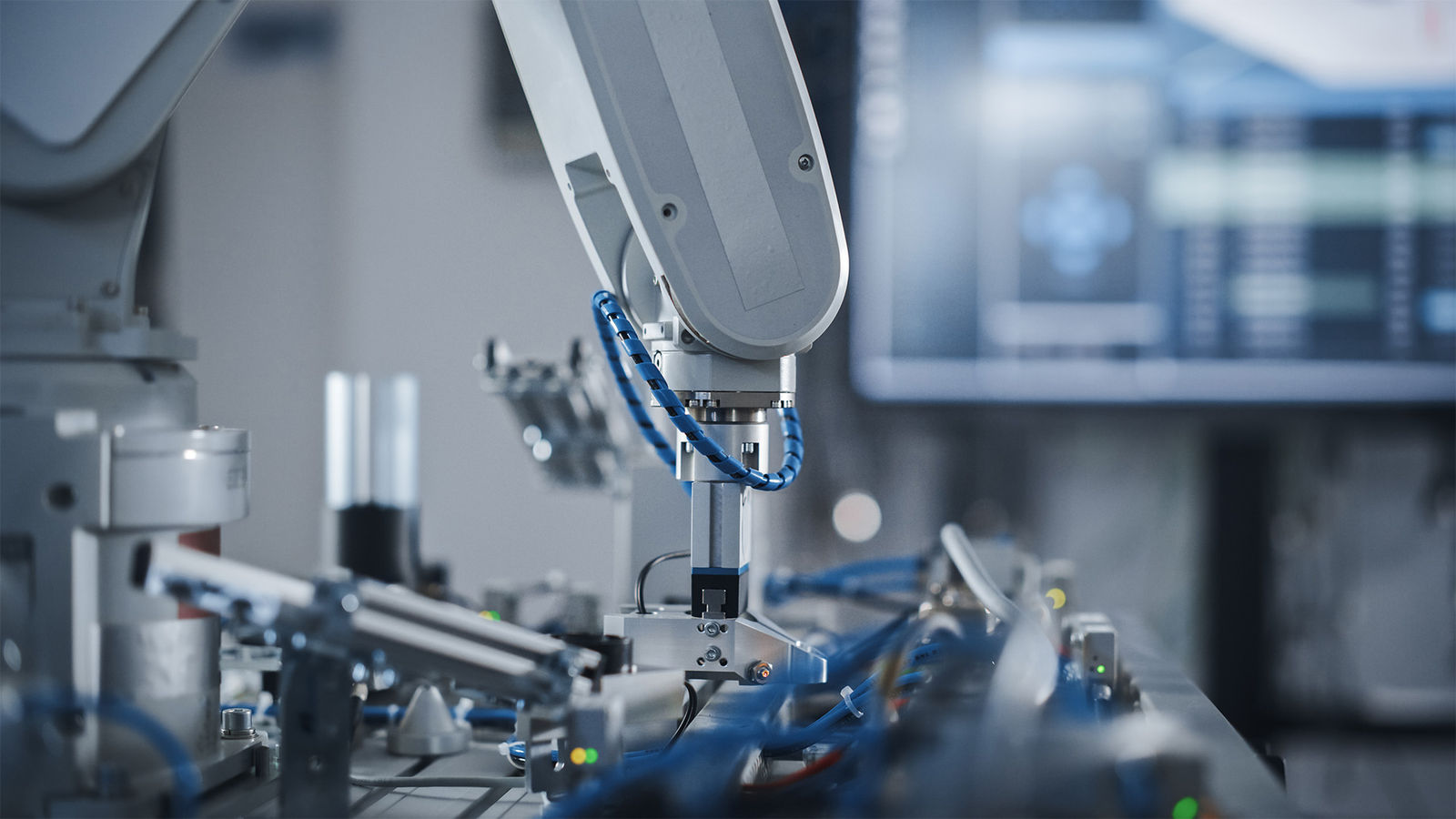
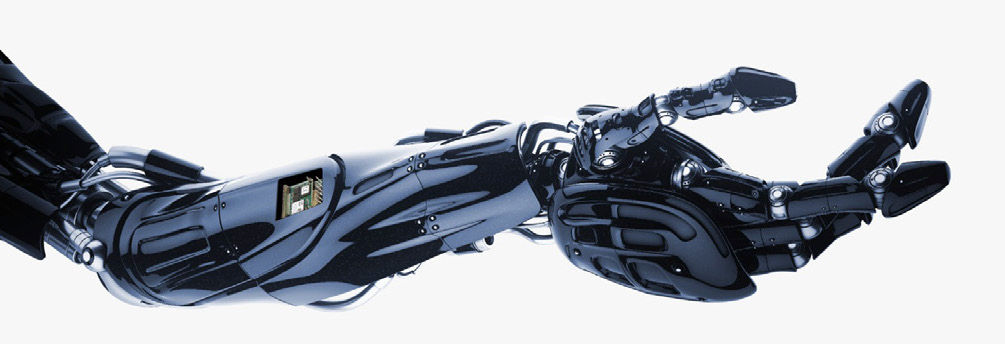
The certification covers Elmo’s Titanium servo drives for both industrial and harsh-environment applications, providing machine builders and system designers with advanced Functional Safety integrated directly into compact, high-performance servo technology.Whenever a piece of equipment is running by itself, such as a robotic arm or autonomous vehicle, safety should be one of the main drivers. (Image: Elmo Motion Control)
Protecting Vital Machine Assets
Safety has become increasingly critical as collaborative robots, humanoids, AGVs, AMRs and other automated systems gain traction in manufacturing. As these technologies evolve, manufacturers must also address cybersecurity risks that could compromise functional safety.
It is difficult to imagine a more dangerous scenario than a cyber-attack disabling or weakening the safety checks on a collaborative robot, humanoid or autonomous vehicle. If a robot fails to slow down or reduce torque near human operators, the consequences could be severe.
“Functional safety itself needs to be protected from cyber-attacks the same way you protect your standard PLC or computer,” Gianotti said.
Password protection for safety parameters will become increasingly important in drive manufacturing. Although current cybersecurity regulations primarily target controllers and industrial PCs, stricter requirements will extend to drives. Currently, we have customers for example, after the drive is parameterized, they proxy the USB port so nobody can physically access the drive or change parameters. Let us call this ‘hardware cybersecurity,’ if you will, preventing access to the device. Eventually, this will start being part of standards and official regulations as well,” Gianotti said.
“Beginning in 2027, manufacturers seeking a CE mark to sell machinery in Europe will need to demonstrate compliance with cybersecurity requirements under the European Union’s machinery regulations. Security measures such as password protection, which manufacturers have already used to safeguard machine safety, will therefore become mandatory. Europe is leading this regulatory shift, and I expect the United States to follow,” Gianotti said.